15 Minutes To Comply, Or Death: Venezuela President's Big Claim On Maduro Op
By NewsDose Team
Updated on January 25, 2026
5 min read
Key takeaways
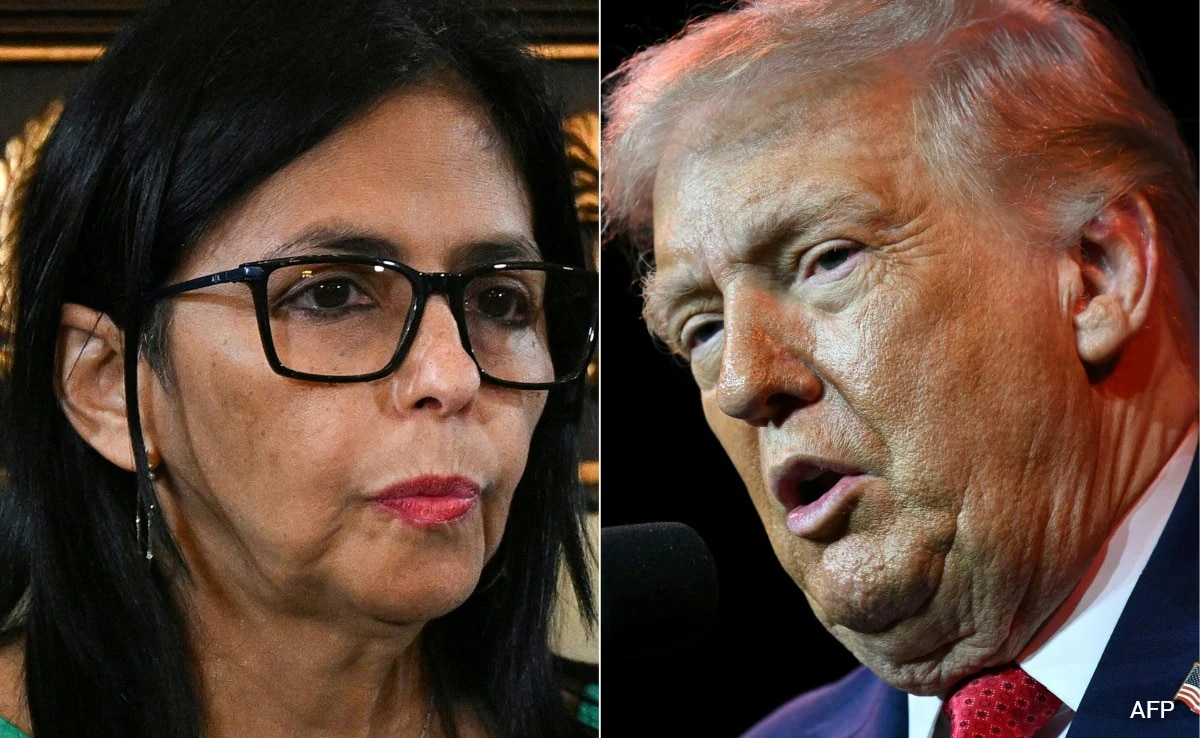
Venezuela's acting president, Delcy Rodriguez claimed that when former president Nicolas Maduro was captured, US forces gave the members of his cabinet 15 minutes to decide if they would comply with America's demands "or they would kill us".
In a stunning revelation that has sent shockwaves through the international diplomatic community, Venezuela's acting president, Delcy Rodriguez, has publicly asserted that US forces delivered a chilling 15-minute ultimatum to former President Nicolas Maduro's cabinet following his capture. According to Rodriguez, the US presented a stark choice: comply with American demands or face deadly consequences.
The dramatic account details a high-stakes standoff where top Venezuelan officials, including Interior Minister Diosdado Cabello and Congressional President Jorge Rodriguez, were allegedly given a mere quarter-hour to decide their fate. "The threats began from the very first minute they kidnapped the president," Rodriguez reportedly stated. "They gave Diosdado, Jorge, and me 15 minutes to respond, or they would kill us." This statement paints a vivid picture of extreme pressure and a direct confrontation with a global superpower.
Further intensifying the unfolding narrative, a recently leaked video recording, spanning two hours, offers an unprecedented glimpse into the inner workings of the Venezuelan regime seven days after the US-led intervention. In this footage, obtained by a local journalism collective, Rodriguez is heard unequivocally prioritizing the "preservation of political power." This revelation suggests a calculated strategy by the remaining members of the government to regain control in the turbulent aftermath of Maduro's removal, casting a different light on the public narrative of victimhood.
Previously, there were unconfirmed reports suggesting a willingness by Rodriguez and her brother to cooperate with US leadership prior to Maduro's capture. However, the contents of the leaked video complicate this picture, revealing significant internal anxieties within the regime regarding potential accusations of treason. The delicate balance between perceived defiance and strategic compliance appears to be a central theme in their struggle for legitimacy and survival.
In the recording, Rodriguez also conveyed a profound sense of anguish regarding her new responsibilities, stating it "hurt ... to have to assume responsibilities in these circumstances." She further disclosed that US armed forces had informed them that "Maduro and his wife, Cilia Flores, had been assassinated, not kidnapped." Responding with defiant resolve, Rodriguez claimed that she, her brother, and Cabello were prepared to "share the same fate."
"And I tell you, we stand by that statement to this day," Rodriguez affirmed, "because the threats and the blackmail are constant, and we have to proceed with patience and strategic prudence, with very clear objectives, brothers and sisters." She outlined three crucial goals for the embattled nation: "to preserve peace ... to rescue our hostages ... and to preserve political power." This comprehensive strategy underscores the multifaceted challenges facing the acting government.
US leadership has publicly commended Rodriguez for her apparent compliance with certain demands. Yet, Rodriguez maintains that her actions are a direct consequence of "constant threats and blackmail." Earlier, a prominent US leader had issued a stark warning, stating that if Rodriguez failed to act "right," she would "pay a very big price, probably bigger than Maduro." This highlights the immense external pressure exerted on the Venezuelan administration.
However, not all observers agree with Rodriguez's interpretation of events. A distinguished historian and political analyst, Margarita Lopez Maya, has suggested that Rodriguez's narrative might be a carefully constructed fabrication. Lopez Maya posited that "everyone knows that Maduro's removal could only have happened with internal complicity," implying a more complex internal dynamic than publicly acknowledged. This critical perspective introduces an element of skepticism regarding the official account of events.
Since the dramatic events surrounding Maduro's capture, the Venezuelan government has adopted a dual approach: publicly denouncing US actions while simultaneously acceding to various US demands. This delicate balancing act culminated in Rodriguez succeeding Maduro as acting president, a transition reportedly backed by US leadership on the condition of granting Washington access to Venezuela's abundant oil reserves. Recently, the US leader praised Rodriguez's stewardship as "very strong" and expressed confidence that the United States was poised to "become richer" by securing a share of Venezuela's crude oil output. The geopolitical stakes, driven by energy interests, remain incredibly high in this unfolding crisis.