Opinion: Blog
By NewsDose Team
Updated on February 15, 2026
5 min read
Key takeaways
It was 1951. My mother had just joined the Government of India as a mid-level officer, three years after independence. Decades later, I would serve in the South Block. Today, they are repositories of a 75-year-long history - personal and national
In the grand tapestry of independent India’s administrative history, few structures resonate with as much profound significance as the North and South Blocks. These iconic sandstone edifices, once symbols of imperial authority, seamlessly transitioned into the vibrant nerve centres of a fledgling democracy. This is a journey through those hallowed corridors, not merely as a chronicle of historical buildings, but as a deeply personal narrative spanning nearly six decades, witnessing the evolution of a nation from a child’s awe-struck perspective to a senior officer’s intimate involvement in the machinery of governance.
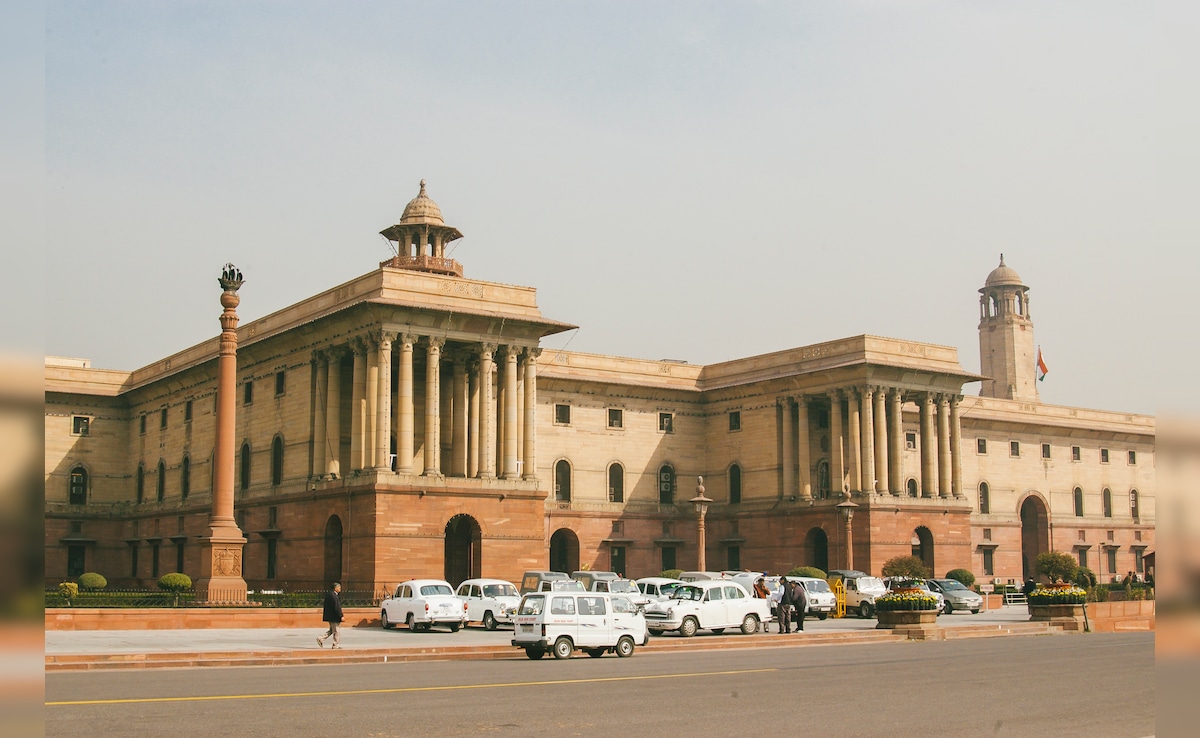
My earliest memories of these majestic structures date back to 1951. I was just seven years old when my small hand first traced the cool, pink sandstone of the North Block's steps. India had been independent for only three years, and my mother, Lilla Wagle Dhume, had just embarked on her career as a mid-level officer within the newly formed Government of India, posted in the Ministry of Home Affairs. Hailing from a middle-class Mumbai locality and educated in Marathi, my visits to her workplace were a revelation. To see her name, resplendent in brass lettering outside her first-floor room, filled me with a childish wonder: “Did my 'Ai' truly work in such an imposing place?”
Even at that tender age, the architecture left an indelible mark. It was regal, yet devoid of ostentation; solid, symmetrical, and unequivocally certain of its monumental place in the burgeoning republic. During those occasional visits, I would perch quietly in my mother's office, which offered a sweeping view of what was then Rajpath. I absorbed the subtle ballet of officialdom around me: the turbaned peons diligently ferrying files, the rhythmic hum of the low-hanging ceiling fan, and the hushed murmurs that defined the backdrop of crucial state affairs. These sensory details ingrained themselves, forming the initial contours of my understanding of power and public service.
This narrative is as much about the unwavering spirit of a remarkable woman as it is about the monumental buildings themselves. My mother, with her elegant Kanjivaram sarees, her distinctive flared woollen coat, and her purposeful high-heeled brown shoes, epitomized dignity and dedication. For sixteen years, the North Block was her professional home. As I matured, I began to grasp the profound nature of her work. She was instrumental in issuing the very letters of appointment on behalf of the Government of India to the pioneering batches of the Indian Administrative Service – the nascent “steel frame” designed to uphold the integrity and efficiency of our new republic. In those transitional years, the echoes of the former Indian Civil Service (ICS) era still resonated through the corridors, yet the files themselves pulsed with the palpable urgency of a nation striving to forge its unique administrative identity.
The North and South Blocks, conceived and erected as integral components of Edwin Lutyens' grand imperial vision for New Delhi in the early 20th century, underwent a quiet, yet profound, metamorphosis post-Independence. Their original symbolism of colonial command gracefully yielded to become the pulsating heart of a sovereign, democratic state. The very same domes and colonnades that once represented foreign rule now bore witness to decisions meticulously crafted and enacted “in the name of We, the People,” embodying the collective aspirations of a newly liberated nation. This architectural continuity, coupled with a fundamental ideological shift, underscored India's seamless, yet transformative, embrace of self-governance.
Decades later, a remarkable symmetry emerged in my own career. History, it seemed, had come full circle. I found myself joining the Ministry of Defence as a Director, my office situated within the hallowed South Block. My window gazed towards the Ministry of External Affairs, and just beyond lay the formidable presences of the Prime Minister's Office and the Cabinet Secretariat. If the North Block had inspired a child's wonder, the South Block, experienced through the eyes of an officer, commanded an entirely different level of reverence and responsibility. The endless red coir matting that lined its corridors seemed to stretch into infinity, a physical manifestation of the long, dedicated walk of public service. The ten-minute journey from my room to that of the Defence Secretary was not merely a measure of physical distance, but an eloquent statement of hierarchy, responsibility, and the intricate web of governance.
Within those formidable power corridors, every detail carried weight. I vividly recall the solemn, wood-panelled walls of the Defence Secretary's office, a space where I, alongside my colleagues, would be summoned for critical deliberations. The interiors of offices belonging to distinguished officers like SM Ghosh and PK Kaul are etched in my memory. The office of the then Raksha Mantri (Defence Minister), R Venkataraman, during particularly intense Parliament sessions, remains a vivid tableau. We operated under the constant expectation of absolute factual mastery, prepared to brief not the Minister directly, but through the vital intermediary of the Joint Secretary. My direct superior, Bhaskar Ghose, possessed a remarkable wit, adept at deflating pomposity with his uncanny imitations of the powerful, though always discreetly behind their backs. Yet, beneath the personal interactions, an unmistakable atmosphere prevailed. It was not one of mere pomp or overt intimidation, but a deep-seated consciousness that the decisions shaped within these rooms had direct, tangible consequences for our armed forces, for soldiers steadfastly stationed on icy, remote frontiers, and for their families residing in distant cantonments. This awareness imbued every task with profound importance.
I recall a specific instance: as a relatively junior Director, I was tasked with overseeing the implementation of free rations for armed forces personnel in non-field stations. Though the decision itself had already been made at a higher level, the temporary absence of my seniors meant that Defence Secretary PK Kaul entrusted this critical responsibility to me, as it fell under the Adjutant General's branch, part of my civilian oversight. We toiled late into the night, meticulously finalising the last intricate details of this important policy, a decision awaiting its formal announcement. It was I who had the singular honour of carrying the official file to the Prime Minister's Office, a moment that underscored the tangible impact of my work within this vast administrative ecosystem.
The Cabinet Secretariat represented another distinct echelon of power. Here, officers would ascend a slightly smaller, yet equally venerable, sandstone staircase. The waiting area offered a contemplative view of the courtyard leading to Rashtrapati Bhavan, India's presidential palace. This was a space where Secretaries to the Government of India, summoned by the 'CS' (Cabinet Secretary), awaited their turn, alongside other officers granted an audience with this pivotal figure. The anticipation in this antechamber was always palpable, a quiet hum of strategic thought and policy formulation.
The Cabinet Secretary's room itself, despite the immense authority it commanded, was strikingly modest. A small, square chamber, it eschewed elaborate trappings or theatrical displays of power. Its simplicity served as a potent, understated reminder: true authority requires no ostentatious ornament; it simply exists through the weight of its decisions and the integrity of its occupants. Over the decades, I participated in dozens of meetings within that very room, my roles evolving from Joint Secretary to Additional Secretary, and ultimately, to Secretary. I witnessed a succession of distinguished Cabinet Secretaries, each leaving an indelible mark.
Figures like PK Kaul, who carried an inherent dignity even in casual moments; TN Seshan, whose notoriously sharp eye once seemingly read a file I carried—upside down—though it bore no relation to his purview, startling me with his presence; VC Pande, the blunt and often amusing bachelor known for his startling remarks; Naresh Chandra, another confirmed bachelor, revered as the doyen of the civil service and an undisputed exemplar of our time; the impeccably dapper Prabhat Kumar; and the voluble TSR Subramanian. Each brought a unique facet of personality and leadership to that unassuming chamber, collectively shaping the course of national policy through their deliberations.
Intriguingly, throughout my extensive career in government, I never physically entered the Prime Minister's Office itself. Nevertheless, I was summoned on numerous occasions by various Principal Secretaries to the Prime Minister, including eminent personalities such as Satish Chandran, AN Verma, and SK Misra. The room where these crucial interactions took place, though often cramped, undeniably signified the ultimate arbiter of government policy, the final word that guided the nation's trajectory. It was a space where decisions of monumental consequence were distilled and given their definitive shape.
These venerable spaces — the North and South Blocks, the Cabinet Secretariat, the anterooms of the Prime Minister's Office — were never glamorous. They were often austere, sometimes cramped, yet they transcended their physical limitations. They were far more than mere workspaces; they were profound repositories of collective memory, unwavering continuity, and the immense, quiet weight of national decision-making. In the crisp Delhi winters, the sandstone seemed to absorb the fleeting warmth of the sun, radiating a timeless comfort. In the sweltering summers, the long corridors echoed faintly with the purposeful rhythm of footsteps and the distant, insistent ring of telephones — sounds that collectively formed the perpetual, vital background score of Indian governance, a symphony of duty and dedication.
Today, as the nation looks towards modernising its administrative infrastructure, with various ministries preparing to relocate to newer, more efficient complexes, a gentle ache resonates within me. Progress, undeniably, is an imperative; governments must adapt and evolve to meet contemporary challenges. Yet, for those of us who dedicated decades of our lives within the embrace of those very sandstone walls, these old buildings were never just utilitarian workplaces. They were living, breathing repositories of intertwined histories — both deeply personal and profoundly national. They held the echoes of past decisions, the spectres of countless debates, and the tangible sense of purpose that shaped generations of civil servants.
My journey, from a seven-year-old girl gazing with boundless wonder at the imposing North Block, to a senior officer engaged in high-level deliberations within the Cabinet Secretariat, has been inextricably woven into the very fabric of these iconic interiors. While the relentless march of time may see sandstone give way to the sleek modernity of glass and steel, for me, nothing can ever truly replace the quiet, enduring strength and the profound historical resonance of the seat of government as I first encountered it. It is a strength I witnessed not only as an awestruck child and a long-time visitor, but as an inhabitant, serving its purpose with dedication for nearly six decades. It is a legacy of unwavering commitment to “Nishkama Karma” — duty performed for duty’s sake — that I hope will continue to inspire generations to come.