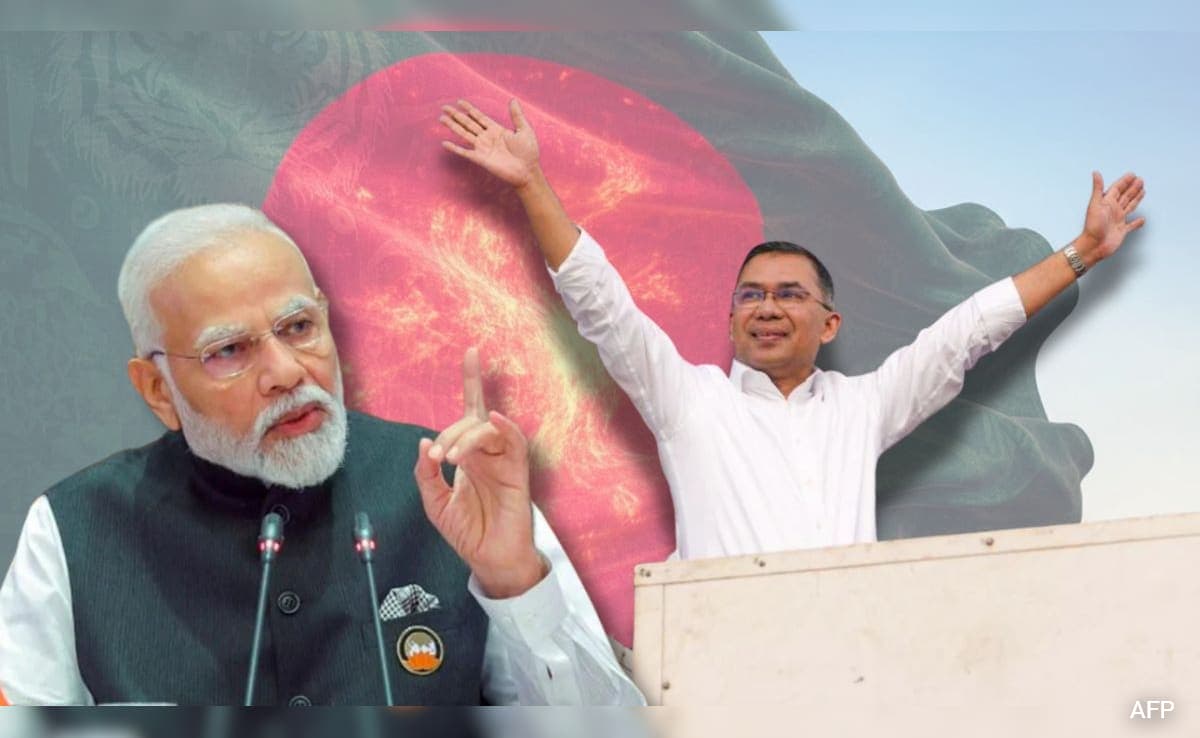
PM Modi Congratulates BNP's Tarique Rahman: "India Will Support Democratic, Inclusive Bangladesh"
By NewsDose Team
Updated on February 15, 2026
5 min read
Key takeaways
Bangladesh Election Results Live: PM Modi Congratulates BNP's Tarique Rahman: "India Will Support Democratic, Inclusive Bangladesh"
The political landscape of Bangladesh has undergone a significant transformation as the Bangladesh Nationalist Party (BNP) declares a sweeping victory in the nation's recent parliamentary elections. While the Election Commission awaits the final tally, party leader Tarique Rahman is widely expected to assume the mantle of Prime Minister, marking a pivotal moment for the South Asian nation.
Following the announcement, Indian Prime Minister Narendra Modi extended his immediate congratulations to Mr. Rahman and the BNP, acknowledging their "decisive victory." In a diplomatic gesture shared on a prominent social media platform, Prime Minister Modi remarked, "I convey my warm congratulations to Mr Tarique Rahman on leading BNP to a decisive victory in the parliamentary elections in Bangladesh. This victory unequivocally demonstrates the trust of the people of Bangladesh in your leadership."
The Indian premier further underscored India's unwavering commitment to its neighbor, stating that India would continue to stand in "support of a democratic, progressive and inclusive Bangladesh." He expressed eagerness to foster deeper bilateral ties, adding, "I look forward to working with you to strengthen our multifaceted relations and advance our common development goals." These remarks signal a proactive approach from New Delhi to engage with the newly elected government in Dhaka.
This congratulatory message from India's leadership is particularly noteworthy as it comes amidst a period of considerable flux in India-Bangladesh relations. The preceding interim administration, led by Chief Muhammad Yunus, saw a perceptible cooling of ties between the two nations. Concerns had mounted in Delhi regarding a deterioration in border security, a surge in undocumented migration into India – with significant political ramifications, especially ahead of crucial elections in West Bengal and Assam – and a troubling resurgence of anti-Hindu sentiments within Bangladesh.
The ousting of former Premier Sheikh Hasina, who fled to India on August 5, 2023, following widespread student unrest, had profoundly altered the geopolitical dynamics. Under Ms. Hasina’s Awami League government, Delhi and Dhaka enjoyed a robust and stable relationship. Her administration was largely perceived as 'pro-India,' prioritizing crucial areas such as trade facilitation, transport connectivity, stringent border security measures, and equitable water-sharing agreements, particularly concerning the Teesta river.
However, the return of the BNP to power brings with it a complex history that both nations must navigate. India's diplomatic circles recall the BNP's previous tenure from 2001 to 2006, a period marked by heightened cross-border insurgency and unsettling events like the 2004 Chittagong arms haul, which involved the illicit trafficking of substantial weaponry to anti-India militant groups.
Despite these historical precedents, Tarique Rahman has articulated a vision for a "reset" in bilateral relations. He has publicly pledged renewed cooperation on counterterrorism efforts, a commitment to resolving the long-standing Teesta water-sharing dispute, and a promise to ensure the protection and well-being of Hindu minorities in Bangladesh. While these assurances are welcomed, Rahman's emphasis on a "Bangladesh First" doctrine introduces an element of strategic re-evaluation, potentially moving away from the near-total alignment that characterized the Hasina era. The coming months will be crucial in observing how these pledges translate into concrete policy and shape the future trajectory of India-Bangladesh relations.