Video: Ilhan Omar Sprayed With Unknown Liquid While Condemning ICE Actions
By NewsDose Team
Updated on January 28, 2026
5 min read
Key takeaways
A man sprayed an unknown substance on Democratic US Representative Ilhan Omar and was tackled to the ground Tuesday during a town hall she was hosting in Minneapolis.
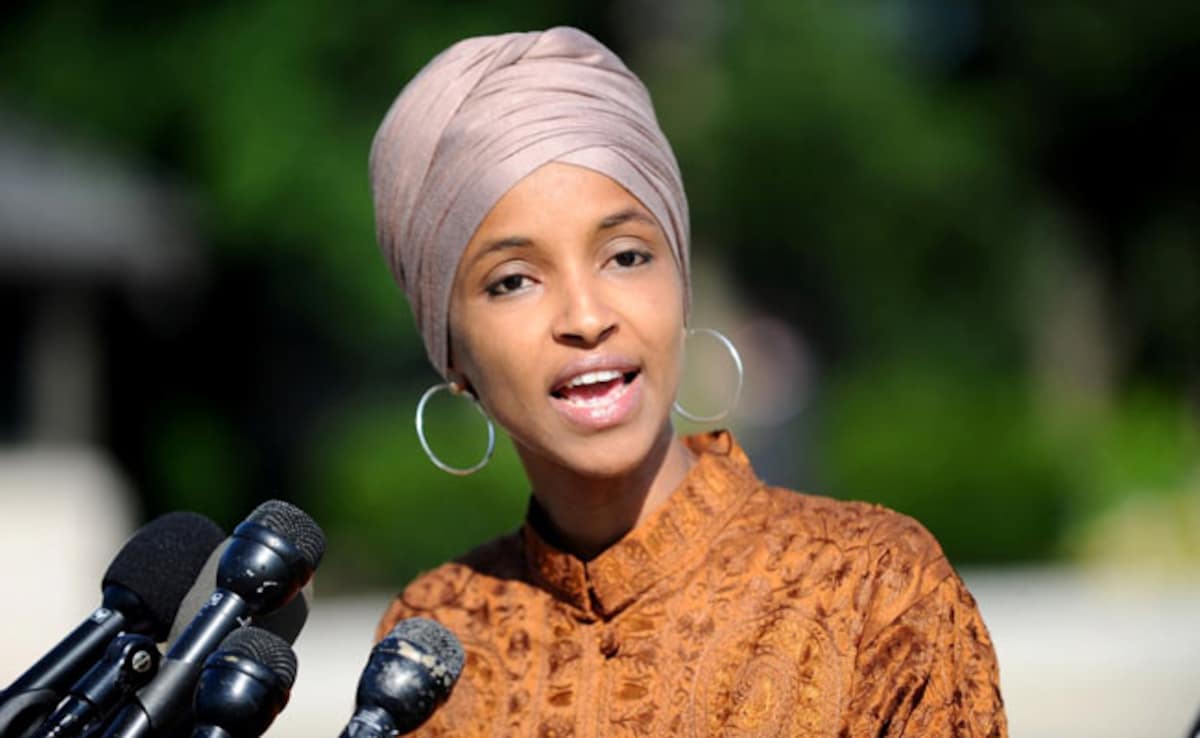
Minneapolis, MN – Democratic U.S. Representative Ilhan Omar was subjected to an alarming assault during a town hall meeting in Minneapolis, where an individual sprayed her with an unidentified substance. The incident, which saw the assailant quickly apprehended by security and audience members, unfolded against a backdrop of escalating tensions regarding federal immigration enforcement in the city.
Eyewitnesses described a chaotic scene where a man, carrying what appeared to be a syringe, approached Rep. Omar and discharged a liquid in her direction. The audience's gasps quickly turned to cheers as security personnel and attendees swiftly tackled the individual to the ground, restraining him while his arms were secured behind his back. The immediate reaction from the crowd underscored the shock and concern sparked by the sudden act.
The incident occurred moments after Representative Omar had delivered strong remarks, advocating for the abolition of U.S. Immigration and Customs Enforcement (ICE) and calling for the resignation of Homeland Security Secretary Kristi Noem. Omar had asserted, “ICE cannot be reformed,” reflecting a stance that resonates with many progressive voices but also ignites fierce debate.
Following the swift intervention, Minneapolis police confirmed that officers on site observed the man using a syringe to spray a liquid at Representative Omar. Authorities promptly arrested the suspect and booked him at the county jail on charges of third-degree assault. Forensic scientists were dispatched to the scene to collect evidence and analyze the unknown substance, providing critical support to the ongoing investigation.
Despite the jarring nature of the attack, Rep. Omar demonstrated remarkable composure, opting to continue the town hall meeting after the perpetrator was removed from the venue by her security detail. Journalists present reported a distinct, vinegar-like odor in the air after the man discharged the syringe. Later, Omar confirmed she was uninjured but felt somewhat flustered, stating she would undergo a medical screening as a precaution. Her defiant spirit was further evident in a message posted on a social media platform: “I’m ok. I’m a survivor, so this small agitator isn’t going to intimidate me from doing my work. I don’t let bullies win. Grateful to my incredible constituents who rallied behind me. Minnesota strong.”
The attack adds another layer of complexity to the already charged political atmosphere surrounding immigration policies, particularly in Minneapolis. The city has recently grappled with heightened unrest following fatal shootings involving federal agents and local residents, including an intensive care nurse and a mother of three, which have intensified calls for reform and accountability within federal immigration agencies.
The incident drew swift condemnation from across the political spectrum. U.S. Representative Nancy Mace, a Republican from South Carolina, expressed her dismay: “I am deeply disturbed to learn that Rep. Ilhan Omar was attacked at a town hall today. Regardless of how vehemently I disagree with her rhetoric - and I do - no elected official should face physical attacks. This is not who we are.” Similarly, Minneapolis Mayor Jacob Frey, a Democrat, denounced the act on a social media platform, stating: “Unacceptable. Violence and intimidation have no place in Minneapolis. We can disagree without putting people at risk.” He lauded the quick response of the police and reiterated that such behavior would not be tolerated in the city.
This event comes on the heels of another recent assault on a member of Congress, U.S. Representative Maxwell Frost, a Democrat from Florida, who was allegedly punched during the Sundance Film Festival. These incidents underscore a troubling trend of increasing threats against lawmakers, which U.S. Capitol Police data indicates have surged in recent years, reaching a peak around the January 6, 2021, attack on the Capitol. This hostile environment has reportedly led some elected officials to reconsider public engagements and even their political futures, citing the palpable chill it casts on their ability to connect with constituents.
Representative Omar, in particular, has long been a target of intense criticism and personal attacks from high-profile figures, including former President Donald Trump, who has frequently lambasted her. During a Cabinet meeting in December, Trump infamously referred to her as “garbage” and extended the insult to her associates. Just hours before the Minneapolis incident, while speaking in Iowa, the former President again singled out Omar, asserting that his administration would only admit immigrants who “can show that they love our country,” adding, “They have to be proud, not like Ilhan Omar.” He further disparaged her country of origin, dismissing it as a “disaster” and “not even a country.” Such rhetoric, while politically charged, inevitably contributes to an environment where public officials face increased vulnerability. The ongoing investigation will aim to uncover the motives behind the assault and shed light on the nature of the substance used, as the nation watches closely to see how the political discourse continues to evolve amidst these escalating tensions.