Trump Talk To G RAM G Act, Opposition Preps Attack As Budget Session Starts
By NewsDose Team
Updated on January 28, 2026
5 min read
Key takeaways
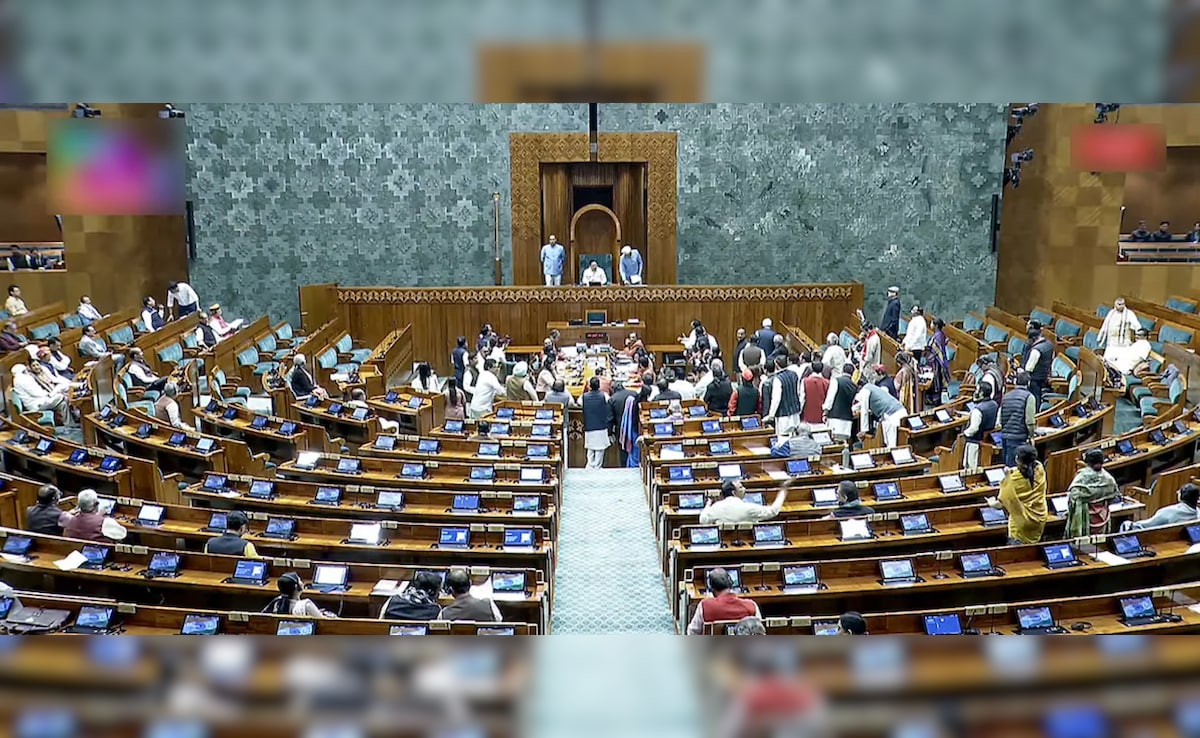
The first phase of the Parliament's Budget Session begins today with President Droupadi Murmu's address to the nation, days before the Narendra Modi government presents the Union Budget.
The hallowed halls of Parliament resonated with anticipation today as the first phase of the crucial Budget Session officially commenced, marked by a solemn address from President Droupadi Murmu. This traditional beginning sets the stage for weeks of intense legislative activity, culminating shortly in the presentation of the Union Budget by the Narendra Modi-led government – a pivotal moment for the nation's economic trajectory.
Scheduled to conclude its initial leg on February 13, this segment of the Budget session is brimming with an ambitious legislative agenda. However, beyond the formalities and financial blueprints, political observers and citizens alike are bracing for a robust confrontation as opposition parties signal their intent to vigorously challenge the Centre on a multitude of pressing issues. Among the key flashpoints expected to dominate parliamentary discourse are the evolving statements from a former US President concerning international trade dynamics, the intricate complexities surrounding the Special Intensive Revision (SIR) of voter lists, and the controversial implementation of the new G RAM G Act, which has superseded the venerable Mahatma Gandhi National Rural Employment Guarantee Act (MGNREGA).
Evidence of the impending political jousting was palpable during an all-party meeting convened yesterday, presided over by Defence Minister Rajnath Singh. During this critical pre-session huddle, opposition factions meticulously outlined an extensive roster of concerns and demands they plan to amplify throughout the Budget session, signaling their readiness to scrutinize government policies and accountability. While the initial segment of the session is inherently structured to prioritize budgetary discussions and related legislative tasks, the opposition's strategic maneuvering suggests that these wider issues will nonetheless find their way into the public and parliamentary spotlight.
The legislative calendar for the upcoming days is packed. Following the President's inaugural address today, the much-anticipated Economic Survey, offering a comprehensive overview of the nation's economic performance and outlook, is slated for release tomorrow. This Sunday promises another landmark event: Finance Minister Nirmala Sitharaman is poised to present the Union Budget for what will be a record ninth time, an unprecedented achievement that underscores her enduring influence on India's financial landscape. Post-Budget, both Houses of Parliament will engage in a thorough discussion on the Motion of Thanks to the President's Address, a debate that will culminate with Prime Minister Modi's comprehensive response. The first leg of this significant session will then draw to a close on February 13, with the second leg scheduled to recommence on March 9, promising further legislative action.
Delving deeper into the opposition's agenda, several specific concerns stand out. Lawmakers are particularly keen to seek clarity on the shifting stances of the US President regarding a trade agreement with India, an issue with significant geopolitical and economic ramifications. The replacement of MGNREGA by the G RAM G Act, a move that has drawn considerable criticism, is also high on the list, with opposition members questioning its efficacy and impact. Furthermore, the complexities and alleged irregularities arising from the Special Intensive Revision of voter lists in various states, coupled with accusations of central agencies being misused against opposition leaders, are expected to fuel fiery debates and demand for answers from the government.
Adding another layer to the diverse parliamentary agenda, an ally of the ruling NDA coalition, the Telugu Desam Party (TDP), is reportedly preparing to table a demand for a social media ban for individuals under the age of 16. This proposal highlights growing concerns about digital safety and youth well-being in the digital age. Moreover, the opposition may also seek to hold the Centre accountable for its perceived silence on crucial geopolitical developments unfolding in regions such as Venezuela and Greenland, urging the government to articulate its diplomatic stance on these international matters.
Despite the opposition's robust plans, the government appears to be holding a firm line, particularly concerning discussions on the SIR and G RAM G Act. Parliamentary Affairs Minister Kiren Rijiju has unequivocally stated that the Special Intensive Revision was exhaustively debated during the electoral reforms discussion in the previous Monsoon Session, suggesting a reluctance to revisit the issue. However, the Trinamool Congress (TMC), gearing up for crucial Assembly polls in West Bengal, is highly likely to press for a renewed discussion on SIR. There are strong indications that party chief and Chief Minister Mamata Banerjee may even lead a protest in Delhi to amplify this demand. Regarding the G RAM G Act, the government's consistent position is that it has now transitioned into established law, effectively closing the door on further legislative debate on its foundational aspects.
Interestingly, while other contentious issues are poised to ignite parliamentary fireworks, the highly debated new University Grants Commission (UGC) regulations, which have sparked considerable public controversy, are largely anticipated to not generate significant political upheaval within Parliament. This muted response from major political parties is largely attributed to a strategic decision to avoid alienating specific caste vote banks, who might be either beneficiaries or adversely affected by the regulations. While a handful of outspoken leaders, such as Priyanka Chaturvedi of the Shiv Sena (UBT), have voiced their concerns, and some individual MPs may attempt to raise questions, the UGC row is widely expected to remain a periphery issue, overshadowed by the more immediate and politically charged debates of this Budget session.