Israel's Netanyahu Says It Would Be "Mistake' To Hold Elections Now
By NewsDose Team
Updated on January 28, 2026
5 min read
Key takeaways
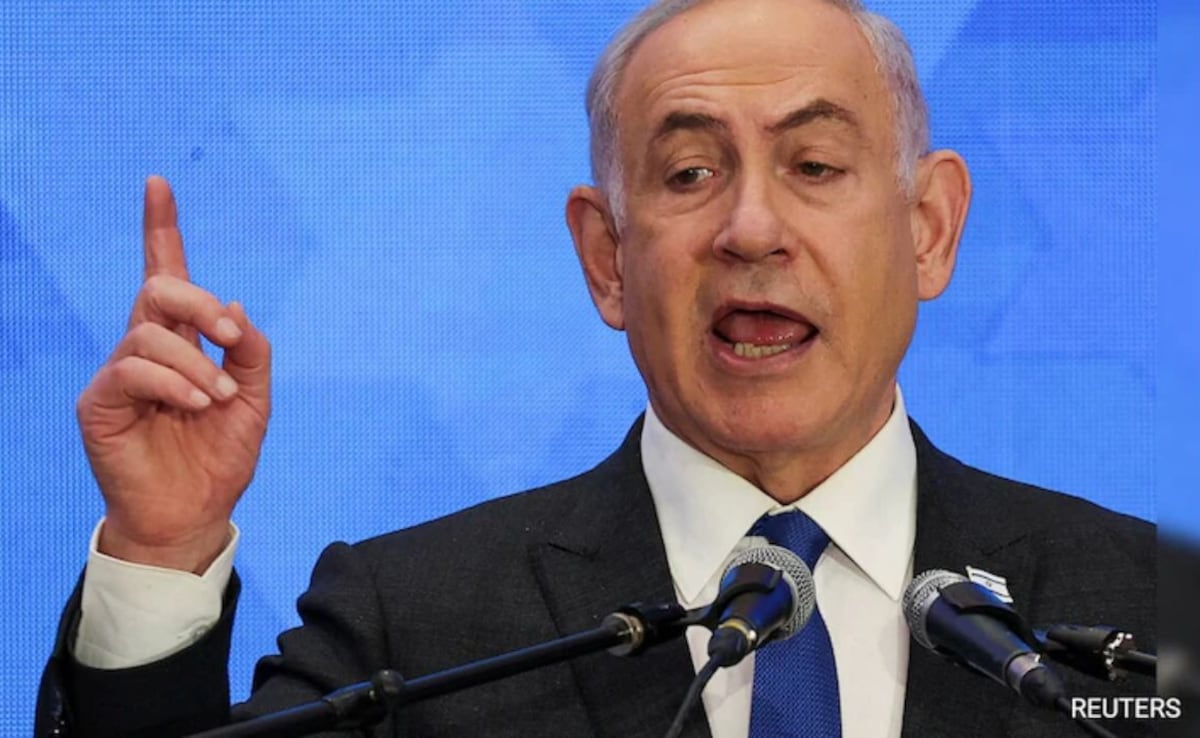
Israeli Prime Minister Benjamin Netanyahu said on Tuesday that holding elections now would be a "mistake", as he faces the possibility of a snap vote should he fail to pass a national budget.
In a period marked by significant political volatility, Israeli Prime Minister Benjamin Netanyahu has publicly cautioned against the immediate necessity of early elections, labeling such a move as a "mistake" given the nation's delicate state. His remarks come as Israel's parliament faces a critical deadline to pass the national budget, a process that could trigger a snap vote if not successfully navigated.
The impending budget reading, scheduled for Wednesday, represents a pivotal moment for Netanyahu's ruling coalition. Despite holding a parliamentary majority, its stability remains precarious, largely dependent on the wavering allegiance of former political allies. This fragile cooperation underscores the deep-seated divisions within the political landscape.
During a recent televised address, the veteran leader conveyed his palpable concern, stating, "Of course I'm concerned... I think we're in a very sensitive situation." The stakes are high: failure to ratify the budget by the March 31 deadline would automatically dissolve the current government and necessitate early elections, a scenario Netanyahu is keen to avoid.
"I think the last thing we need right now is elections. We'll have elections later on this year, but I think it's a mistake to have them now," he reiterated, emphasizing the importance of stability. While general elections are constitutionally mandated to occur by November, the threat of an earlier vote looms large over the political discourse.
Netanyahu, who leads the primary right-wing party, holds an unparalleled record as Israel's longest-serving premier, having accumulated over 18 years in office across multiple terms since 1996. He has consistently indicated his intention to seek re-election, a prospect that fuels the ongoing political machinations.
The coalition's vulnerability is further exacerbated by the demands of certain ultra-Orthodox factions, whose formal departure from the government last year left a significant void. Although these groups currently refrain from actively seeking to collapse the government, their support for the budget remains conditional. They are reportedly holding out for the premier to fulfill a pledge to enact legislation granting their community exemptions from military conscription, a contentious issue that has long divided Israeli society.
This latest political maneuvering unfolds against a backdrop of continuous societal unrest. Netanyahu's current term was inaugurated with a controversial judicial overhaul plan, which ignited months of widespread protests, drawing tens of thousands of citizens onto the streets almost daily. More recently, the nation has grappled with the profound impact of the conflict in Gaza, initiated by a devastating attack on October 7, 2023. The premier has faced escalating criticism from vast segments of society regarding his administration's handling of the conflict, particularly concerning the recovery of hostages.
The recent repatriation of the remains of Ran Gvili, the last hostage believed to be held in the Palestinian territory, concluded a harrowing chapter that had deeply affected the nation since the hostilities began. This development, while bringing a measure of closure, does little to alleviate the political pressures facing Netanyahu as he navigates a complex domestic and international environment.