If Sunetra Pawar Says No, Why Praful Patel Is Ajit Pawar's Likely Successor
By NewsDose Team
Updated on January 30, 2026
5 min read
Key takeaways
In Maharashtra's politics today, all eyes are on the Pawar family and power, specifically who would wield the power to run Nationalist Congress Party (NCP) following the death of Ajit Pawar.
The political landscape of Maharashtra is currently gripped by an intense leadership vacuum within the Nationalist Congress Party (NCP) following the untimely demise of prominent leader Ajit Pawar. As the party navigates this critical juncture, all eyes are fixated on the crucial question of succession: who will step into the formidable shoes to steer the NCP through its next chapter?
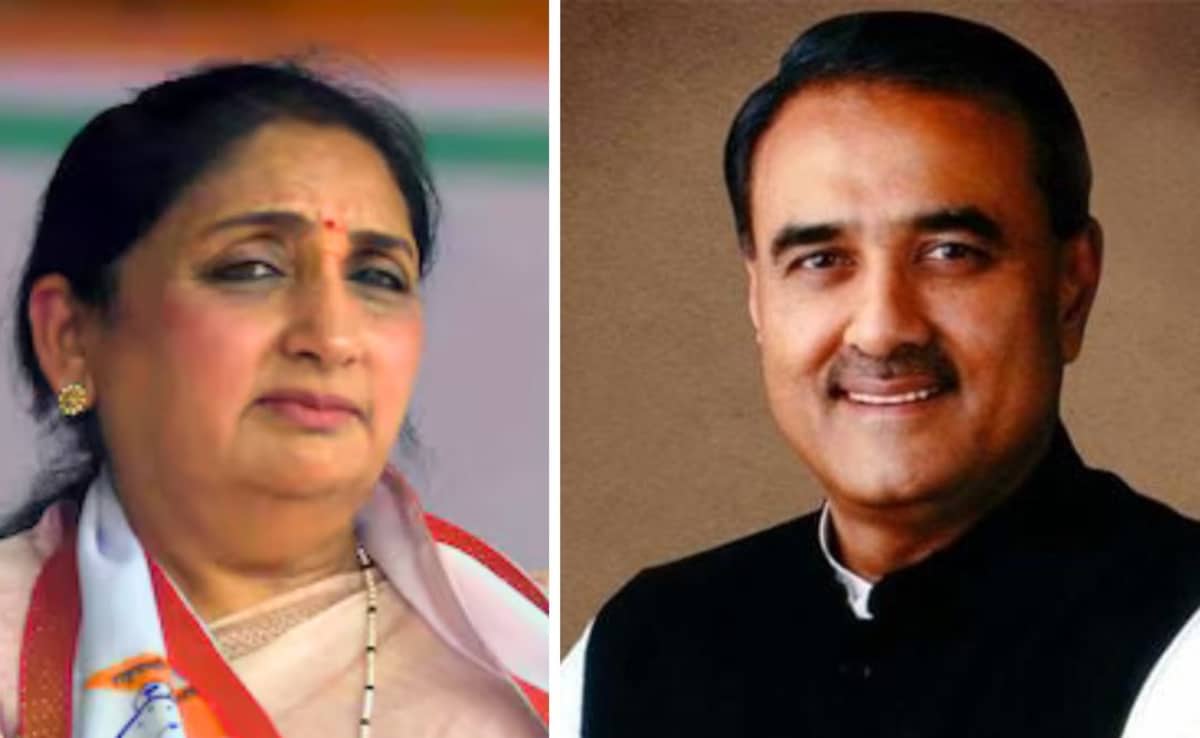
A significant chorus within the party ranks is advocating for Sunetra Pawar, Ajit Pawar's widow and a respected Rajya Sabha MP, to assume the dual mantle of NCP president and legislative party leader. Her proximity to the late leader and her existing political standing make her a natural frontrunner, symbolizing continuity and drawing on emotional resonance within the party base.
However, informed sources suggest that should Sunetra Pawar's appointment face unforeseen technical limitations or complex political considerations, veteran leader Praful Patel is being actively considered as a powerful alternative to take the party's helm. This proposition introduces a dynamic layer to the succession narrative, highlighting the strategic depth required to command a major political entity.
The argument for Praful Patel's leadership is multifaceted and compelling. He possesses a formidable reputation as a seasoned strategist and an adept troubleshooter, qualities deemed indispensable in the often-turbulent arena of state and national politics. His extensive network in Delhi is another significant asset. Having served as the Union Civil Aviation Minister from 2004 to 2011 during the United Progressive Alliance (UPA) government, Patel cultivated deep and enduring connections with top echelons across the political spectrum, including both ruling and opposition parties.
Crucially, his demonstrated ability to maintain a strong rapport with the Bharatiya Janata Party (BJP) leadership proved instrumental in ensuring the relevance and stability of the Ajit Pawar-led NCP faction within the National Democratic Alliance (NDA). When the NCP experienced its significant split, it was Praful Patel who meticulously managed the intricate legal challenges and spearheaded the arduous battle before the Election Commission from behind the scenes. His long-standing position as one of Sharad Pawar's closest strategists provided him with unparalleled insight into the party patriarch's maneuvers, equipping him uniquely to counter them effectively.
Patel's influence extends beyond the confines of traditional politics into the corporate world. His considerable reach and understanding of business dynamics are well-documented. Whether it involves mobilizing crucial resources for electoral campaigns or engaging in intricate negotiations with alliance partners, Praful Patel is widely acknowledged as a master practitioner of political chess, capable of securing advantageous outcomes for his party.
Throughout his illustrious political career, which spans several decades, Patel has held various critical portfolios. Beyond his tenure in Civil Aviation, he also successfully managed departments such as Heavy Industries and Public Enterprises from 2011 to 2014, showcasing his diverse administrative capabilities. His journey has been marked by consistent electoral success, having served as a Lok Sabha MP four times and a Rajya Sabha MP six times. This cumulative experience solidifies his stature as an exceptionally influential and profoundly experienced leader within the national political discourse.
Representing the Bhandara-Gondia constituency, he was elected to the 10th (1991), 11th (1996), 12th (1998), and 15th (2009) Lok Sabha. His extensive tenure in the Rajya Sabha commenced in 2000, followed by terms in 2006, 2014, 2016, 2022, and most recently, 2024. These repeated mandates underscore his political longevity and continued relevance.
Among his notable achievements, Praful Patel is credited with spearheading the modernization of the Indian aviation sector and orchestrating the significant expansion of Air India. These efforts garnered him prestigious accolades such as 'Aviation Minister of the Year' and 'Reformer of the Year' in 2005, reflecting his impactful leadership. Beyond specific ministries, he has long been regarded as one of Sharad Pawar's most trusted strategists, often hailed as a 'Chanakya' of coalition politics and opposition unity within the powerful corridors of Delhi.
His deep administrative acumen and profound understanding of governance are undisputed. Within the NCP itself, he commands widespread respect, making him a unifying figure during times of internal deliberation. Considering this confluence of experience, strategic prowess, and established influence, should the path for Sunetra Pawar to assume the top leadership position face insurmountable obstacles, Praful Patel stands as a highly meritorious and experienced politician fully capable of guiding the NCP forward.
The ongoing internal discussions within the NCP reflect this complexity. While some leaders have floated the idea of appointing Sunetra Pawar as Deputy Chief Minister, others firmly contend that only a leader of Praful Patel's caliber and extensive experience can effectively navigate the intricate and often volatile political equations that define Maharashtra's political landscape. The party finds itself at a pivotal juncture, where the choice of leadership will undeniably shape its future trajectory.
Meanwhile, Ajit Pawar's last rites were conducted with full state honors in Baramati, Pune, marking a somber end to an era and setting the stage for the party's impending leadership decision.