Opinion: Opinion
By NewsDose Team
Updated on January 28, 2026
5 min read
Key takeaways
The BJP's victories across regions (it won 23 of the 29 corporations), including the country's plum municipality, the cash-rich BMC, shows how deeply it has dug roots in a state once synonymous with the Congress, the Pawars and the Thackerays.
Maharashtra, a pivotal state in India's political and economic landscape, is currently undergoing a profound transformation, marked by significant shifts in its traditional power structures. Recent local body elections have unequivocally cemented the Bharatiya Janata Party's (BJP) position as the preeminent political force, signaling a departure from decades where established regional players held sway.
The BJP’s remarkable performance, securing victories in 23 out of 29 corporations, including the highly coveted Brihanmumbai Municipal Corporation (BMC)—the nation’s wealthiest civic body—underscores its deep-seated penetration across the state. This electoral success highlights how effectively the party has cultivated a robust presence in a region historically identified with the Congress party and formidable regional families like the Pawars and the Thackerays.
The implications of this political reordering are monumental. With Maharashtra now firmly under its influence, the BJP commands not only India's premier economic powerhouse, home to the financial capital and numerous corporate giants, but also the second most politically influential state after Uttar Pradesh, boasting a substantial 48 seats in the Lok Sabha. This strategic control provides the party with an unprecedented platform for national policy implementation and economic agenda setting.
A Grand Political Reset Unfolds
The diminishing influence of long-standing political entities and the ascent of new ones signify a comprehensive recalibration of power equations across the state. While the intricate details of Maharashtra’s evolving political, social, and economic fabric are still emerging, discernible trends from the recent electoral outcomes offer valuable insights.
One prominent development is the rise of a Brahmin face at the helm of Maharashtra politics, effectively displacing the Maratha community that has exerted a powerful grip on the reins of power for decades. This is a state that previously saw strong Maratha leaders such as Y.B. Chavan, Vasantdada Patil, and most notably, Sharad Pawar. The current political narrative now firmly places Chief Minister Devendra Fadnavis, a Brahmin, as the new central figure. Much of the BJP's recent electoral triumph is widely attributed to his astute political strategies, tireless campaigning, and his successful outreach efforts to non-Maratha communities, particularly the Other Backward Classes (OBCs), which proved instrumental in propelling the BJP to its dominant position.
Fadnavis's impressive political acumen and his decisive victory in Maharashtra also position him prominently in the national political discourse. He is increasingly seen as a potential successor in the post-Modi era, alongside other rising stars like Uttar Pradesh Chief Minister Yogi Adityanath and Union Home Minister Amit Shah, underscoring his growing stature within the national party hierarchy.
The Fading Echoes of the Pawar Dynasty
A second crucial outcome of the elections is the profound impact on the political landscape of Western Maharashtra's influential sugar belt, a region that historically served as the bedrock of Maratha power. The comprehensive defeat of both factions of the Nationalist Congress Party (NCP) – one led by the seasoned patriarch Sharad Pawar and the other by his nephew, Ajit Pawar, once considered his political heir – in their hitherto impregnable bastions of Pune and Pimpri-Chinchwad, has left the community facing a leadership vacuum.
Leveraging the robust support of the OBCs, who appear to have resonated strongly with the Hindutva ideology championed by the BJP, the party has successfully fragmented and thereby weakened the Maratha community's traditional influence. For a considerable period, the BJP has strategically eyed the immense wealth and power concentrated within the sugar and banking cooperatives, which have traditionally been controlled by the Maratha community. The current vulnerability of the Pawar family, coupled with an absence of an immediate, clear successor, presents the BJP with a unique and long-sought opportunity. This scenario enables the party to restructure a sector that has been vital to Maratha power and fundamentally alter the dynamics of the sugar belt, a region historically central to state politics.
Ajit Pawar’s Uncertain Trajectory
While Sharad Pawar is in the twilight of his illustrious political career, Ajit Pawar, despite his prominent role, faces a significantly challenging period. His decision to align with his uncle's faction, driven by the hope that a reunited family could regain control of the sugar belt, proved to be a considerable miscalculation. This strategic blunder has left him in a precarious position, seemingly adrift without clear political anchorage.
Ajit Pawar was never a figure warmly embraced by either the BJP or the Rashtriya Swayamsevak Sangh (RSS). His inclusion in the National Democratic Alliance (NDA) was primarily a tactical move aimed at undermining Sharad Pawar's influence. Compounding his current difficulties, there are now circulating reports suggesting that investigative probes by agencies like the Enforcement Directorate (ED), which had previously been suspended, may be reactivated. While it is true that no politician should ever be definitively written off, the immediate future for Ajit Pawar appears fraught with uncertainty and significant political hurdles.
Mumbai: A Persistent Challenge for Dominance
Mumbai, the state capital, remains a distinct and complex political arena, often operating on dynamics separate from the rest of Maharashtra. While the BJP can rightfully celebrate its achievement in dislodging the Thackeray family from the Brihanmumbai Municipal Corporation (BMC), an institution the family-led Shiv Sena had controlled for nearly three decades, the party must remain acutely aware of critical caveats that will undoubtedly shape future political developments in the city.
Despite its perceived triumph, the BJP secured only three more seats in the BMC compared to its performance in the 2017 elections. Crucially, its current majority in the corporation is contingent upon its alliance with the Eknath Shinde-led faction of the Shiv Sena, highlighting a continued reliance on coalition partners for urban governance.
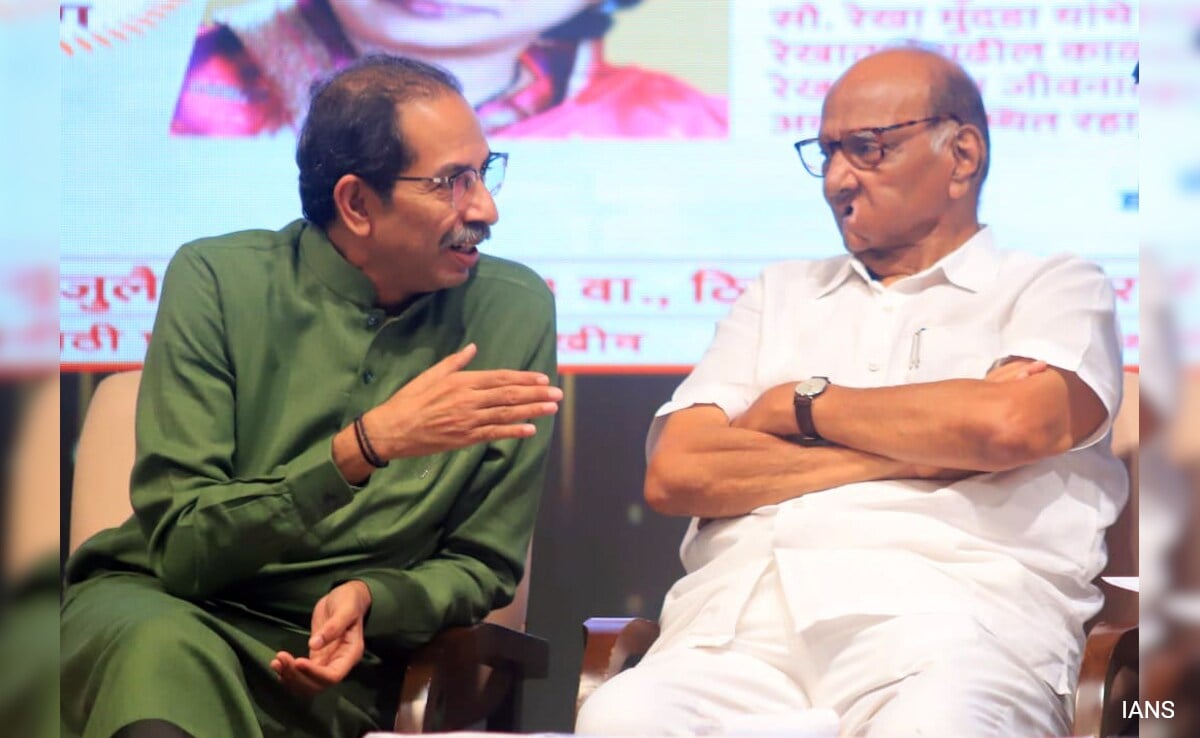
The BJP had harbored ambitions of decisively weakening Uddhav Thackeray and his faction of the Shiv Sena, much in the same vein as its success against the Pawars in Western Maharashtra. However, these aspirations largely fell short. Uddhav Thackeray demonstrated remarkable resilience, successfully holding onto his traditional strongholds within Mumbai's Marathi-speaking segments. He has consequently emerged as a potent opposition voice within the city. Indeed, political observers suggest that a different strategic alliance for Uddhav Thackeray, perhaps with the Congress rather than a brief reunion with his cousin Raj Thackeray, could have presented an even more formidable challenge to the BJP's ambitions in the metropolis.
The political landscape of Mumbai remains fluid and contentious. Eknath Shinde's faction is already engaging in complex negotiations and maneuvers with the BJP regarding crucial decisions, such as the selection of the next mayor. Concurrently, Uddhav Thackeray’s Shiv Sena continues to vigorously criticize Shinde, consistently reminding the public of the split that destabilized the party and led to the collapse of its government in 2021. It is becoming increasingly clear that the BJP will face significant hurdles in establishing the same level of control and dominance over Mumbai that it has successfully achieved in the state's hinterland.
The Expanding Footprint of the AIMIM
A fourth significant development poised to influence Maharashtra’s future politics is the burgeoning influence of Asaduddin Owaisi’s All India Majlis-e-Ittehadul Muslimeen (AIMIM). The party registered an impressive performance in the recent local polls, winning 121 seats across various corporations, including a noteworthy eight seats in Mumbai. The AIMIM effectively swept nearly all Muslim-dominated electoral belts, displacing the Congress as the primary choice for the community and relegating the Samajwadi Party to a distant second.
The presence and impact of the AIMIM are projected to grow substantially across Maharashtra, especially if the BJP continues to pursue its Hindutva agenda overtly. It will be particularly intriguing to observe how the AIMIM strategizes and expands its political operations beyond its traditional stronghold of Hyderabad, as it navigates the diverse political currents of Maharashtra.
Anticipating Future Political Dynamics
In conclusion, Maharashtra's political environment is set for continued dynamism and intense activity in the coming months and years. As the BJP meticulously plans to consolidate its recent gains and lay the groundwork for the upcoming 2029 Lok Sabha and state assembly elections, the state will undoubtedly witness further shifts in alliances, intensified political competition, and evolving voter alignments. The intricate interplay of established political forces, emerging leaders, and new social equations will ensure that Maharashtra remains a captivating and crucial arena in India's political narrative.