"Devastated": Supriya Sule Posts WhatsApp Status After 'Dada' Ajit Pawar's Death
By NewsDose Team
Updated on January 28, 2026
5 min read
Key takeaways
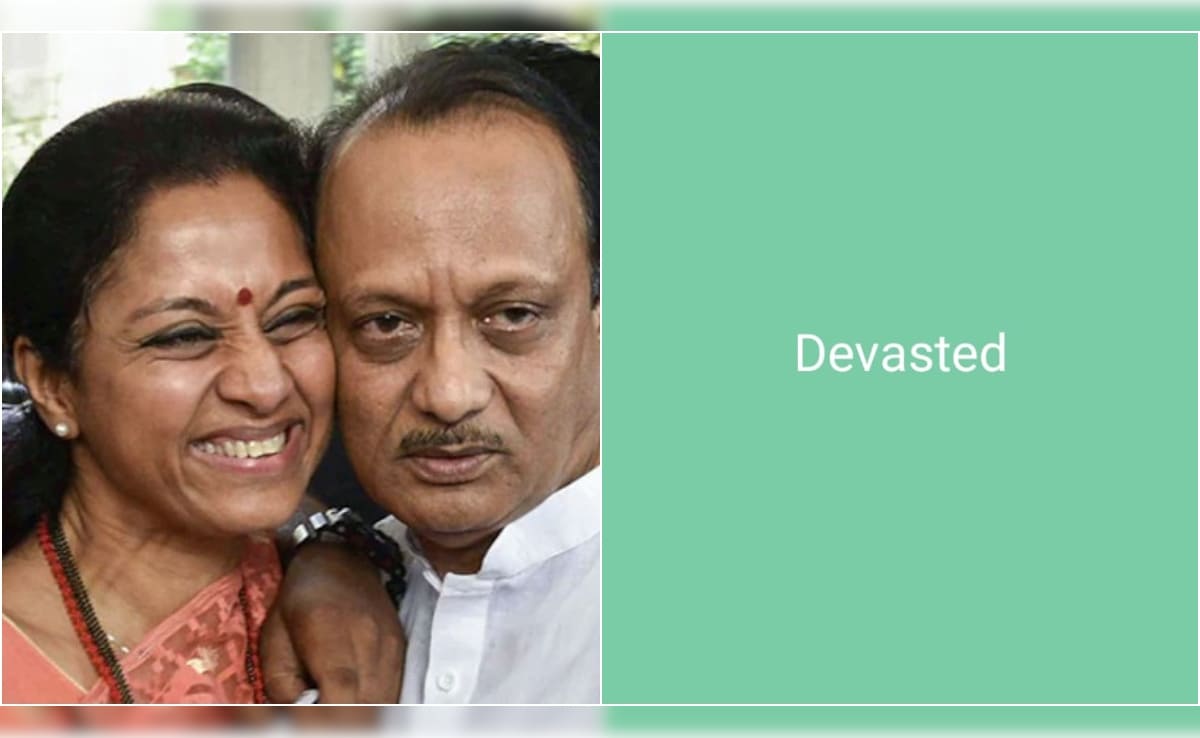
Nationalist Congress Party-Sharadchandra Pawar (NCP-SP) leader Supriya Sule said she was "devastated" by the tragic death of her "Dada" and Maharashtra Deputy Chief Minister Ajit Pawar, who died in an air crash in Pune's Baramati area.
Maharashtra's political landscape has been plunged into profound mourning following the tragic demise of Deputy Chief Minister Ajit Pawar in a devastating air crash. The incident, which occurred in the early hours in Baramati, Pune district, has sent shockwaves across the state and the nation, prompting an outpouring of grief from political leaders and citizens alike.
The Nationalist Congress Party-Sharadchandra Pawar (NCP-SP) leader, Supriya Sule, expressed deep sorrow over the loss, stating she was "devastated" by the tragic death of her "Dada." Pawar, aged 66, was en route to Baramati – incidentally Sule's constituency – from Mumbai to address crucial public meetings. These rallies were part of the intense campaign trail for the upcoming zilla parishad elections, slated for February 5, a critical electoral battle for all major parties in the state.
Reports from local authorities confirmed that the aircraft, carrying Deputy Chief Minister Pawar and five other individuals, crash-landed at Baramati airport around 8:50 AM. The catastrophic incident tragically claimed the lives of all six people on board, leaving an irreplaceable void in Maharashtra's leadership. Supriya Sule, accompanied by senior NCP leader Praful Patel, his wife Sunetra, and son Parth, immediately departed for Baramati upon receiving the harrowing news, underscoring the deep personal and political connections.
A Legacy Entwined with Maharashtra's Fabric
The Pawar family has, for many decades, stood at the very epicentre of Maharashtra's socio-political fabric. Their influence has been instrumental in shaping the cooperative movement, dictating the nuances of rural politics, and navigating the ever-shifting power equations in both Mumbai and Delhi. Ajit Pawar himself was a towering figure, known for his administrative acumen, assertive leadership, and a political style that often saw him take bold, sometimes controversial, stands. His demise marks the end of an era for a leader who significantly contributed to the state's development and political narrative.
The Complex Threads of Family and Politics
While fundamentally united at its core, the Pawar family experienced a very public and significant political schism in 2023. Ajit Pawar led a substantial faction of the Nationalist Congress Party, breaking away from his uncle, the revered patriarch Sharad Pawar, to align with the BJP-Shiv Sena alliance. This move dramatically altered the political landscape of Maharashtra and became a focal point of national political discourse.
At the time, many political analysts and critics suggested that the growing prominence and rise of Supriya Sule, Sharad Pawar's daughter, within the party ranks, contributed significantly to the perceived rift. Sule, a Member of Parliament representing Baramati and increasingly recognized as the national face of the NCP-SP, has often been lauded for her measured approach, effective communication skills, and a more nationally-oriented political outlook. In stark contrast, Ajit Pawar's political relevance was frequently defined by his pragmatic, often audacious, willingness to undertake significant political risks and navigate complex power plays.
Despite the highly publicized political division, Supriya Sule consistently maintained that their differences were ideological rather than personal. "Relationships shouldn't come in between politics. The fight between the Nationalist Congress Party (Sharadchandra Pawar faction) and Ajit Pawar's faction is ideological and not personal," she had stated emphatically during the period of the split. This sentiment of familial bond transcending political rivalry was recently reiterated by Sule prior to the Pune Municipal Corporation (PMC) elections, where she affirmed that there had never been any fundamental issues within their family unit.
Indeed, in a poignant display of this complex relationship, Ajit Pawar's Nationalist Congress Party had recently collaborated with his uncle Sharad Pawar's NCP (SP) faction to contest the critical municipal corporation elections in Pune and Pimpri Chinchwad. This alliance, formed despite the earlier split, highlighted the intricate dynamics and often unpredictable nature of Maharashtra politics, where family ties and political strategies frequently intersect.
The sudden and tragic loss of Ajit Pawar leaves a massive vacuum in Maharashtra's political arena. Leaders from across the spectrum have expressed condolences, acknowledging his immense contributions. The state now faces the challenge of grappling with this unforeseen leadership void, particularly as it heads into crucial local elections and prepares for larger electoral battles in the near future. The coming days will undoubtedly see intense political realignments and discussions as Maharashtra begins to chart its course without one of its most prominent and impactful figures.