"Devastated": Supriya Sule Posts WhatsApp Status After 'Dada' Ajit Pawar's Death
By NewsDose Team
Updated on January 28, 2026
5 min read
Key takeaways
Nationalist Congress Party-Sharadchandra Pawar (NCP-SP) leader Supriya Sule said she was "devastated" by the tragic death of her "Dada" and Maharashtra Deputy Chief Minister Ajit Pawar, who died in an air crash in Pune's Baramati area.
Maharashtra has been plunged into profound grief following the tragic demise of Deputy Chief Minister Ajit Pawar, who perished in a devastating air crash near Pune's Baramati area earlier today. The shocking incident, which claimed the lives of all six individuals on board, has sent ripples of sorrow across the state's political landscape, leaving colleagues, family, and constituents in deep mourning. This unforeseen tragedy marks a somber moment for Indian politics, particularly for a state where Ajit Pawar played such a pivotal role.
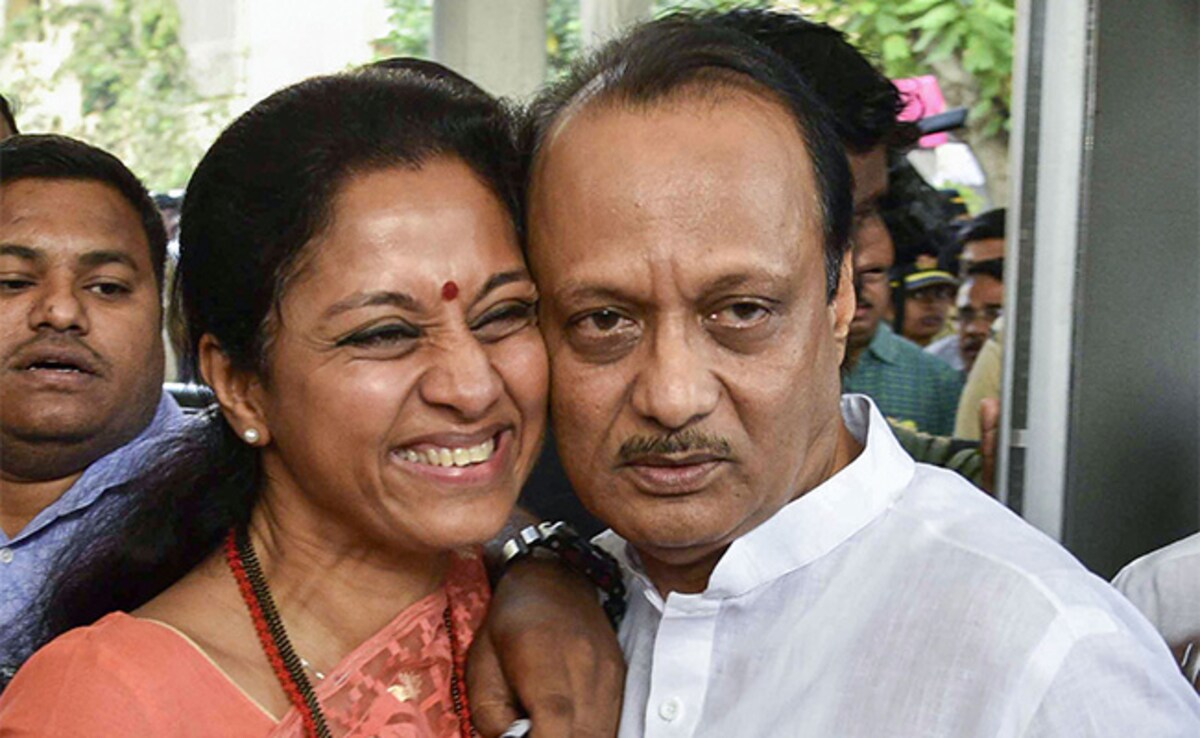
Nationalist Congress Party-Sharadchandra Pawar (NCP-SP) leader Supriya Sule expressed her overwhelming devastation at the loss of her "Dada." The emotional tribute from Sule, who is Pawar's cousin, powerfully underscored the deep personal bond that transcended political divides within the influential Pawar family. She, along with NCP leader Praful Patel, his wife Sunetra, and son Parth, immediately departed for Baramati upon hearing the tragic news, racing to the site where the aircraft carrying Pawar and five others crash-landed. Her WhatsApp status, simply stating "Devastated," resonated with countless citizens across the state.
The ill-fated aircraft met its tragic end at approximately 8:50 AM, according to initial reports from police officials. Ajit Pawar, aged 66, was en route to Baramati – incidentally, Sule's parliamentary constituency – from Mumbai. His journey was intended to include a series of critical public meetings, vital components of the campaign for the forthcoming February 5 zilla parishad elections across the state. The sudden and violent nature of the accident has prompted immediate investigations into its cause, with aviation authorities and local law enforcement working diligently to ascertain the sequence of events that led to the fatal impact.
For generations, the Pawar family has stood as an undeniable pillar in Maharashtra's political and cooperative movements. Their profound influence has permeated rural politics and consistently dictated shifting power equations both within Mumbai and at the national capital, Delhi. Despite this enduring unity at its core, the family experienced a highly publicised political schism in 2023. Ajit Pawar spearheaded a significant faction within the Nationalist Congress Party, ultimately breaking away from his uncle, the revered patriarch Sharad Pawar, to align with the formidable BJP-Shiv Sena alliance. This move reshaped the state's political dynamics and generated extensive national debate.
At the time of this monumental political realignment, critics often posited that the growing prominence of Supriya Sule, Sharad Pawar's daughter, within the party hierarchy contributed to the deepening rift. As a Member of Parliament representing Baramati and the emerging national face of the NCP, Sule was widely perceived as a measured, articulate, and nationally-focused leader. Ajit Pawar, in stark contrast, had carved out his distinct political identity through a reputation for bold, often controversial, and decisive actions, embodying a more grassroots and immediate political approach.
Despite the public nature of their political divergence, Supriya Sule consistently maintained that her personal relationship with her "brother" Ajit Pawar remained unaffected. "Relationships shouldn't come in between politics," she had affirmed at the time, clarifying that the struggle between the NCP and Ajit Pawar was fundamentally ideological, rather than a personal dispute. This sentiment was echoed more recently, ahead of the Pune Municipal Corporation (PMC) elections, where Sule reiterated the absence of any familial discord, highlighting the complex interplay of personal bonds and political necessity.
Remarkably, the political landscape saw a powerful testament to this underlying familial bond during the recent municipal corporation elections in Pune and Pimpri Chinchwad. Ajit Pawar's faction of the Nationalist Congress Party chose to contest these crucial elections in a strategic alliance with his uncle Sharad Pawar's NCP (SP). This collaboration, despite their earlier political split, underscored the complex and often interdependent dynamics that continue to define Maharashtra's political arena and the Pawar family's enduring legacy. His untimely passing leaves a significant void, not only for his immediate family and political allies but for the millions he served and the intricate political fabric of the state he so deeply influenced throughout his illustrious career.