The glitz and gab of Davos cannot disguise America's voluntary winding down
By NewsDose Team
Updated on January 24, 2026
5 min read
Key takeaways
International News: One year into Trump 2.0 — and one day after his speech at Davos iterating, with some caveats and eschewals of violence, his Greenland demand — how clo.
Amidst the pristine snows and gilded halls of Davos, where the world's elite convene for dialogues on global challenges, a disquieting truth lingers beneath the surface of diplomatic pleasantries and economic forecasts. The annual gathering, renowned for its intellectual gravitas and networking opportunities, struggled to mask an increasingly apparent reality: the United States appears to be in a phase of voluntary strategic retraction on the global stage, a trend sending ripples of uncertainty across international relations.
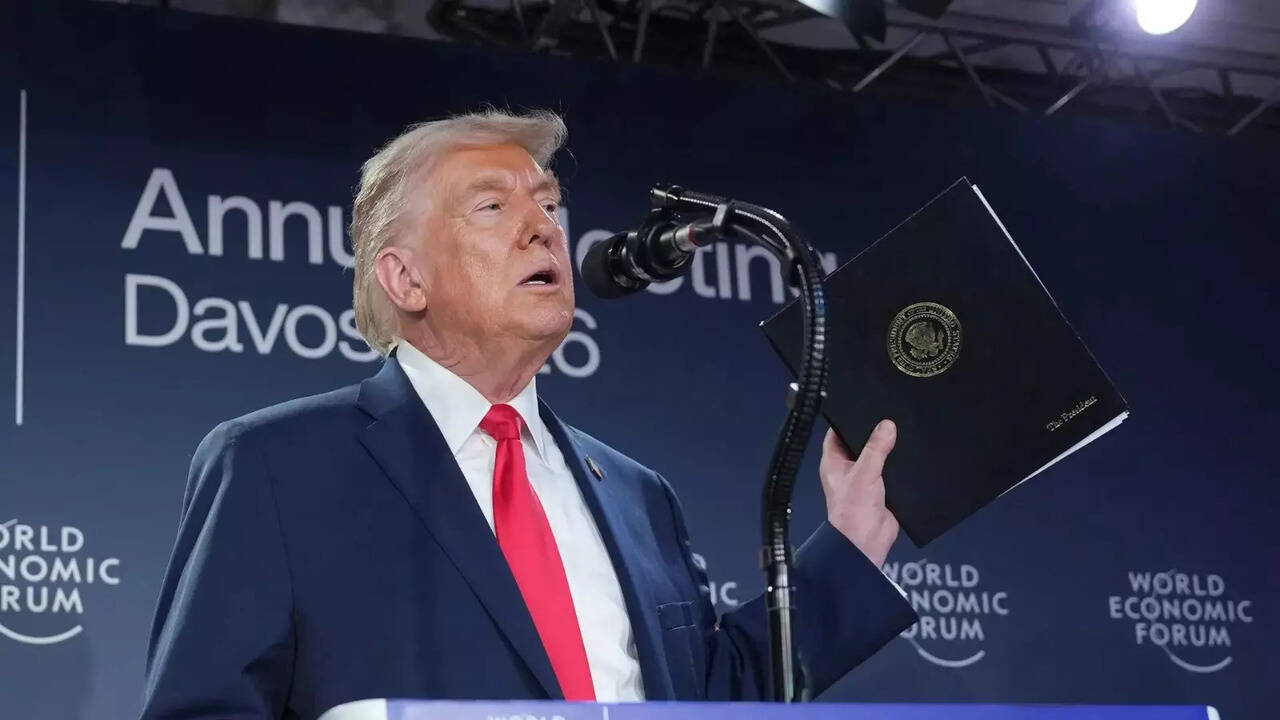
One year into what analysts are coining 'Trump 2.0,' the international community grapples with a persistent lack of clarity regarding American foreign policy. Even a high-profile address from the U.S. President at the World Economic Forum, while offering some tempered remarks and disavowals of aggression concerning past controversial demands like the acquisition of Greenland, did little to settle the pervasive sense of unease. Instead, it seemed to reinforce a pattern of strategic ambiguity that has become a hallmark of the current administration.
The President's operating philosophy, often perceived as a doctrine that deems nothing truly resolved until every previous arrangement is questioned or overturned, has effectively opened numerous new fronts on the geopolitical landscape. This approach has led to a continuous re-evaluation of long-standing alliances, trade agreements, and international commitments, leaving allies guessing and adversaries calculating their moves. From the intricate web of transatlantic relations to the delicate balance of power in the Indo-Pacific, traditional frameworks are being tested, and in some cases, dismantled.
The implications of such a strategy are far-reaching. Global institutions designed to foster cooperation and stability find themselves under unprecedented strain. The absence of a clear, consistent American presence in traditional leadership roles creates vacuums that other powers are eager to fill, potentially reshaping the future international order in unforeseen ways. The very notion of predictability, a cornerstone of stable global governance, has become a luxury rather than an expectation.
Observers and policy makers alike are left pondering the long-term consequences of this shift. Is this a deliberate recalibration of American priorities, or an impulsive unraveling of established foreign policy tenets? The answer remains elusive, shrouded in the unpredictable dynamics of a presidency that thrives on unsettling the status quo. What is certain is that the glittering facade of Davos, with all its earnest discussions and ambitious pledges, could not entirely obscure the profound questions hanging over America's global posture and the future of international stability.