What Went Wrong For Hardline Jamaat-E-Islami In Bangladesh Elections
By NewsDose Team
Updated on February 15, 2026
5 min read
Key takeaways
In the weeks leading up to Bangladesh's general election on February 12, few parties projected confidence as assertively as the Bangladesh Jamaat-e-Islami.
In the crucial weeks leading up to Bangladesh's general election on February 12, few political entities projected an aura of self-assured confidence quite like the Bangladesh Jamaat-e-Islami. Before the ballots were cast, political analysts and observers within Dhaka's vibrant landscape openly speculated about the possibility of the party achieving its most formidable electoral performance since the nation gained independence. Jamaat itself proactively signaled its readiness not merely to participate but to contend seriously for a central role in national governance, aiming for significant power.
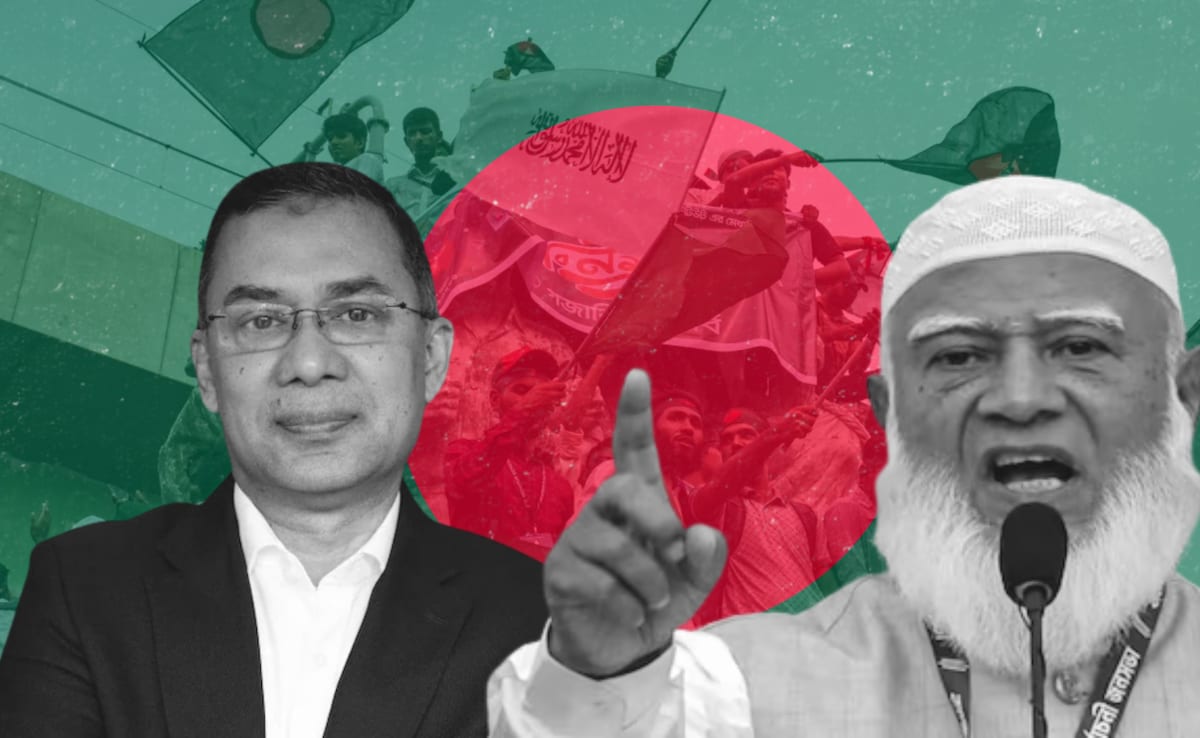
However, as the Bangladesh Nationalist Party (BNP), under the leadership of Tarique Rahman, swiftly declared a decisive victory and various foreign governments began extending their congratulatory messages, Jamaat adopted a strikingly different and more cautious stance. On Friday, the day immediately following the nationwide voting, the party issued a public statement expressing "serious questions about the integrity of the results process."
"We are profoundly dissatisfied with the procedures surrounding the announcement of the election results," Jamaat communicated in its statement, further noting that official, comprehensive results had not yet been formally released. The party urged "everyone to remain patient" amidst the evolving political climate, highlighting their reservations about the electoral transparency and outcome.
Despite Jamaat's appeals for patience and scrutiny, the immediate political momentum unmistakably appeared to be with the BNP. The BNP-led alliance triumphantly claimed a decisive mandate in what marked the country's first general election since the transformative and often deadly uprising of 2024, an event that fundamentally reshaped Bangladesh's established political order. Consequently, its charismatic leader, Tarique Rahman, is now prominently poised to assume the high office of prime minister, signaling a new chapter in Bangladeshi governance.
By 4 pm on election day, preliminary reports indicated that the BNP-led alliance held a significant lead in 125 out of the 299 constituencies where elections had been successfully conducted. In stark contrast, the coalition spearheaded by the Jamaat-e-Islami was reportedly leading in approximately 50 constituencies, a figure that fell considerably short of their ambitious pre-election projections and expectations. This early tabulation provided the first clear signs of a potential electoral upset for Jamaat.
Even before the final, authenticated tallies were officially announced by the Election Commission, the United States embassy in Dhaka moved swiftly to congratulate Rahman and the BNP for what it characterized as an "historic victory." This early recognition by a major international power further cemented the perception of BNP's success and added to the pressure on other political actors to accept the preliminary outcomes.
For Jamaat, the unfolding election results represented a profound and sharp reversal of the high expectations they had carefully cultivated and nurtured. The party had anticipated a much stronger showing, buoyed by recent political developments and a perceived surge in public support, making the final tally a bitter disappointment.
Early Advantage That Dissipated
In the immediate aftermath of the tumultuous student-led uprising in July 2024, which ultimately led to the dramatic ouster of the Awami League government, Jamaat was widely perceived as possessing significant organizational momentum. The party had played a pivotal role, emerging as a key force in the widespread street protests and demonstrations that culminated in the fall of Sheikh Hasina's long-serving administration. Their active participation and visibility during this period seemed to position them advantageously for future political gains.
With the Awami League subsequently banned from contesting the upcoming elections, and its long-standing leadership effectively removed from power, the political field narrowed considerably. This created an unprecedented opening for other parties. For the first time in many years, Jamaat found itself operating not from the political margins, but with a renewed sense of legitimacy and an opportunity to compete more directly for power.
There was also a clear tactical opening that Jamaat initially exploited. Tarique Rahman's entry into the fiercely contested electoral race came relatively late in the campaign cycle. For a crucial period, Jamaat strategically benefited from this delay, diligently working to consolidate support in numerous constituencies where the BNP's formidable campaign infrastructure had not yet fully mobilized or established its presence. This early head-start allowed Jamaat to build a foundation of support.
However, that perceived early advantage proved to be fleeting and temporary. As the electoral campaign intensified across the nation, several key voter blocs that Jamaat had strategically hoped to attract and win over began to shift their allegiance decisively elsewhere. This unforeseen movement of voters proved detrimental to Jamaat's ambitions.
A significant number of young Bangladeshis, many of whom had been the driving force behind the impactful July uprising, chose to cast their votes overwhelmingly for the BNP rather than for Jamaat. Similarly, women voters did not migrate towards Jamaat in the substantial numbers its leadership had optimistically anticipated. Moreover, crucial minority communities, including the Hindu population, rallied strongly behind the BNP, further eroding Jamaat's potential support base.
Crucially, even those Awami League voters who opted to participate in the election, despite their party's ban, did not migrate to Jamaat. Instead, in a significant political realignment, they largely transferred their support to the BNP, effectively consolidating the anti-Awami League vote around Rahman's party and diminishing Jamaat's share.
The Diplomatic Dimension
Jamaat's campaign unfolded against a complex backdrop, notably influenced by reports circulating about foreign diplomatic efforts to increase engagement with the party. These reports, citing obtained audio recordings, suggested a quiet outreach initiative by diplomats, indicating a nuanced shift in international relations. It was also reported that a foreign diplomat had reportedly downplayed concerns regarding Jamaat's potential intent to impose its specific interpretation of Islamic law, aiming to reassure international partners.
The dissemination of these reports dramatically altered the tone and dynamics of the entire election campaign. Allegations of external influence became a focal point for political debate and scrutiny, adding another layer of complexity to an already tense election.
A senior BNP leader and Secretary General, during a lively election roadshow in Thakurgaon, publicly alleged that Jamaat had forged a clandestine understanding or 'secret deal' with a major foreign power. This leader warned emphatically that any such arrangement could potentially pose severe risks to Bangladesh's long-term peace, its cherished stability, and its national sovereignty, sparking widespread concern and debate.
While Jamaat did not formally confirm any specific deal, the party continued its diplomatic engagements without interruption. It strategically framed its numerous meetings with foreign envoys as routine, standard discussions held in preparation for the Thirteenth National Parliamentary Election. This narrative aimed to normalize their international interactions and dispel accusations of impropriety.
In an official statement released after a significant meeting with Western diplomats, Jamaat reported that discussions were conducted in a "very cordial and friendly atmosphere." The topics covered included crucial aspects of ensuring a "free, fair, and acceptable" election, as well as broader issues of mutual interest between Bangladesh and the diplomatic community. Both sides, the statement highlighted, expressed fervent hope that the upcoming election would strengthen democratic principles and institutions within Bangladesh, and that trade, commerce, and cooperation would experience renewed dynamism.
Further emphasizing their international outreach, the French ambassador to Dhaka, Jean-Marc Sere-Charlet, accompanied by Deputy Ambassador Frederic Inza and Economic Adviser Julien Dure, also held a high-profile meeting with Jamaat's leader, Shafiqur Rahman, at the party's central office. Jamaat characterized this meeting in similar positive terms, noting productive discussions centered on the impending election and the prospects for mutual cooperation between Bangladesh and France.
Rebranding A Complex Past
Founded in 1941 by the esteemed Islamic scholar Syed Abul Ala Maududi, Jamaat-e-Islami holds a contentious place in Bangladesh's historical narrative. The party notably opposed Bangladesh's independence during the pivotal 1971 Liberation War, aligning instead with West Pakistan. Its leaders were controversially involved in the formation of paramilitary groups such as Razakar, Al-Badr, and Al-Shams, organizations accused of perpetrating horrific atrocities, including the killing of thousands of civilians, the systematic rape of hundreds of thousands of women, and the deliberate targeting of the Hindu minority community.
Following Bangladesh's hard-won independence, the party was initially banned in 1972 on grounds of misusing religion for political purposes. This ban was subsequently lifted in 1979, allowing Jamaat to re-enter the political arena. Over the years, the party formed significant political coalitions with the BNP and even held ministerial positions in various governments, demonstrating its enduring political influence despite its controversial past.
Under Sheikh Hasina's Awami League government, which held power from 2009 to 2024, Jamaat leaders faced intense prosecution before the International Crimes Tribunal, established to address wartime atrocities. Several senior figures, including Motiur Rahman Nizami and Ali Ahsan Mohammad Mojaheed, were ultimately executed for their roles in the 1971 war. In 2013, the Bangladesh High Court further complicated Jamaat's standing by canceling its registration, citing inherent conflicts with the nation's constitution.
Despite these severe setbacks and political isolation, Jamaat's student wing, Islami Chhatra Shibir, remained remarkably active throughout this turbulent period. It frequently engaged in clashes with rival student groups and maintained considerable influence within numerous madrassas, showcasing the party's resilient grassroots organizational capacity. For approximately 15 years, Jamaat effectively operated under a cloud of political isolation, largely excluded from formal electoral politics.
However, the landscape dramatically shifted following the July 2024 uprising, effectively ending Jamaat's extended period of isolation. The party swiftly reorganized, making a calculated re-entry into formal politics. It embarked on a strategic rebranding effort, meticulously presenting itself as "pro-Uprising" and "anti-fascist," attempting to align with the revolutionary spirit of the recent protests. In a notable move to broaden its appeal, Jamaat began promoting minority rights, even fielding its first-ever Hindu candidate, and visibly moderated its public references to Sharia law, signaling a more inclusive stance.
In a series of campaign speeches designed to project a forward-looking image, Shafiqur Rahman passionately declared: "Together – women and men – we will build the Bangladesh of tomorrow." He further warned that violence against women would be unequivocally not tolerated under their governance and pledged that once true justice was established, systemic corruption, widespread extortion, terrorism, murder, rape, and bank robbery would cease to plague the nation. He ardently called for the creation of a "justice-based, discrimination-free Bangladesh," urging voters to wholeheartedly support the candidates of the 10-party alliance spearheaded by Jamaat.
Rahman also strategically sought to draw a clear contrast between Jamaat and the BNP, articulating that if his 10-party alliance were elected, "the victory will not belong to any family or party, but rather, the victory will belong to the people." This message aimed to position Jamaat as a truly democratic alternative, free from dynastic politics or partisan self-interest.
Despite these concerted efforts to rebrand and modernize its image, several deeply entrenched public perceptions continued to significantly shape how Jamaat was viewed by the electorate. The party's historical advocacy of Sharia-based laws, its controversial past opposition to women's rights reforms, persistent allegations of political violence frequently linked to its student wing, long-standing concerns from minority communities over previous attacks, and accusations of financial misconduct among its leadership all served as potent reminders of its complex legacy, posing significant challenges to its quest for broader acceptance and trust.
The recent election results, therefore, represent a critical moment for Jamaat, highlighting the enduring struggle to reconcile its contentious past with its aspirations for a mainstream political future in Bangladesh. The outcome suggests that while the post-uprising landscape offered a window of opportunity, the party's journey towards widespread public trust and electoral dominance remains an uphill battle, marked by the persistent shadow of its history.