Shankaracharya vs Yogi Adityanath Escalates, Ayodhya Bureaucrat Resigns
By NewsDose Team
Updated on January 30, 2026
5 min read
Key takeaways
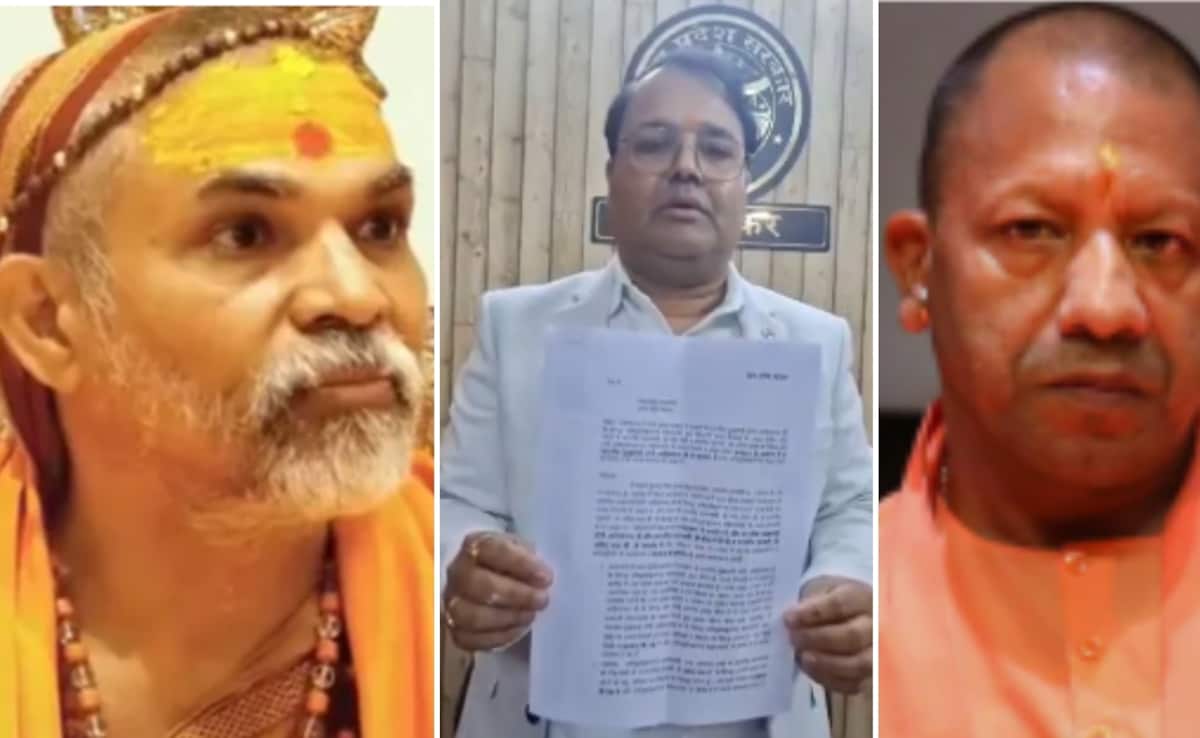
In a sharp escalation of the row involving Shankaracharya Swami Avimukteshwaranand Saraswati and Yogi Adityanath, an Ayodhya bureaucrat has resigned, saying he is doing this in support of the Uttar Pradesh chief minister, the PM and the Constitution.
A significant development has unfolded in Uttar Pradesh, adding another layer of complexity to the ongoing political and religious discourse. Prashant Kumar Singh, the Deputy GST Commissioner in Ayodhya, has tendered his resignation, citing an inability to tolerate what he describes as insults directed towards Chief Minister Yogi Adityanath, Prime Minister Narendra Modi, and the broader democratic framework. This resignation comes amidst a charged atmosphere, fueled by a high-profile verbal spat between CM Adityanath and Shankaracharya Swami Avimukteshwaranand Saraswati, coupled with a contentious debate surrounding new regulations from the University Grants Commission (UGC).
The roots of this escalating tension can be traced back to an incident earlier this year during the revered Magh Mela in Prayagraj. Shankaracharya Swami Avimukteshwaranand Saraswati and his devotees alleged that they were unjustly prevented from taking a holy dip at the Sangam, a sacred confluence of rivers. The local administration, however, presented a different account, stating that the Shankaracharya's chariot procession was halted to avert a potential stampede in the heavily crowded area. They clarified that he was requested to proceed on foot, in line with the practice followed by countless other pilgrims.
This administrative intervention sparked immediate outrage from the Shankaracharya, who condemned it as a profound insult to religious traditions and spiritual leaders. What began as a local dispute quickly spiraled into a public exchange of sharp words between the revered seer and Chief Minister Yogi Adityanath. Without directly naming the Shankaracharya, CM Adityanath made a veiled reference to 'Kalanemi,' a demon from the epic Ramayana known for impersonating a saint to deceive Lord Hanuman. This biblical allusion intensified the friction, drawing lines between religious authority and political governance.
Responding to the Chief Minister's pointed remarks, Shankaracharya Swami Avimukteshwaranand Saraswati did not mince words. He emphasized that as a politician now occupying the highest office in Uttar Pradesh, Yogi Adityanath should focus his attention on critical issues such as education, healthcare, law and order, and the overall prosperity of the state. The Shankaracharya firmly asserted that matters of religion and spiritual ethics should be the exclusive domain of seers and religious leaders, not politicians. He questioned the appropriateness of a Chief Minister delving into religious interpretations like 'Kalanemi' instead of concentrating on governance, stating, "A politician who is the chief minister doesn't talk about education, health, law and order, or the state's prosperity. He talks about Kalanemi and religion and irreligion. How appropriate is this? The chief minister should discuss the prosperity of his state. The issue of religion should be left to religious leaders."
Further complicating the landscape, the Shankaracharya also weighed in on the contentious new rules introduced by the University Grants Commission. These regulations mandated the establishment of special committees, dedicated helplines, and monitoring teams specifically designed to address complaints, particularly from students belonging to Scheduled Caste (SC), Scheduled Tribe (ST), and Other Backward Class (OBC) categories. While intended to promote inclusivity and address grievances, these rules have been met with significant backlash from general category students and numerous political figures who argue that the framework could inadvertently foster discrimination against them.
Criticizing the UGC's initiative, the Shankaracharya articulated a strong viewpoint, stating, "No caste is inherently unjust; it is individuals who act unjustly. Every caste has both good and bad people. An individual may commit injustice, but no caste as a whole can be labelled just or unjust. By pitching one caste against another, you are taking a misguided step. This could cause great harm to Hinduism. Therefore, this law should be immediately repealed." His commentary underscored a deep concern about the potential for social division and disharmony within the Hindu community, adding another layer to the intricate web of controversies.
It was against this backdrop of heightened religious and political tensions that Deputy GST Commissioner Prashant Kumar Singh announced his resignation. On Tuesday, he explicitly stated his inability to tolerate what he perceived as an "insult" to Chief Minister Yogi Adityanath, Prime Minister Narendra Modi, and others. Singh’s resignation letter and subsequent statements made his motivations clear: "I have resigned in support of the government, the chief minister, Prime Minister, Home minister, the Constitution and democracy, and in accordance with the rules for government employees. I have been pained by Avimukteshwaranand's unrestrained comments, which are aimed at dividing society."
Singh further elaborated on his profound loyalty to the incumbent government, likening it to his 'annadata' (food provider) and expressing a sense of deep indebtedness. He asserted that his duty extended beyond merely drawing a salary, emphasizing his moral obligation to defend the democratically elected leadership. "This government is my 'annadata'. I am indebted to it ('maine iska namak khaya hai'). It is not my duty to keep drawing salary like a robot. Yogi Adityanath is a democratically elected chief minister and I cannot tolerate this insult," Singh declared, highlighting the emotional and ideological weight behind his decision. The bureaucrat also expressed his distress over the politicization of the UGC issue, reiterating his conviction to dedicate himself to social work once his resignation is officially accepted. This dramatic departure from public service underscores the intensity of the political and cultural currents currently shaping Uttar Pradesh.