'Maharashtra Politics Weaker, Directionless Without Ajit Dada': Uddhav Sena's Mouthpiece
By NewsDose Team
Updated on January 30, 2026
5 min read
Key takeaways
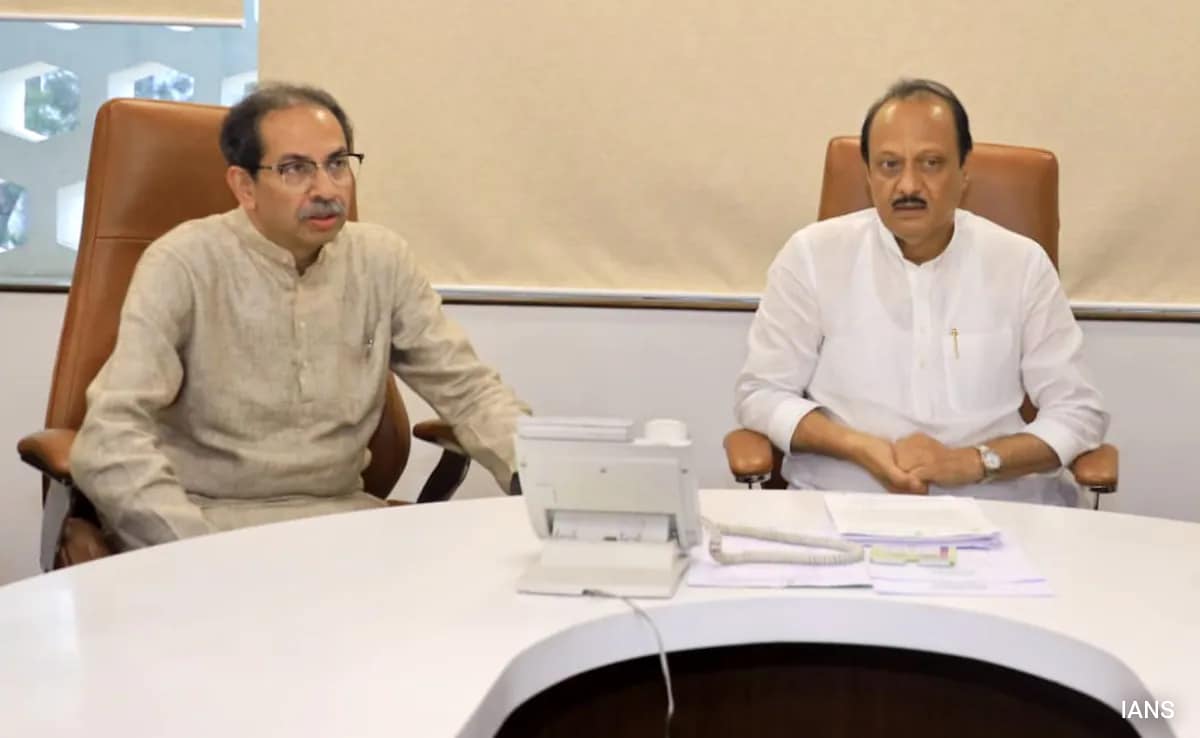
Shiv Sena (UBT) mouthpiece Saamana said the death of Ajit Pawar was a cruel blow to Maharashtra.
Maharashtra has been plunged into profound mourning following the untimely demise of its seasoned political stalwart, Ajit Pawar. The influential leader, who served as Deputy Chief Minister, left an indelible mark on the state's political landscape, his passing sending shockwaves across the region and leaving a palpable void in public life.
Widely regarded as a natural leader, Ajit Pawar demonstrated remarkable independence and strategic acumen, even while initially operating under the formidable shadow of his uncle, the veteran politician Sharad Pawar. His sudden departure is being universally described as a cruel blow to Maharashtra, depriving the state of a strong, decisive, and large-hearted leader who was perpetually engaged in the pulse of public life.
Pawar's political journey, which commenced as the nephew of Sharad Pawar, saw him meticulously carve out his own distinct and impactful path. While he grew significantly under his uncle's guidance, his achievements and unwavering commitment to public service eventually led him to forge an independent political identity. His career trajectory showcased a dynamic evolution, where early mentorship blossomed into robust, self-reliant leadership.
Throughout his extensive career, Ajit Dada, as he was affectionately known, was a man of action, constantly traversing the length and breadth of Maharashtra, deeply connected to the people and the soil. His relentless engagement with citizens and his commitment to addressing their concerns were hallmarks of his leadership. "Ajit Dada was always on the move, constantly travelling," notes a prominent political publication, reflecting on his active presence. "Now he has embarked on a journey from which he will never return. His sudden departure has created a deep void in Maharashtra's social life, political landscape, and in the personal lives of millions."
Described as a blunt, efficient, and results-oriented leader, Ajit Pawar was known for his unwavering commitment to punctuality, discipline, and meticulousness. He eschewed hollow promises, consistently backing his words with tangible action and often challenging political adversaries with his characteristic resolve. His working style was defined by pragmatism and a clear focus on execution, earning him both respect and admiration across party lines.
In the complex tapestry of contemporary politics, Ajit Pawar stood as a towering figure, often likened to a "vast umbrella under which thousands found shelter." His sudden absence has cast a shadow of uncertainty over the future of the many individuals and communities who relied on his guidance and support. The premature end of this "Dada" era is deeply felt, bringing to mind the significant losses of other prominent Marathi leaders such as Pramod Mahajan, Gopinath Munde, Vilasrao Deshmukh, and R.R. Patil. Many observers lament that Marathi politics appears to be under an unfortunate spell, as the state once again mourns the loss of a capable and powerful leader.
The void created by Ajit Pawar's departure is expected to leave Maharashtra's political arena feeling weaker, slower, and potentially directionless in the immediate future. A substantial segment of individuals who built their political careers and aspirations around his formidable presence now confront a sense of being orphaned. The state has truly lost a firm, courageous, and bold personality, whose impact will resonate through countless memories.
Ajit 'Dada' Pawar's life tragically ended on Wednesday in a plane crash at Baramati airport. He was en route to Baramati to address a public rally for the Zilla Parishad Elections, underscoring his lifelong dedication to grassroots politics and public engagement until his final moments.
Born on July 22, 1959, in Deolali Pravara, Ahmednagar district, Ajit Pawar rapidly rose through the ranks of Maharashtra politics. His moniker, "Ajit Dada," was a testament to his tireless efforts on behalf of the common people and his profound ability to maintain a genuine connection with them and the very fabric of Maharashtra.
Beyond his significant contributions to state government administration, Pawar played a crucial role in the management and leadership of various cooperative organizations. His influence extended to numerous Milk Unions and Federations, as well as vital sugar factories, showcasing his deep understanding and commitment to Maharashtra's agricultural and cooperative sectors.
Ajit Dada's leadership journey began and flourished within these foundational institutions—milk unions, cooperative societies, sugar factories, and banks. His career took a pivotal turn in 1991 when he was elected to the Lok Sabha. Demonstrating his loyalty and strategic foresight, he later vacated the Baramati seat for his revered uncle, Sharad Pawar. From that point, his political career saw him hold a multitude of significant positions, including multiple terms as a Member of the Legislative Assembly (MLA), Minister of State for various critical government departments, and eventually, the esteemed role of Deputy Chief Minister of Maharashtra.
Notably, Ajit Pawar holds the distinction of being the longest-serving Deputy Chief Minister of Maharashtra, having served in this pivotal position for an impressive six non-consecutive terms under various administrations. His political versatility saw him work alongside Chief Ministers like Prithviraj Chavan, Devendra Fadnavis, Uddhav Thackeray, and Eknath Shinde, navigating complex political landscapes with remarkable resilience and adaptability.
His career was not without its dramatic turns. In November 2019, he engineered a significant split within the Nationalist Congress Party (NCP), subsequently joining a government led by the Bharatiya Janata Party and once again assuming the role of Deputy Chief Minister. More recently, in February 2024, the Election Commission officially recognized and awarded the party name and symbol to the faction headed by Ajit Pawar, solidifying his leadership within the political structure.
Despite these significant political realignments, Ajit Pawar maintained a notably close relationship with his uncle, Sharad Pawar, whose guidance had initially shaped his entry into politics. This enduring bond was recently exemplified during the Pune and Pimpri-Chinchwad Municipal Elections, where the two rival factions of the NCP temporarily set aside their differences to form an alliance, presenting a united development agenda for the prosperous region of Pune.
Ajit Pawar will be remembered for his straightforward approach, frankness, and unwavering dedication to the people of Maharashtra. He is survived by his beloved wife, Sunetra Pawar, and their two sons, Jay and Parth Pawar, leaving behind a legacy of dedicated public service and impactful leadership that will be cherished and remembered for years to come.