"Devastated": Supriya Sule Posts WhatsApp Status After 'Dada' Ajit Pawar's Death
By NewsDose Team
Updated on January 28, 2026
5 min read
Key takeaways
Nationalist Congress Party-Sharadchandra Pawar (NCP-SP) leader Supriya Sule said she was "devastated" by the tragic death of her "Dada" and Maharashtra Deputy Chief Minister Ajit Pawar, who died in an air crash in Pune's Baramati area.
Maharashtra has been plunged into profound mourning following the tragic demise of its Deputy Chief Minister, Ajit Pawar, who perished in a devastating air crash near Pune’s Baramati area this morning. The sudden loss of the veteran leader, aged 66, has sent shockwaves across the political spectrum, leaving a significant void in the state’s dynamic landscape.
The accident occurred when an aircraft carrying Pawar and five other individuals crash-landed at Baramati airport at approximately 8:50 AM. All six people on board tragically lost their lives. Authorities have launched a full-scale investigation into the circumstances surrounding the crash, with preliminary reports indicating a catastrophic mechanical failure. The incident has cast a pall over the ongoing election campaign, for which Pawar was actively participating, travelling from Mumbai to Baramati—a constituency deeply intertwined with the Pawar family’s political legacy—to address public meetings ahead of the February 5 zilla parishad elections.
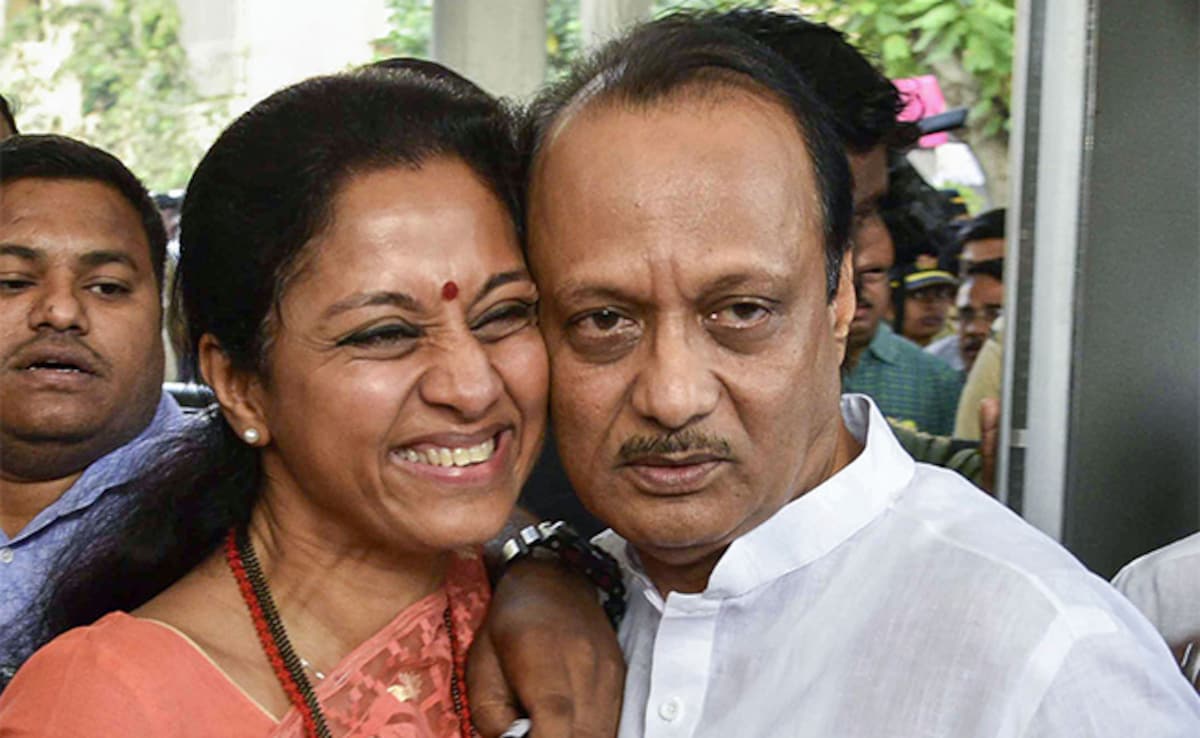
Among those reeling from the devastating news is Nationalist Congress Party-Sharadchandra Pawar (NCP-SP) leader Supriya Sule, Pawar’s cousin, who expressed her profound grief. "Devastated," she conveyed via her WhatsApp status, reflecting the deep personal impact of the tragedy. Sule, alongside NCP leader Praful Patel, his wife Sunetra, and son Parth, immediately departed for Baramati, a testament to the strong, albeit complex, familial bonds that have defined the Pawar clan for generations.
A Legacy of Influence: The Pawar Family and Maharashtra Politics
For decades, the Pawar family has stood as an indomitable force at the epicentre of Maharashtra's cooperative movement, rural governance, and the intricate power equations both in Mumbai and Delhi. Their influence has been pervasive, shaping policies and political alliances. However, 2023 marked a significant public fracture within the family's political unity, when Ajit Pawar spearheaded a major split within the Nationalist Congress Party. Breaking away from his uncle and party patriarch Sharad Pawar’s faction, he chose to align with the BJP-Shiv Sena coalition, a move that dramatically reshaped the state’s political architecture.
The reasons behind this high-profile schism were manifold, with many political observers attributing the rift, in part, to the ascendance of Supriya Sule within the party. As Sharad Pawar's daughter, a Member of Parliament representing Baramati, and a nationally recognised face of the NCP, Sule was often characterised by her measured approach, strong communicative skills, and a national orientation in her political outlook. Ajit Pawar, in stark contrast, carved his political identity through a willingness to undertake bold, often controversial, risks, defining his relevance by decisive action rather than cautious deliberation.
Beyond Politics: Personal Bonds Amidst Ideological Divides
Despite the public and politically charged split, Supriya Sule consistently maintained that her differences with Ajit Pawar were purely ideological, never personal. "Relationships shouldn't come in between politics. The fight between the NCP and Ajit Pawar is ideological and not personal," she had stated at the time, underscoring a foundational belief that familial ties transcended political allegiances. This sentiment was echoed more recently, ahead of the Pune Municipal Corporation (PMC) elections, when Sule reiterated that internal family issues had never plagued their personal rapport.
Intriguingly, Ajit Pawar's Nationalist Congress Party (NCP) had, in a surprising turn, even contested the recent municipal corporation elections in Pune and Pimpri Chinchwad in alliance with his uncle Sharad Pawar's NCP (SP). This alliance, forged for specific local electoral battles, highlighted the intricate and often fluid nature of political partnerships within the family, suggesting that while the ideological divide remained, tactical collaborations were not entirely off the table.
An Irreplaceable Loss and Uncertain Future
Ajit Pawar's sudden passing leaves an undeniable void in Maharashtra politics. Known for his administrative prowess, strategic acumen, and deep understanding of grassroots politics, his contributions to the state’s development have been significant. His absence will undoubtedly influence the upcoming elections and potentially realign political strategies across all major parties. As Maharashtra grapples with this profound loss, the focus shifts to the ongoing investigation and the profound impact this tragedy will have on the state’s political future, particularly for the Pawar family, who now face the daunting task of navigating both personal grief and political recalibrations.