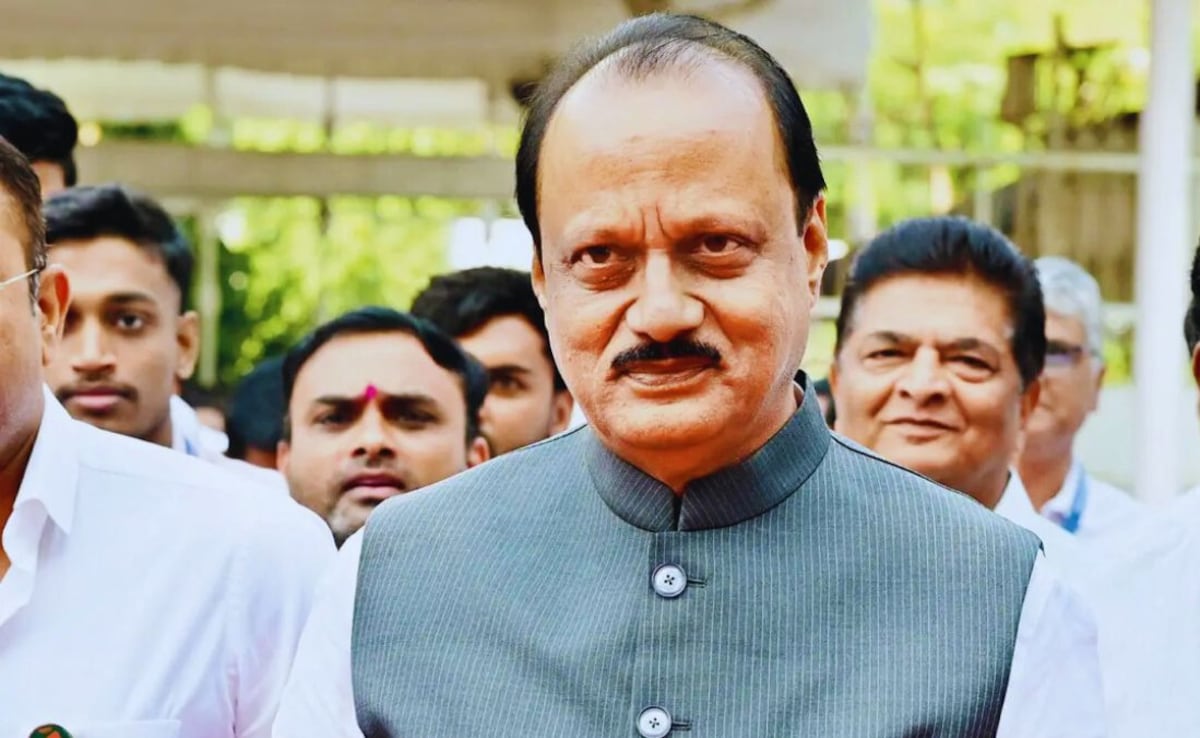
Ajit Pawar, 'Dada' Of Maharashtra Politics, Who Shook Up Sharad Pawar's Party
By NewsDose Team
Updated on January 28, 2026
5 min read
Key takeaways
Ajit Pawar - the Deputy Chief Minister of Maharashtra and one of the state's key power brokers, certainly after the June 2023 split from uncle Sharad Pawar's side - died in a plane crash Wednesday morning.
Maharashtra has been plunged into mourning following the sudden demise of its influential Deputy Chief Minister, Ajit Pawar. The veteran political leader, a formidable force in state politics and undeniably one of its most pivotal power brokers, passed away on Wednesday morning, February 23rd, 2026, at the age of 66, in a tragic private plane crash.
Pawar was en route from Mumbai to Baramati, the ancestral stronghold and political heartland of his family, when his private aircraft encountered severe difficulties. The crash occurred approximately an hour into the flight, during its descent and attempted landing in Baramati, sending shockwaves across the nation.
He is survived by his devoted wife, Sunetra Pawar, a respected Rajya Sabha MP, and his two sons, Parth and Jay Pawar. The loss creates a significant void not only in his family but also in the intricate web of Maharashtra’s political fabric, where his presence was both commanding and transformative.
While the finality of life’s journey eventually touches us all, there is a profound resonance in the fact that Ajit Pawar’s remarkable three-decade-long political odyssey concluded in Baramati. This now-flourishing sugarcane-producing region was more than just his home; it was the crucible where a young Ajit Pawar, initially navigating the expansive shadow of his uncle Sharad Pawar, meticulously honed his skills in the complex game of power and statecraft. It was here that he was forged into the shrewd, determined, and often unyielding politician who would ultimately play a defining role in recalibrating Maharashtra's political alliances and dynamics, perhaps for generations to come.
Pawar’s political career was a tapestry woven with dramatic twists and turns, marked by bold decisions and strategic maneuvering. In a move that stunned the state and national political landscape in November 2019, he briefly aligned with the BJP to form a surprise government – a tenure that lasted a mere 80 hours. This audacious gambit represented the first public fissure within the Nationalist Congress Party (NCP) family, signaling deeper ideological and power struggles.
The initial crack widened into an irreparable chasm in July 2023. In a move that fundamentally reshaped Maharashtra’s political alignment, Ajit Pawar spearheaded a faction of NCP MLAs to join the BJP-led government once more, this time assuming the mantle of Deputy Chief Minister. This decisive action effectively cleaved the NCP into two distinct entities, forcing a painful realignment of loyalties and a complete re-evaluation of political futures for many.
Months following the dramatic split, the Election Commission of India ruled in favor of Ajit Pawar’s faction, granting it the original party name and symbol. This landmark decision left loyalists of Sharad Pawar to embark on the challenging task of rebuilding their political identity under a new banner, further cementing Ajit Pawar’s control over a significant portion of the party apparatus.
Ajit Pawar’s narrative transcends that of a mere powerful state leader. His life was a compelling reflection of India’s perpetually evolving political landscape – a realm where alliances are fluid, family loyalties can be severely tested, and sheer political survival frequently necessitates profound reinvention. From his early days in Baramati to his final moments, Ajit Pawar remained a central and unyielding force, forever in the game, influencing its direction and leaving an indelible mark on Maharashtra's storied political history.