If Sunetra Pawar Says No, Why Praful Patel Is Ajit Pawar's Likely Successor
By NewsDose Team
Updated on January 30, 2026
5 min read
Key takeaways
In Maharashtra's politics today, all eyes are on the Pawar family and power, specifically who would wield the power to run Nationalist Congress Party (NCP) following the death of Ajit Pawar.
Maharashtra's political landscape finds itself at a critical juncture, grappling with a significant leadership vacuum within the Nationalist Congress Party (NCP) following the untimely demise of its prominent leader, Ajit Pawar. The sudden loss has thrust the party into an intricate succession battle, with all eyes firmly fixed on the Pawar family and the formidable question of who will now steer the party's direction in the state's dynamic political arena.
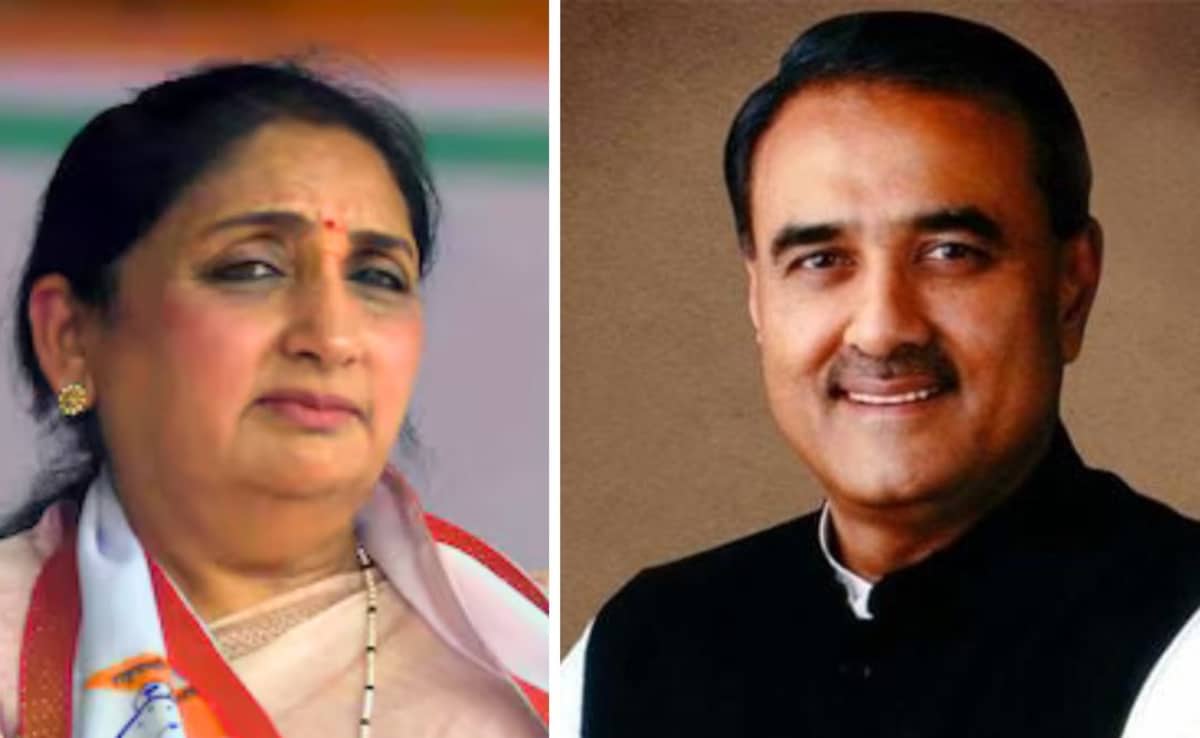
In the immediate aftermath, a strong consensus has begun to emerge from within the NCP ranks, advocating for the ascension of Sunetra Pawar, Ajit Pawar's widow and a respected Rajya Sabha Member of Parliament. She is widely perceived as the natural successor, positioned as the frontrunner to assume the dual responsibilities of party president and leader of the legislative party. This push for Sunetra Pawar reflects not only a sentiment of continuity but also an acknowledgement of her familial connection to the party's previous leadership, aiming to consolidate support during this period of transition.
However, the path to leadership in politics is rarely straightforward. Should Sunetra Pawar's appointment encounter unforeseen technical limitations or complex political considerations, senior party sources indicate that Praful Patel, a seasoned veteran of the NCP, stands ready as a formidable alternative to take the reins. His potential leadership has sparked considerable discussion, given his extensive experience and deep-rooted connections across the Indian political spectrum.
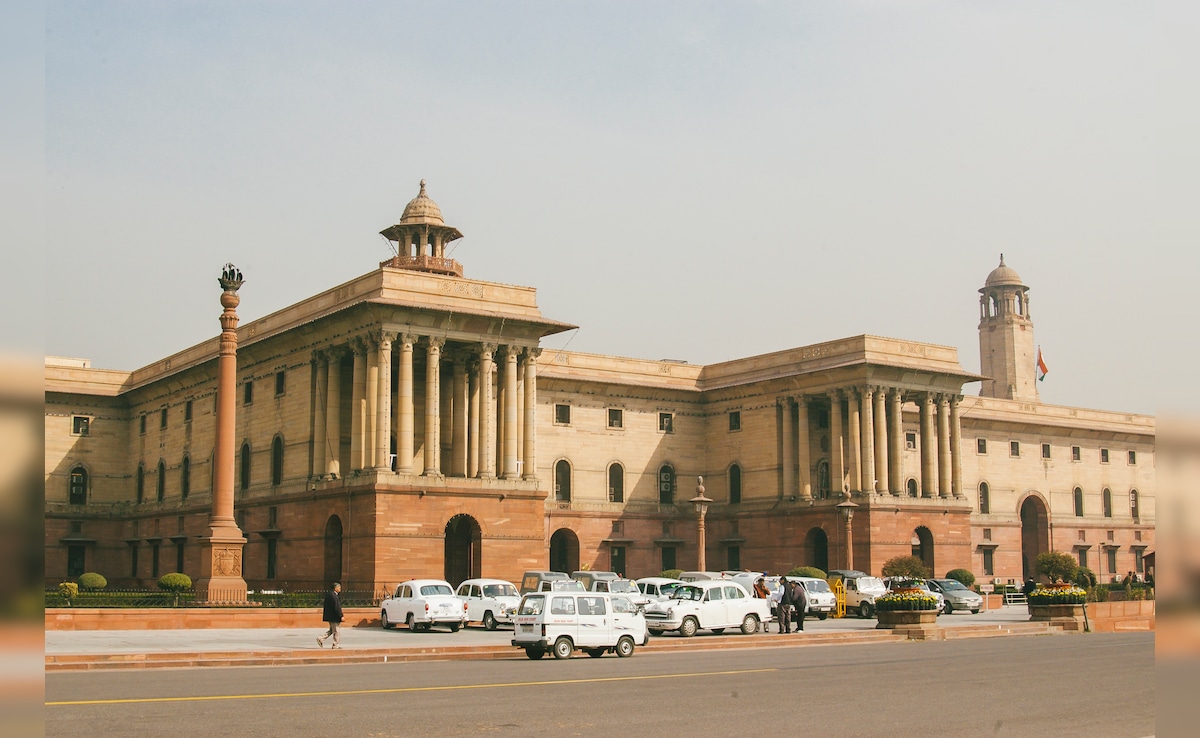
The question naturally arises: what makes Praful Patel a compelling choice for such a pivotal role? Several factors underscore his unique suitability. Primarily, Patel possesses a widely acknowledged image as a shrewd strategist and an adept troubleshooter. In the often-turbulent world of coalition politics and party management, his ability to navigate complex situations and forge consensus is invaluable. Furthermore, his profound connections within the corridors of power in Delhi add significant weight to his candidacy.
Patel's illustrious career includes a notable tenure as the Union Civil Aviation Minister from 2004 to 2011 during the United Progressive Alliance (UPA) government. This period allowed him to cultivate robust relationships with top-tier leaders from both the ruling dispensation and the opposition. These long-standing ties are not merely ceremonial; they represent a crucial asset for the NCP, enabling effective communication and negotiation at the national level. Moreover, his established rapport with the Bharatiya Janata Party (BJP) leadership has been instrumental in ensuring the continued relevance and strategic positioning of the Ajit Pawar faction of the NCP within the National Democratic Alliance (NDA).
His strategic acumen was particularly evident during the tumultuous period when the NCP experienced an internal split. It was Praful Patel who meticulously managed the intricate legal challenges and spearheaded the party's battle with the Election Commission from behind the scenes. His deep understanding of the party's foundational principles and his intimate knowledge of its political landscape, honed over years as one of Sharad Pawar's most trusted strategists, allowed him to anticipate and effectively counter opposing moves, proving indispensable in safeguarding the party's interests.
Beyond the realm of pure politics, Praful Patel's influence extends significantly into the corporate world. His extensive network and business acumen are well-documented, making him a crucial asset when it comes to resource mobilization, particularly during arduous election campaigns. Whether it involves securing funding or engaging in tough bargaining with alliance partners, Patel is widely regarded as a master negotiator, capable of delivering tangible results for the party.
His political journey is marked by an impressive trajectory and diverse administrative experience. In addition to his role in civil aviation, he has successfully managed other vital sectors, including Heavy Industries and Public Enterprises from 2011 to 2014. This breadth of experience across different ministries underscores his administrative capabilities and his understanding of governance at a macroscopic level.
Patel's parliamentary career is equally distinguished. He has served as a Lok Sabha MP on four separate occasions and a Rajya Sabha MP six times. This cumulative experience over decades positions him as a highly influential and seasoned leader, possessing an unparalleled grasp of parliamentary procedures, legislative processes, and national policy-making. He represented the Bhandara-Gondia constituency in the 10th (1991), 11th (1996), 12th (1998), and 15th (2009) Lok Sabha. His Rajya Sabha tenures began in 2000, followed by terms in 2006, 2014, 2016, 2022, and most recently, 2024, illustrating his enduring presence and continuous contribution to national politics.
During his tenure as Civil Aviation Minister, Praful Patel received widespread acclaim for his pioneering efforts in modernising the Indian aviation sector and spearheading the expansion of Air India. His visionary leadership earned him prestigious accolades such as 'Aviation Minister of the Year' and 'Reformer of the Year' in 2005. These achievements further solidify his reputation as a results-oriented leader capable of driving significant change and development.
Within the inner circles of power, he has long been lauded as one of Sharad Pawar's most reliable strategists – a political 'Chanakya' whose counsel was invaluable in orchestrating opposition unity and navigating the complexities of coalition politics. This reputation for strategic foresight and political dexterity makes him a compelling figure in the current leadership discourse. His extensive administrative experience combined with his widely respected standing within the NCP party ranks further strengthens his claim.
Given this multifaceted profile, a significant faction within the NCP leadership believes that if the appointment of Sunetra Pawar as party head encounters insurmountable obstacles, Praful Patel presents himself as an indisputably meritorious and experienced politician, exceptionally well-suited to guide the party through its current challenges. The internal buzz suggests varying opinions: some leaders have floated the idea of appointing Sunetra Pawar as a Deputy Chief Minister to ensure her continued involvement and influence, while others argue vehemently that only a leader of Praful Patel's calibre and extensive experience can effectively navigate the intricate and often volatile political equations of Maharashtra.
As the NCP deliberates on its future direction, the memory of Ajit Pawar’s profound impact on Maharashtra politics remains. His last rites were observed with full state honours on Thursday at Baramati in Pune, a solemn reminder of the void he leaves behind. The decision on succession will undoubtedly shape the NCP's trajectory for years to come, profoundly influencing the broader political dynamics of Maharashtra and its alliances at the national level.