Denmark Archaeologists Discover The World's Largest Medieval Cargo Ship
By NewsDose Team
Updated on January 28, 2026
5 min read
Key takeaways
The ship survived for centuries because the sand protected it from the elements.
In a groundbreaking archaeological feat that promises to rewrite chapters of maritime history, the submerged remains of what has been confirmed as the world's largest cog ship have been meticulously uncovered off the coast of Copenhagen. This monumental discovery, resting silently beneath the waves for nearly six centuries, offers an unprecedented window into the sophisticated trade networks and shipbuilding prowess of the medieval era.
The exciting revelation comes courtesy of marine archaeologists working in the Øresund Strait, the vital waterway separating Denmark and Sweden. Initial explorations by divers, conducted as part of the preparatory work for Copenhagen’s ambitious Lynetteholm development project, hinted at something truly extraordinary. As centuries of accumulating sand and silt were carefully removed, a colossal vessel began to emerge, instantly captivating experts from the Viking Ship Museum in Roskilde.
This wasn't merely another shipwreck; it was 'Svælget 2', a marvel of engineering dating back to 1410. Measuring an astonishing 92 feet (approximately 28 meters) in length, 30 feet (around 9 meters) in width, and standing roughly 20 feet (about 6 meters) high, its sheer scale distinguishes it as the largest cog ever brought to light. Tree-ring analysis, a precise dendrochronological technique, not only pinpointed its construction year but also revealed its diverse origins: the robust timber used in its massive hull hailed from distant Pomerania (modern-day Poland) and the Netherlands, underscoring the vast interconnectedness of medieval European trade routes.
With an estimated cargo capacity of approximately 330 tons, Svælget 2 was a veritable 'medieval super ship'. Its design represented the cutting edge of naval architecture for its time, enabling it to navigate treacherous waters and carry immense payloads with a surprisingly small crew. This efficiency transformed commerce, democratizing long-distance trade. Prior to the advent of such advanced cogs, only high-value luxury goods were economically viable for extensive transport. However, ships like Svælget 2 made it possible to ship everyday commodities across vast distances, fundamentally altering economic landscapes and the daily lives of countless communities.
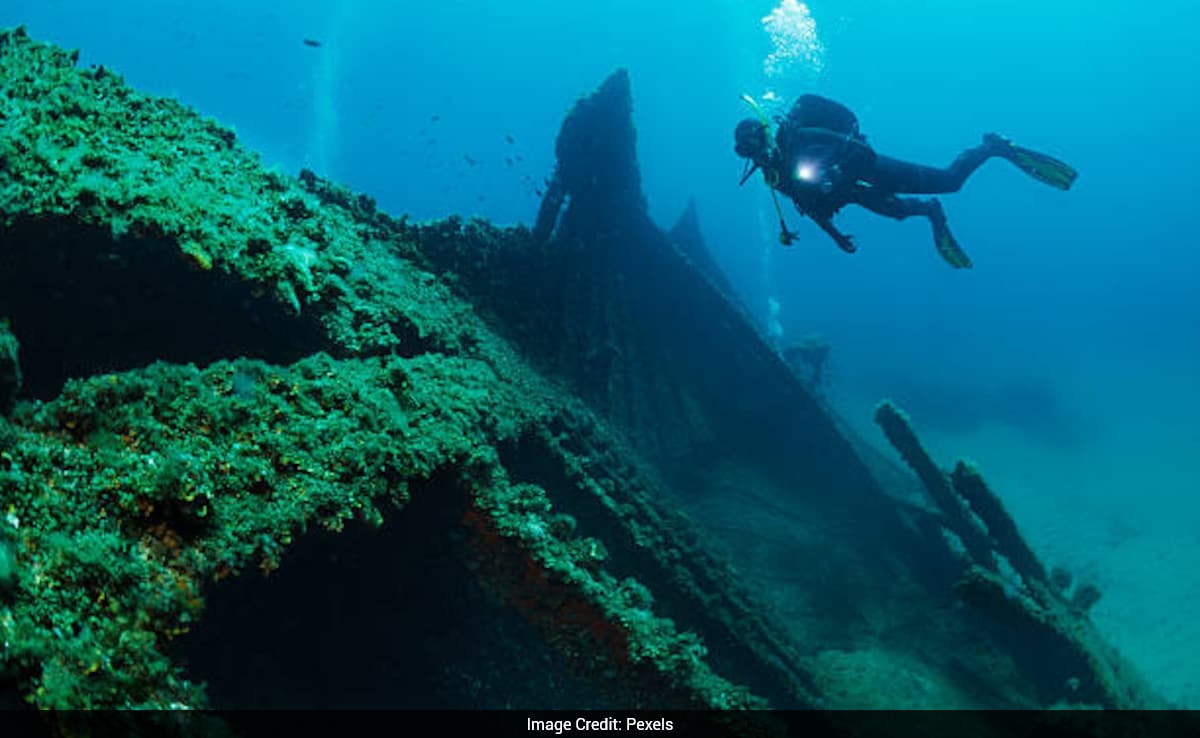
The exceptional state of preservation of Svælget 2 is largely attributed to its resting place. Buried deep within the seabed's sand, the ship was shielded from the relentless corrosive forces of oxygen and ocean currents, allowing it to survive remarkably intact for nearly 600 years. This protective layer acted as a time capsule, safeguarding details that would otherwise have been lost to history.
As researchers continue to study Svælget 2, this unprecedented find is expected to yield invaluable insights into medieval ship construction, trade economics, and the broader social fabric of 15th-century Europe. It serves as a powerful reminder of humanity's enduring ingenuity and our ancestors' mastery of the seas.
You Might Also Like


More in World
- "Iran's Pilot Exodus: War Pushes Talent To India"
- ‘Terror plot’: Who is Matthew VanDyke, the US citizen arrested by India’s NIA?
- Is America already trapped in an unwinnable war with Iran?
- "US Missile Stockpile Drained? Trump's Iran War Costs $5Bn in 2 Days"
- Solar Eclipse 2026: Here's what every student should know about the year’s first ‘Surya Grahan’
