"US Missile Stockpile Drained? Trump's Iran War Costs $5Bn in 2 Days"
By NewsDose Team
Updated on March 14, 2026
5 min read
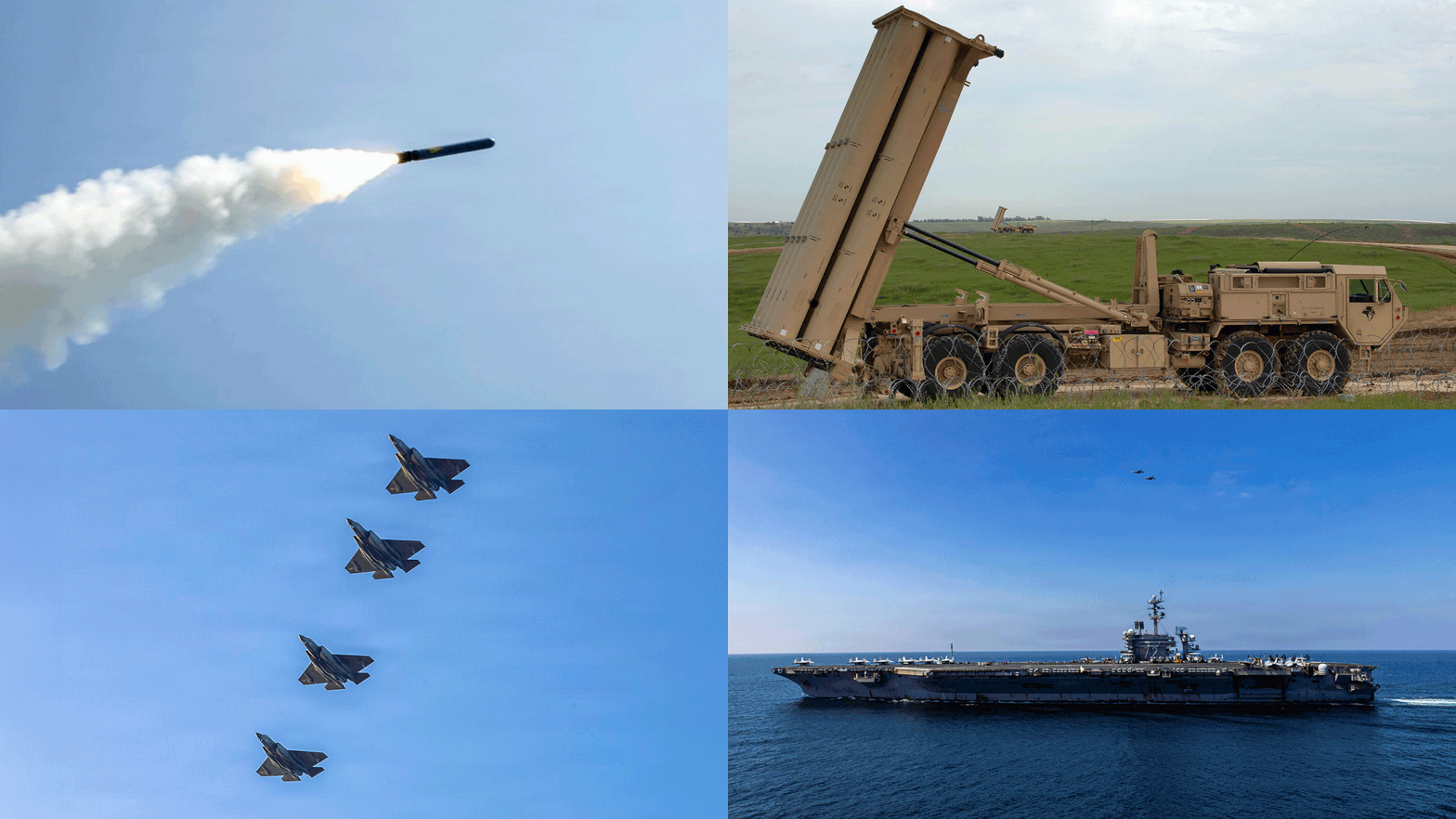
Key takeaways
International News: Barely a week before the US and Israel launched their first coordinated strikes on Iran on February 28, a senior Pentagon official reportedly warned t.
Key Takeaways
- The recent two-day military engagement with Iran, characterized by swift and intense operations, is estimated to have cost the United States over $5 billion.
- Concerns have escalated within the Pentagon regarding the potential strain on US missile stockpiles, with senior officials warning of depletion risks.
- General Dan Caine, Chairman of the Joint Chiefs of Staff, specifically cautioned against a “long-term entanglement” and the associated logistical challenges.
The Full Story
A recent, albeit brief, military confrontation between the United States and Iran has ignited serious debate over the financial and logistical sustainability of American military operations. Within a mere 48-hour period, the engagement, which observers have dubbed Trump's Iran War due to its alignment with a robust foreign policy stance, reportedly incurred a staggering cost exceeding $5 billion. This rapid expenditure has brought the issue of the US missile stockpile — its availability and resilience — into sharp focus, prompting warnings from high-ranking defense officials.
The events unfolded on February 28, 2026, when the United States and Israel initiated coordinated strikes against Iranian targets. These operations, while precise, demanded a substantial allocation of advanced weaponry and sophisticated platforms. While the immediate tactical objectives were reportedly met, the financial outlay for just two days of concentrated action has raised eyebrows across Washington, D.C.
Pentagon Concerns Over Stockpile Strain
Prior to the launch of these coordinated strikes, a senior official within the Pentagon had already voiced considerable apprehension regarding the impact such an operation could have on the nation’s existing weapons inventories. This warning highlighted the vulnerability of critical munitions, particularly precision-guided missiles, which are essential for modern warfare but are also expensive and time-consuming to produce.
Adding weight to these concerns, General Dan Caine, the Chairman of the Joint Chiefs of Staff, publicly emphasized the dual risks posed by a significant military engagement in the region. He cautioned that the intense expenditure of resources during even a short conflict could lead to a rapid drawdown of the US missile stockpile. Furthermore, General Caine underscored the danger of a potential “long-term entanglement,” a scenario that would not only compound the financial burden but also severely deplete strategic reserves necessary for global stability and deterrence.
“The immediate success of a strike must be weighed against its long-term implications for our readiness and industrial capacity,” General Caine stated in a closed-door briefing, his words later emerging to underline the severity of the situation. “We cannot afford to drain our critical missile stockpiles for short-term gains, only to find ourselves vulnerable elsewhere or unable to sustain a prolonged engagement should circumstances dictate.”
The estimated $5 billion cost in 2 days covers not only the ordnance expended but also fuel for aircraft and naval assets, intelligence gathering, logistical support, and the operational hours of highly trained personnel. The scale of this expenditure for such a brief engagement suggests a high-intensity operational tempo that, if sustained, would quickly overwhelm current production capabilities for advanced weaponry.
The Geopolitical Context
This latest escalation, framed by some as a manifestation of Trump's Iran War doctrine, reflects a period of heightened tensions in the Middle East. The coordinated nature of the strikes with Israel further complicates the regional dynamics, potentially prompting reciprocal actions and expanding the theater of conflict. The financial and matériel costs associated with deterring or engaging in such conflicts are becoming an increasingly central part of strategic discussions within the Pentagon and on Capitol Hill.
Why This Matters
The reported $5 billion cost for just two days of operations and the alarm over a potentially drained US missile stockpile highlight a critical challenge for global powers: the intersection of military readiness, industrial capacity, and geopolitical strategy. This incident signals that even limited conflicts can have profound implications for national defense budgets and the ability to project power, prompting a re-evaluation of defense spending and procurement strategies in an increasingly volatile world. For consumers and markets, such escalating costs often translate to economic instability and potential shifts in global energy prices.
Frequently Asked Questions
- What was the primary concern regarding the US missile stockpile? The primary concern was that the two-day military engagement with Iran led to a significant depletion of critical missile inventories, risking future readiness.
- Who warned about the risk of a “long-term entanglement”? General Dan Caine, Chairman of the Joint Chiefs of Staff, specifically cautioned against the dangers of a prolonged conflict and its resource implications.
- When did the US and Israel launch coordinated strikes on Iran? The coordinated strikes by the US and Israel against Iran occurred on February 28, 2026.
You Might Also Like


More in World
- "Iran's Pilot Exodus: War Pushes Talent To India"
- ‘Terror plot’: Who is Matthew VanDyke, the US citizen arrested by India’s NIA?
- Is America already trapped in an unwinnable war with Iran?
- Solar Eclipse 2026: Here's what every student should know about the year’s first ‘Surya Grahan’
- How Louvre Museum In Paris Lost Over Rs 100 Crore In Ticket Scam
