'Trade Above Ukraine': Team Trump Blasts Europe Over India-EU Deal
By NewsDose Team
Updated on January 30, 2026
5 min read
Key takeaways
Bessent accused European countries of indirectly financing the conflict they publicly condemn. After Russia invaded Ukraine and the imposition of Western sanctions, India significantly increased its purchases of discounted Russian crude oil.
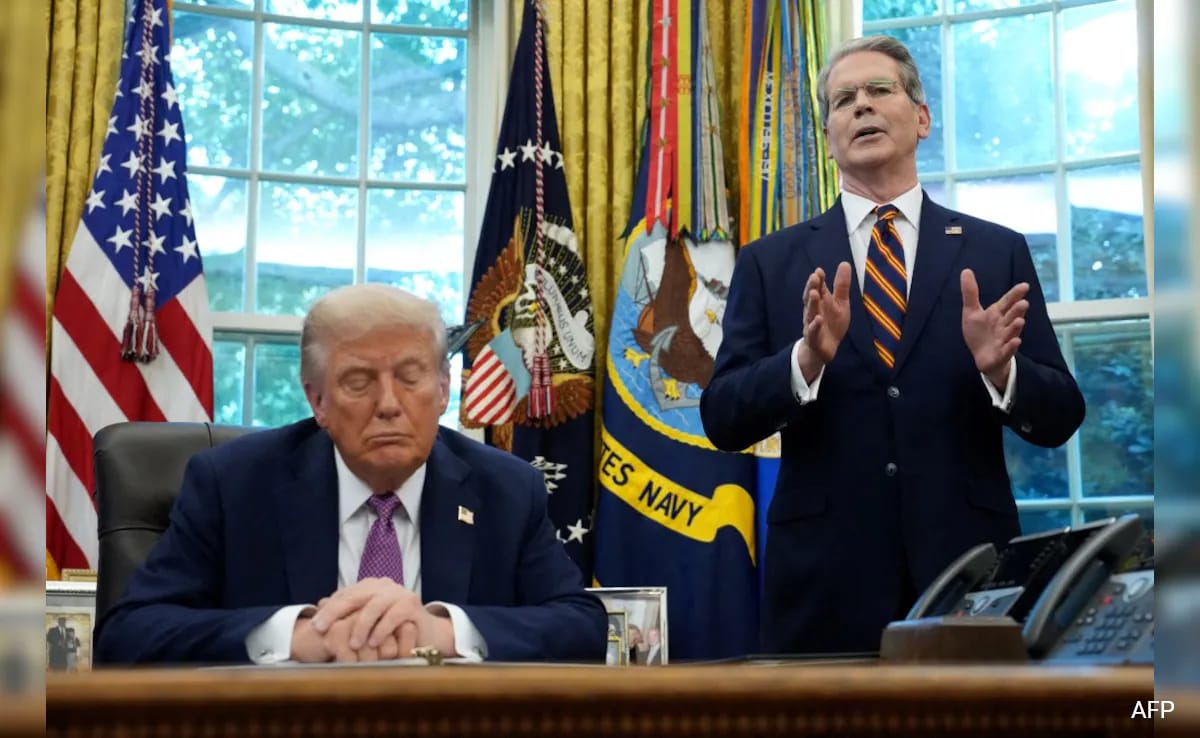
Washington D.C. – In a sharp rebuke that has underscored growing transatlantic friction, US Treasury Secretary Scott Bessent has vehemently criticized Europe's recently concluded free trade agreement with India. Bessent accused European leaders of a profound inconsistency, alleging they are indirectly financing the very conflict they publicly denounce – the war in Ukraine – by prioritizing economic gain over geopolitical solidarity and energy security.
Speaking in a candid interview with US media, Secretary Bessent did not mince words when reacting to the landmark EU-India trade pact. While affirming nations' rights to pursue their own economic interests, he contended that Europe's strategic choices expose what he termed a “deep contradiction” at the heart of its foreign policy concerning Ukraine.
“Europe and India signing this massive trade deal—does that threaten America? Again, they should do what’s best for themselves,” Bessent stated, before adding, “But I find the Europeans very disappointing because they are on the front line of the Ukraine-Russia war.” His remarks highlight a simmering tension regarding the unified Western front against Moscow and the practicalities of economic sanctions.
The crux of Bessent's accusation centers on a sophisticated oil trade dynamic. Following Russia's invasion of Ukraine and the subsequent imposition of Western sanctions, India significantly ramped up its acquisition of discounted Russian crude oil. According to the Treasury Secretary, Europe then emerged as a major purchaser of the refined petroleum products derived from this very Russian oil, processed in India.
“India started buying sanctioned Russian oil, and guess who was buying the refined products? The Europeans,” he explained. “So the Europeans have been funding the war against themselves, something you couldn’t have made up.” This assertion paints a picture of a complex global supply chain that, in Washington's view, inadvertently undermines the collective effort to isolate Russia economically.
To counter this, the United States had previously imposed a substantial 25 percent tariff on India for its continued purchases of Russian oil. However, Europe notably declined to join Washington in implementing similar punitive measures. Bessent strongly implied that this reluctance was intrinsically linked to Europe's desire to keep the intricate trade negotiations with India on track, ultimately prioritizing the economic deal over tighter sanctions.
“The Europeans were unwilling to join us, and it turns out because they wanted to do this trade deal,” Bessent elaborated. He concluded with a pointed challenge: “Every time you hear a European talk about the importance of the Ukrainian people, remember that they put trade ahead of the Ukrainian people. Trade, European trade, more important than ending the war in Ukraine.”
While acknowledging Europe's undeniable dependence on energy imports as a significant factor shaping its decisions, Bessent framed the issue as a critical moral and strategic trade-off. “They need energy, I guess, which is part of their issue. At a price, they want cheap energy,” he mused, adding a provocative hypothetical: “if we were willing to buy sanctioned Russian oil,” the US too could benefit from lower energy costs.
These comments underscore the increasingly complex dynamics and fissures emerging within the broader Western alliance. As nations grapple with enforcing economic pressure on Russia, they are simultaneously contending with considerable domestic economic and political costs. European officials have consistently maintained that energy security and economic stability remain paramount, even as they reiterate their unwavering support for Ukraine.
The EU-India trade pact, hailed as one of the most substantial agreements in years, is poised to significantly deepen economic ties between the two global powers. However, Secretary Bessent's candid remarks make it clear that in Washington, this deal is being interpreted as a potent symbol of Europe's intricate and, at times, controversial balancing act between its overarching geopolitical objectives, its immediate economic imperatives, and its long-term energy security strategies.
You Might Also Like

More in World
- "Iran's Pilot Exodus: War Pushes Talent To India"
- ‘Terror plot’: Who is Matthew VanDyke, the US citizen arrested by India’s NIA?
- Is America already trapped in an unwinnable war with Iran?
- "US Missile Stockpile Drained? Trump's Iran War Costs $5Bn in 2 Days"
- Solar Eclipse 2026: Here's what every student should know about the year’s first ‘Surya Grahan’
