Trump's "Speed And Violence" Warning, Iran's "Like Never Before" Response
By NewsDose Team
Updated on January 30, 2026
5 min read
Key takeaways
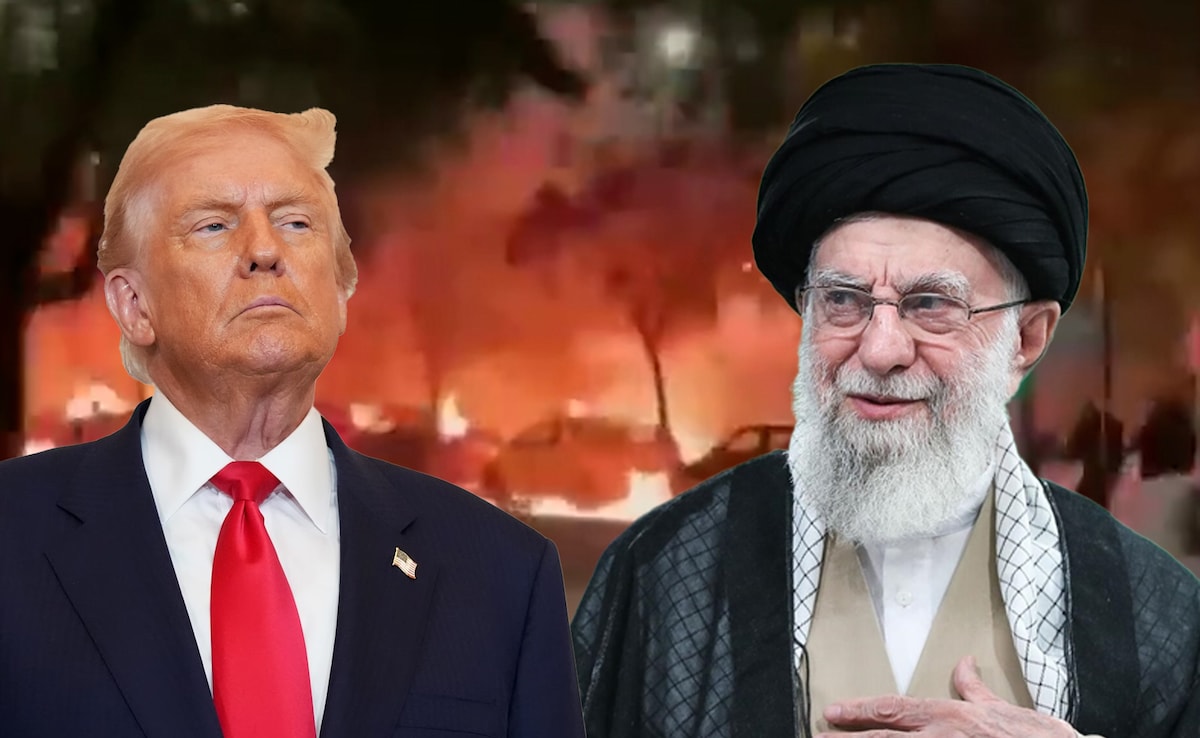
President Donald Trump warned Iran to make a nuclear deal with the US or face military strikes far worse than the attack he ordered last June, increasing pressure on the regime and propelling oil prices higher.
Tensions between Washington and Tehran have reached a critical juncture following a stark warning from the US President. The leader issued an ultimatum to Iran, urging a swift agreement on a nuclear deal to avert potential military strikes, which he cautioned could be far more severe than previous actions. This escalating rhetoric has not only ratcheted up pressure on the Iranian regime but has also sent ripple effects through global markets, particularly impacting oil prices.
In a recent social media declaration, the US President underscored the readiness of American military assets deployed to the region. He specifically highlighted the presence of a formidable fleet of US ships, spearheaded by the USS Abraham Lincoln aircraft carrier, asserting its capability to fulfill its mission “with speed and violence, if necessary.” The message was clear: a nuclear agreement is paramount, one that he hopes will be reached quickly at the negotiating table, benefiting all parties involved and definitively preventing Iran from acquiring nuclear weapons.
Iran's response, conveyed through its mission to the United Nations, articulated a dual message. While expressing readiness for dialogue founded on mutual respect and shared interests, it simultaneously issued a firm warning: should it be pushed, Iran vowed to defend itself and “respond like never before.” This strong stance was accompanied by a flurry of diplomatic activity, with Foreign Minister Abbas Araghchi engaging in a series of critical calls with top regional officials to navigate the rapidly escalating situation.
This renewed pressure from the US leader comes amidst a complex backdrop of previous threats. Earlier statements had linked potential military action more closely to Tehran’s deadly crackdown on domestic protests rather than its atomic activities. However, the current focus appears to have shifted back to the nuclear issue, despite the US President’s prior claims that Iran's nuclear program was “obliterated” in strikes ordered last June targeting three facilities across the country. Notably, the latest presidential statement omitted demands for Iran to cease uranium enrichment, halt its ballistic-missile program, or end its funding of anti-US proxy militias – conditions Iran has consistently resisted in previous negotiations.
Adding another layer to the intricate situation, recent developments suggest Iran’s potential to reactivate its nuclear program if it chooses. Rafael Mariano Grossi, the director of the United Nations' nuclear watchdog, confirmed in a recent interview that the country retains a significant stockpile of highly enriched uranium, further complicating the prospects for a swift resolution.
The economic repercussions of these geopolitical tremors were immediate and pronounced. The US President’s latest remarks propelled Brent crude futures to $68.19 a barrel, marking a fresh four-month high and extending a significant 3% jump from the previous session. This surge in oil prices, the highest since late September, underscores the market's sensitivity to stability in the Middle East. Concurrently, Iran's national currency, the rial, experienced a renewed and precipitous slide after a brief period of stabilization. It plummeted to a fresh record low of approximately 1.6 million per dollar on the black market, a development reminiscent of the currency's collapse in December which initially triggered widespread protests across the nation.
Amidst this volatile environment, senior US officials have voiced their strategic considerations. Secretary of State Marco Rubio, addressing lawmakers in a hearing, described the buildup of US military forces in the region as “wise and prudent.” He emphasized that this posture is a necessary response to the significant threat Iran poses to the tens of thousands of US troops stationed within range of Iranian drones and short-range ballistic missiles. Rubio affirmed the president's prerogative to exercise a “preemptive defensive option” if there are indications of impending attacks on US personnel in the region. He also highlighted existing security agreements, such as the defense of Israel plan, which necessitate a robust force presence to counter such threats.
The US leader's stance on military action has seen some fluctuation in recent days. He had previously suggested a reduced likelihood of further strikes after claiming that Iran had agreed not to execute certain individuals arrested during the widespread demonstrations. However, the current rhetoric marks a return to a more confrontational posture. Analysts from Bloomberg Economics, Becca Wasser and Dina Esfandiary, have suggested that military strikes on Iran remain a likely possibility, unless the Iranians accede to what they describe as the US President’s “extensive demands to decommission their nuclear program,” an outcome they deem unlikely given Iran's historical resistance.
A significant diplomatic offensive has been underway from Iran as it seeks to de-escalate potential conflict with the United States. Foreign Minister Araghchi held crucial discussions with Qatari Prime Minister Sheikh Mohammed bin Abdulrahman Al Thani and Egypt’s top diplomat, Badr Abdelatty. Additionally, Araghchi engaged with his Turkish counterpart, Hakan Fidan, as reported by the semi-official Tasnim agency. Concurrently, US Special Envoy Steve Witkoff engaged in separate talks with Egypt’s Abdelatty, focusing on Iran and the creation of conditions conducive to the resumption of dialogue between Washington and Tehran. Furthermore, the Qatari prime minister held discussions with Ali Larijani, the secretary of Iran’s Supreme National Security Council, signaling broad regional efforts to manage the crisis. Notably, Saudi Arabia’s Crown Prince Mohammed bin Salman recently affirmed that the kingdom would not permit its territories or airspace to be used for military strikes against Iran, a statement that underscores the complex web of regional interests at play.
The current internal turmoil within Iran, characterized by a new wave of protests that erupted on December 28, further complicates the international landscape. Initially spurred by the dramatic depreciation of the national currency, these demonstrations quickly evolved into a nationwide expression of dissent, marking one of the strongest rebukes of the Islamic Republic in its history. A subsequent crackdown by authorities has, according to the latest data collected by the US-based Human Rights Activists Network, resulted in the deaths of almost 6,000 civilians. This internal instability, coupled with external pressures, places Iran at a precarious crossroads, with profound implications for regional and global security.
You Might Also Like

More in World
- "Iran's Pilot Exodus: War Pushes Talent To India"
- ‘Terror plot’: Who is Matthew VanDyke, the US citizen arrested by India’s NIA?
- Is America already trapped in an unwinnable war with Iran?
- "US Missile Stockpile Drained? Trump's Iran War Costs $5Bn in 2 Days"
- Solar Eclipse 2026: Here's what every student should know about the year’s first ‘Surya Grahan’
