Snow Moon 2026: How And Where To See February's Bright Night Sky
By NewsDose Team
Updated on January 30, 2026
5 min read
Key takeaways
To see the Snow Moon clearly and distinctly, it's best to view it away from city lights and other light pollution.
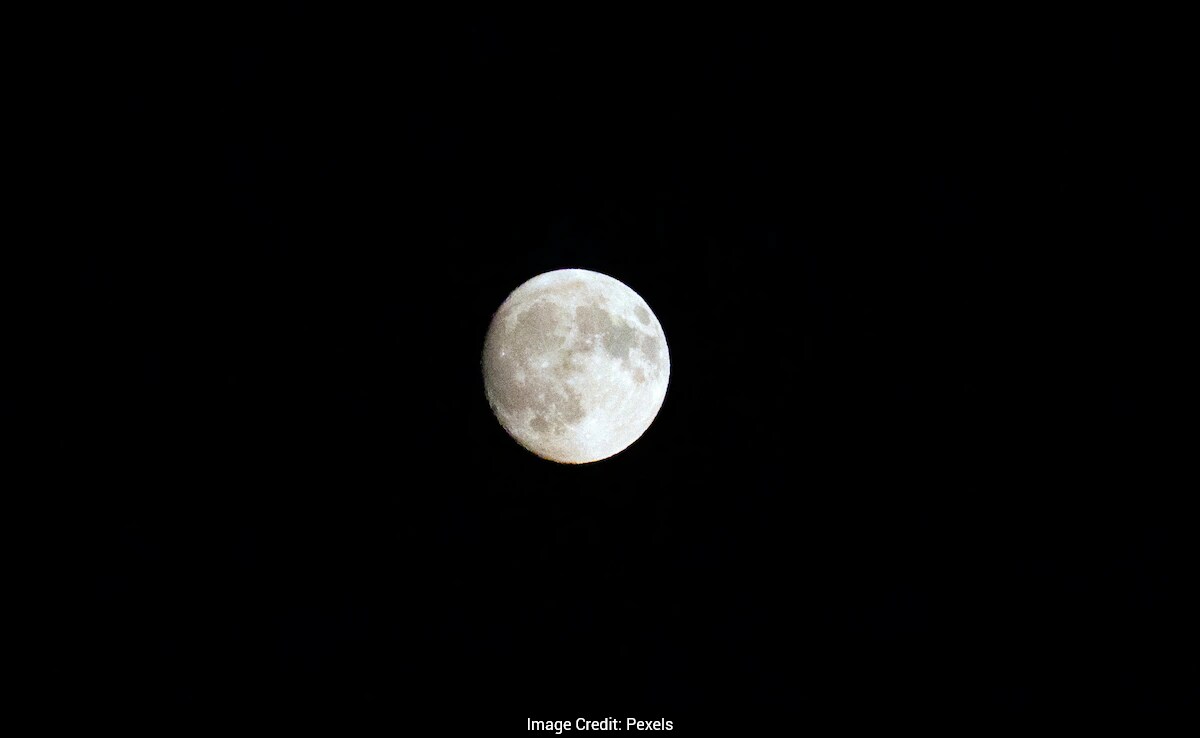
As winter's chill holds its grip, a breathtaking celestial spectacle, the Snow Moon, graced our night skies on February 1st. This particular full moon, a beacon in the often-harsh winter landscape, earns its evocative name from the historically heavy snowfalls common during this month, particularly across North America.
The tradition of naming full moons dates back centuries, rooted deeply in indigenous cultures who used these lunar cycles to track seasons and natural phenomena. Historical records from the 1760s, specifically accounts from early explorers interacting with native tribes, document that February's full moon was designated the Snow Moon due to the marked increase in snowfall observed during this period compared to other winter months. This rich cultural heritage connects us directly to the rhythms of nature observed by generations past.
From an astronomical perspective, a full moon is an extraordinary event occurring when the Moon positions itself directly opposite the Sun in its continuous orbit around Earth. During this precise alignment, the entire side of the Moon facing our planet is fully bathed in sunlight, presenting a luminous, complete disk. This is the moment when the Moon appears most vibrant and whole to observers on Earth, offering a stunning display of reflected solar brilliance. Although we perceive it as a 'full' circle, technically, it represents the complete illumination of the Moon's Earth-facing hemisphere, an optical marvel.
For those eager to witness the Snow Moon in its full glory, stargazers were encouraged to direct their gaze towards the eastern horizon shortly after sunset on February 1st. As it majestically ascended, it appeared notably close to the constellation Cancer, providing a useful celestial marker for easy identification. Observing the Moon near the horizon often enhances its apparent size, a fascinating phenomenon known as the "Moon Illusion." This is an optical trick played on our perception, making the Moon seem larger than its actual angular size in the sky, a spectacle that adds to the allure of lunar observation.
Furthermore, as the Moon's light traverses Earth's atmosphere, its edge, or 'limb,' can sometimes appear to shimmer or move. In certain atmospheric conditions, a luminous halo or ring might even encircle the Moon, a beautiful effect created by moonlight interacting with ice crystals suspended in high-altitude clouds. To truly appreciate the Snow Moon's intricate details and serene glow, it is always recommended to venture away from urban centers and their pervasive light pollution. The darker the sky, the more spectacular the lunar display.
A curious and constant aspect of our Moon is that, despite its orbital journey, we on Earth always perceive the same lunar face. This remarkable synchronicity is due to a phenomenon called tidal locking, where the Moon's rotational period precisely matches its orbital period around Earth. Consequently, one hemisphere is perpetually turned towards us, while the "far side" remains unseen from our vantage point.
It's important to remember that the Moon does not generate its own light. Its radiant presence in our night sky is purely a result of reflecting sunlight. Occasionally, during the crescent or half-moon phases, particularly at dawn or dusk, the normally dark portion of the Moon can be observed with a faint, ethereal glow. This captivating effect, known as Earthshine, occurs when sunlight bounces off Earth's clouds and oceans, illuminating the lunar surface with a gentle, indirect luminescence, a testament to the interconnected dance of celestial bodies.
The Snow Moon serves as a profound reminder of the cosmos' ongoing ballet, inviting us to pause, look skyward, and connect with the ancient rhythms that govern our world and beyond. Each full moon offers a unique moment for contemplation and appreciation of the vast, observable universe.
You Might Also Like


More in World
- "Iran's Pilot Exodus: War Pushes Talent To India"
- ‘Terror plot’: Who is Matthew VanDyke, the US citizen arrested by India’s NIA?
- Is America already trapped in an unwinnable war with Iran?
- "US Missile Stockpile Drained? Trump's Iran War Costs $5Bn in 2 Days"
- Solar Eclipse 2026: Here's what every student should know about the year’s first ‘Surya Grahan’
