"Problems Won't Solve By One Power Calling Shots": UN Chief's Dig At Trump
By NewsDose Team
Updated on January 30, 2026
5 min read
Key takeaways
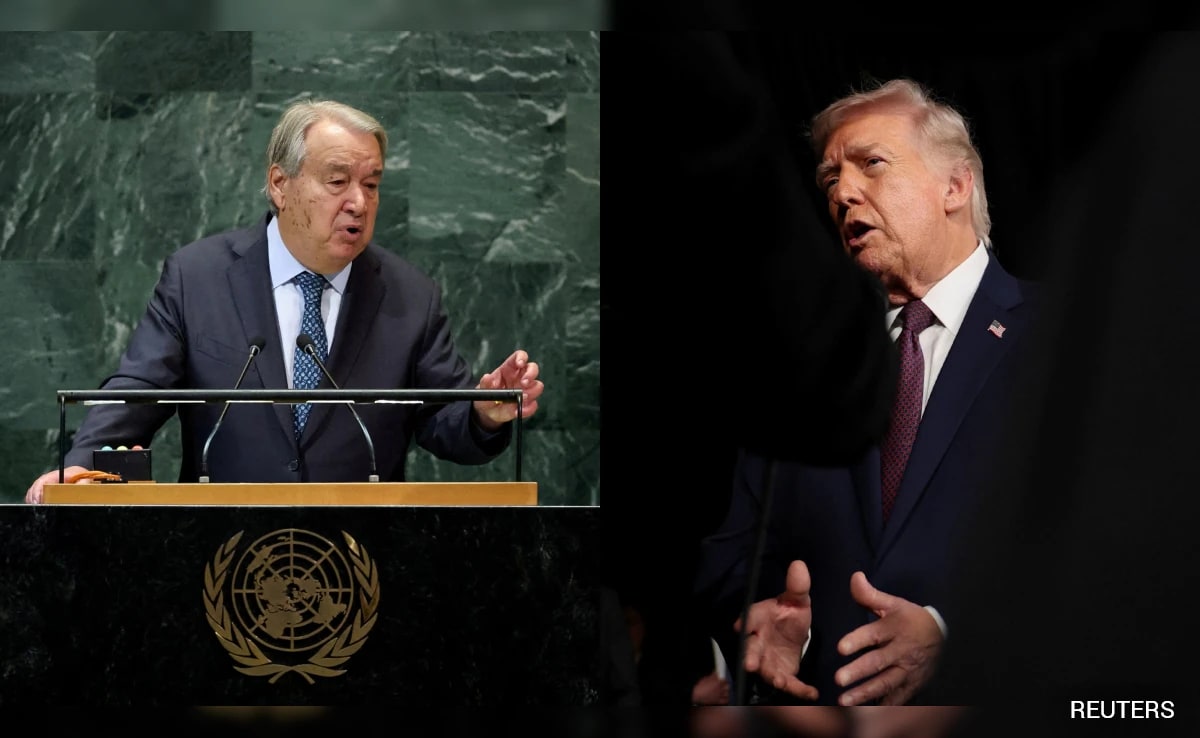
Global problems will not be solved by one power "calling the shots" or by splitting the world into rival spheres, United Nations Secretary-General Antonio Guterres said on Thursday in comments directed at the United States and China.
United Nations Secretary-General Antonio Guterres has issued a stark warning against the growing global power rivalry, specifically cautioning the United States and China against dividing the world into competing spheres of influence. Speaking as he commenced his tenth and final year in office, Guterres passionately advocated for a return to multipolarity, asserting it as the crucial pathway to fostering sustained peace and equitable development across the globe.
During a significant address to reporters, Guterres articulated a compelling vision for international stability, emphasizing that complex global challenges cannot be effectively resolved by a single dominant power dictating terms or by the world splintering into antagonistic blocs. He directly referenced the prevailing perception of a future characterized by two poles—one centered around the U.S. and another around China—stressing that such a dynamic undermines collective efforts towards a harmonious international order.
“Global problems will not be solved by one power calling the shots,” Guterres stated unequivocally, clarifying this remark was primarily directed at the United States. He further elaborated, “Nor will they be solved by two powers carving the world into rival spheres of influence.” The Secretary-General underscored that for a truly stable world, one where peace endures, development is universal, and shared values prevail, robust support for multipolarity is absolutely essential. This perspective arrives amidst renewed discussions regarding geopolitical realignments and the re-emergence of traditional notions of influence, particularly as nations navigate complex trade relations and security concerns.
A cornerstone of Guterres's address was his firm critique of the resistance to Security Council reform. He highlighted that the very entities lamenting the United Nations' perceived ineffectiveness are often those obstructing vital structural changes within the Security Council. “In my opinion, the basic responsibility for international peace and security lies with the UN, lies with the Security Council,” he asserted, linking the lack of reform directly to instances where the organization struggles to achieve its full potential in peacekeeping and conflict resolution. This impasse, he argued, directly impedes the UN’s capacity to respond agilely and decisively to global crises, from humanitarian emergencies to armed conflicts.
Guterres's second five-year term has been undeniably tumultuous, marked by an array of severe international upheavals. His tenure has witnessed the full-scale conflict in Ukraine, the return of the Taliban in Afghanistan, protracted strife in Sudan, the intense conflict between Israel and Palestinian militants in the Gaza Strip, a swift conclusion to Syria's devastating civil war, and significant political developments in Latin America. These events collectively paint a sobering picture of a world grappling with profound instability, demanding coordinated international responses often hindered by geopolitical divisions.
The Secretary-General lamented the erosion of foundational international principles, stating, “International law is trampled. Cooperation is eroding. And multilateral institutions are under assault on many fronts.” He warned that a pervasive sense of impunity is fueling contemporary conflicts, leading to escalating tensions, deepening global mistrust, and creating fertile ground for powerful actors to exploit vulnerabilities from all directions. This climate, he suggested, makes the UN’s role more critical than ever, even as it faces unprecedented challenges in securing consensus and implementing effective solutions.
Adding to these complexities, the United Nations itself is navigating a significant financial crunch. The global body's largest contributor has reportedly reduced voluntary contributions to UN agencies and withheld mandatory payments to its regular and peacekeeping budgets. In response to these fiscal pressures and the broader need for modernization, Guterres launched a comprehensive reform task force in March, dubbed 'UN80'. This initiative aims to streamline operations, enhance efficiency, and ensure the UN remains a relevant and effective institution in its mission for global peace and security, particularly in an era of constrained resources and heightened demand.
Despite formidable obstacles and a global landscape frequently marred by discord, Guterres reaffirmed the United Nations' unwavering commitment to its core mandate. "Despite all the hurdles, the United Nations is acting to give life to our shared values," he declared. "And we won't give up. We are pushing for peace – just and sustainable peace rooted in international law. Peace that addresses root causes. Peace that endures beyond the signing of an agreement." His remarks served as both a sobering assessment of current world affairs and a resolute call to uphold the principles of international cooperation and multilateralism as indispensable tools for navigating the future.
You Might Also Like

More in World
- "Iran's Pilot Exodus: War Pushes Talent To India"
- ‘Terror plot’: Who is Matthew VanDyke, the US citizen arrested by India’s NIA?
- Is America already trapped in an unwinnable war with Iran?
- "US Missile Stockpile Drained? Trump's Iran War Costs $5Bn in 2 Days"
- Solar Eclipse 2026: Here's what every student should know about the year’s first ‘Surya Grahan’
