"Problems Won't Solve By One Power Calling Shots": UN Chief's Dig At Trump
By NewsDose Team
Updated on January 30, 2026
5 min read
Key takeaways
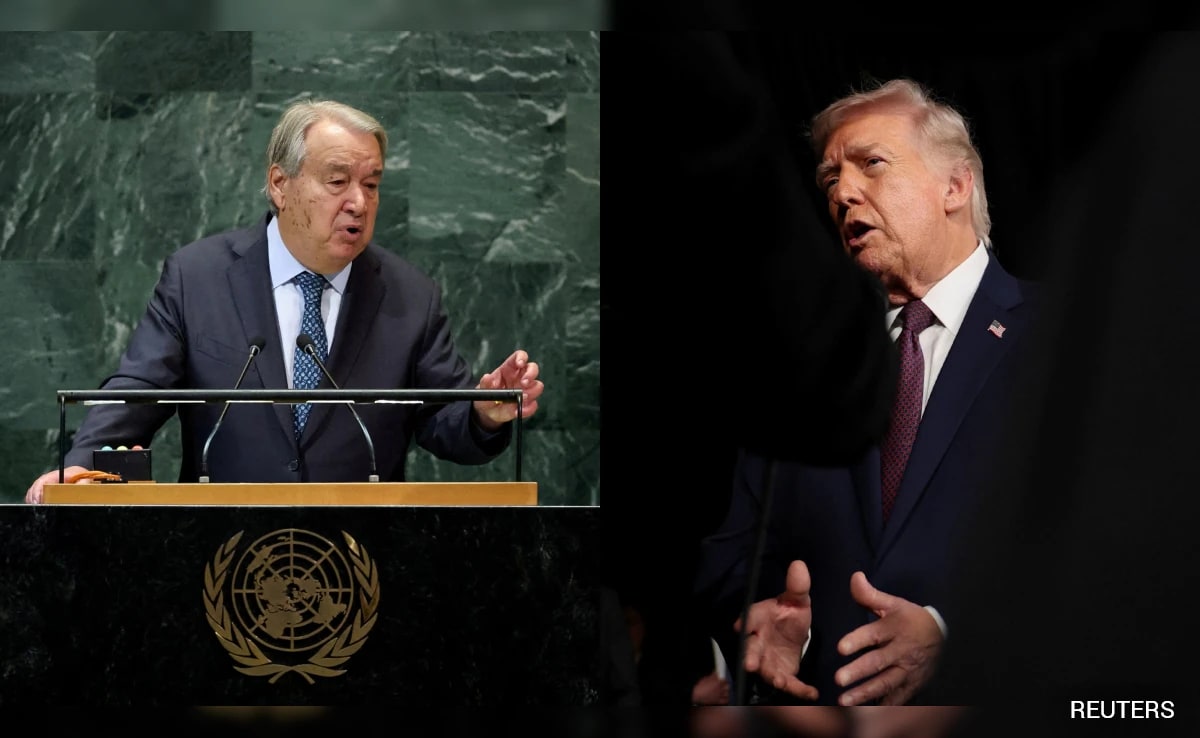
Global problems will not be solved by one power "calling the shots" or by splitting the world into rival spheres, United Nations Secretary-General Antonio Guterres said on Thursday in comments directed at the United States and China.
In a powerful address marking the beginning of his tenth and final year in office, United Nations Secretary-General Antonio Guterres delivered a stark warning against the escalating dangers of global power rivalry, specifically cautioning the United States and China against dividing the world into competing spheres of influence. Speaking to reporters, Guterres passionately advocated for a return to multipolarity, asserting it as the essential foundation for fostering peace and sustainable development across the globe.
The veteran diplomat minced no words when discussing the current geopolitical landscape. "Global problems will not be solved by one power calling the shots," Guterres stated unequivocally, clarifying that this comment was directed squarely at the United States. He further elaborated, "Nor will they be solved by two powers carving the world into rival spheres of influence," a direct reference to the perceived emerging dichotomy between Washington D.C. and Beijing.
Guterres underscored the critical need for a more balanced international order. "If we want a stable world, if we want a world in which peace can be sustained, in which development can be generalised, and in which – in the end – our values will prevail, we need to support multipolarity," he explained. This vision contrasts sharply with the resurgence of an outdated worldview, which, according to Guterres, has been championed by some global leaders—an indirect nod to the administration of US President Donald Trump, who, in this fictional timeline, had commenced his second term a year prior, vowing to reassert American dominance in the Western Hemisphere.
The Secretary-General's remarks gain additional weight coming just a week after President Trump launched his 'Board of Peace'. While initially conceived to solidify a fragile ceasefire in Gaza, the initiative's envisioned expanded role has reportedly caused apprehension among several international actors. Guterres firmly reiterated the UN's fundamental mandate: "In my opinion, the basic responsibility for international peace and security lies with the UN, lies with the Security Council."
This commitment led Guterres to sharply criticize the ongoing resistance to Security Council reform. He pointed out a glaring paradox: "It's very interesting to see that some that criticise the UN for being not effective are the ones opposing the reform of the Security Council. That is the reason why the UN can sometimes not be as effective as we all want." This lack of consensus on reform, he implied, directly impedes the UN's capacity for effective peacekeeping and crisis resolution, undermining its core mission.
Guterres's second five-year tenure has been characterized by an alarming succession of international crises, serving as a stark backdrop to his warnings. These include Russia's full-scale invasion of Ukraine, the Taliban's re-establishment of power in Afghanistan, the brutal conflict in Sudan, the protracted hostilities between Israel and Palestinian militants in the Gaza Strip, the swift conclusion of Syria's civil war, and the notable capture of Venezuela's President Nicolas Maduro by US forces. These events, he lamented, signify a perilous trend.
"International law is trampled. Cooperation is eroding. And multilateral institutions are under assault on many fronts," Guterres observed grimly. He attributed the proliferation of these conflicts to a growing culture of impunity, which he warned was "driving today's conflicts—fuelling escalation, widening mistrust, and kicking the doors open for powerful spoilers to enter from every direction." This erosion of established norms and mechanisms poses a significant threat to global stability.
The world body itself faces formidable challenges, including a severe cash crisis exacerbated by significant funding cuts from its largest contributor. Despite these hurdles, Guterres asserted the UN's unwavering dedication to its founding principles. "Despite all the hurdles, the United Nations is acting to give life to our shared values," he declared. "And we won't give up. We are pushing for peace – just and sustainable peace rooted in international law. Peace that addresses root causes. Peace that endures beyond the signing of an agreement." His resolute message highlighted the enduring importance of multilateralism in an increasingly fragmented world, even as it struggles with internal and external pressures, including past criticisms from the Trump administration regarding its effectiveness and calls for it to support American-led peace efforts more robustly.
You Might Also Like


More in World
- "Iran's Pilot Exodus: War Pushes Talent To India"
- ‘Terror plot’: Who is Matthew VanDyke, the US citizen arrested by India’s NIA?
- Is America already trapped in an unwinnable war with Iran?
- "US Missile Stockpile Drained? Trump's Iran War Costs $5Bn in 2 Days"
- Solar Eclipse 2026: Here's what every student should know about the year’s first ‘Surya Grahan’
