Opinion: How China Got Trapped In Its Own 'Export Miracle'
By NewsDose Team
Updated on January 28, 2026
5 min read
Key takeaways
China is producing too much, selling too cheap, and running out of buyers. Has its economic model reached its peak?
China's economic juggernaut, long celebrated for its export prowess, now faces critical questions regarding its sustainability. The nation's unparalleled manufacturing capacity, which has reshaped global trade over decades, appears to be grappling with the double-edged sword of overproduction and intense price competition, leading to an impending crisis of finding sufficient global buyers for its vast output. This pivotal moment prompts a re-evaluation: has the foundational model of China's economic ascent reached its inherent limits?
Last week’s announcement of an astounding $1.19 trillion trade surplus for 2025 underscored China's enduring dominance in global commerce. This record-breaking figure emerged even as significant tariffs, notably those initiated by former US President Donald Trump across numerous countries, created considerable turbulence in the international economic landscape. Despite a reported 20% reduction in exports to the United States, Beijing successfully rerouted its vast production, significantly increasing sales to other regions, including India.
To put this staggering figure into perspective, China's $1.19 trillion trade surplus is equivalent to nearly half of India's Gross Domestic Product and comparable in size to the entire economy of Saudi Arabia, a key G-20 member. This financial might demonstrates an undeniable shift in global economic partnerships. Throughout the past year, China cemented its position as the primary trading partner for numerous countries: Brazil, nestled in what was once exclusively America's sphere of influence; Central Asian nations, traditionally within Russia's orbit; and several Gulf countries, where US economic hegemony has historically been undisputed. The strategic pivot is stark; having already significantly expanded its economic ties across Africa, there's a growing apprehension that continued protectionist trade policies from major Western economies could accelerate China's rise as the foremost trading partner in even more regions, effectively displacing established powers like the United States.
China’s unbroken streak of trade surpluses, maintained consistently since 1993, highlights a remarkable transformation. From a largely impoverished nation in 1978, when Deng Xiaoping initiated groundbreaking economic reforms, China has evolved into the world's second-largest economy and a formidable global superpower. However, this meteoric rise has also profoundly reshaped the global economic fabric, fostering widespread reliance on Chinese manufacturing and exports. The fundamental question now is whether this very model, which has also generated considerable challenges for its own populace, can continue to endure.
The Architects of China's Economic Ascendancy
The roots of Beijing's export-driven economic model can be traced directly to Deng's visionary reforms. These policies systematically dismantled old barriers and paved the way for China to become the undisputed manufacturing hub of the world. Across the nation, a proliferation of massive industrial plants and factories began churning out goods at unprecedented scales, designed to produce cost-effective products for international markets. This strategy led to the gradual outsourcing of millions of manufacturing jobs from Western nations to China, fundamentally altering global industrial landscapes.
These often state-subsidized Chinese enterprises created an intensely competitive environment, frequently forcing factories in other countries to shutter their operations, unable to match the lower production costs of Chinese goods. Such competitive pressures were noted as early as 1994, when silk farmers in India voiced concerns that the influx of inexpensive Chinese synthetic silk was devastating their livelihoods. Accusations of 'dumping' – selling goods in a foreign market below their production cost – have frequently been leveled against Beijing, and these concerns have resurfaced with renewed vigor following the publication of the latest record-breaking trade surplus figures.
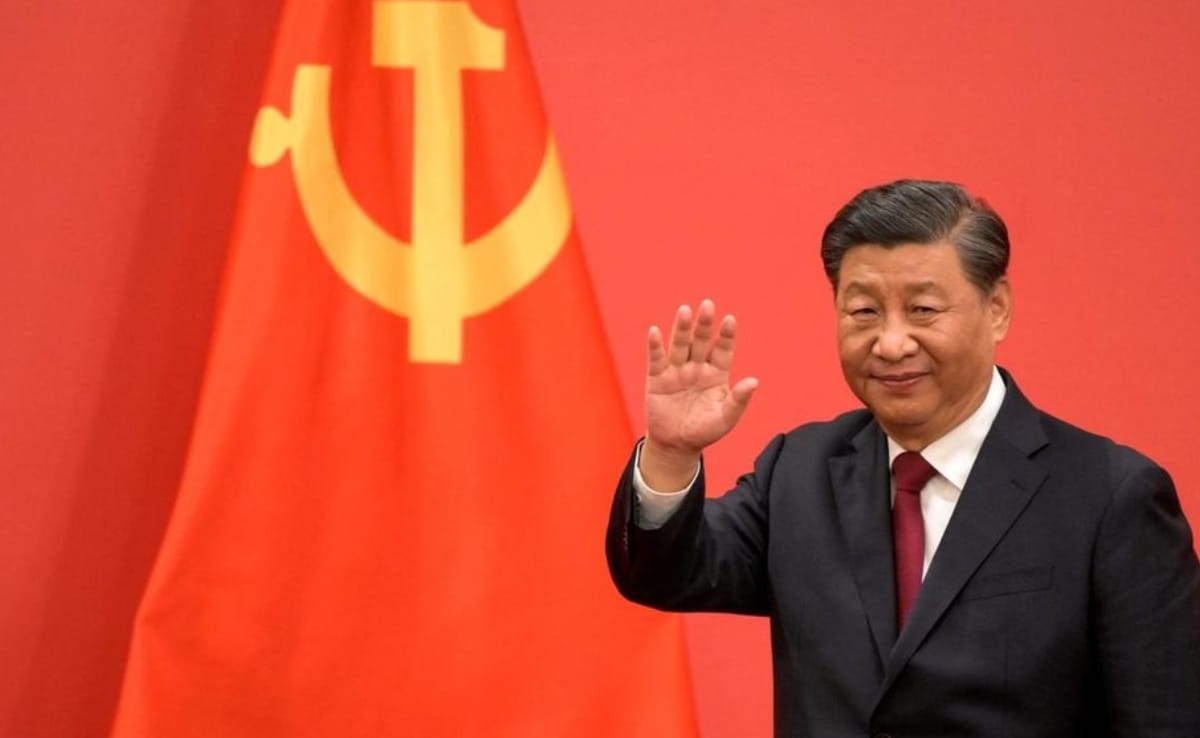
Yet, China has not rested on its laurels, consistently expanding its industrial capacity and strategically diversifying into advanced and emerging fields. Under the leadership of current President Xi Jinping, the nation's economic model has been propelled to new strategic heights. Since assuming leadership of the Communist Party in 2013, Xi has championed a vision of 'high-quality development,' directing substantial investments into strategic emerging industries. The objective is clear: to cultivate a dominant force capable not only of challenging China's traditional rivals but also of exerting control over critical global supply chains.
The Quest for Self-Reliance and Global Influence
At the very core of China's contemporary economic strategy lies an ambitious pursuit of self-reliance, a principle frequently articulated by its leaders. Xi's ambitious decade-long initiative, famously known as 'Made in China 2025,' launched in 2015, aimed to significantly reduce the nation's dependence on Western technologies and markets. This program has largely achieved its initial objectives, particularly through Beijing's unparalleled investment in green technologies. As a result, China has emerged as the undisputed global leader in renewable energy solutions, electric vehicles, and a host of other critical technological domains.
Recent data further illuminates this industrial might. State media reported over the weekend that China consumed an astounding 10.4 trillion kilowatt-hours of power in 2025, according to figures from the National Energy Administration. This figure is more than double the consumption recorded in the United States and surpasses the combined power usage of India, Russia, Japan, and the entire European Union. Such immense energy consumption serves as a compelling indicator of the ceaseless activity within China's industrial plants and advanced AI data centers, operating at a scale unmatched anywhere else in the world.
President Xi has also proactively prepared China for potential economic confrontations, particularly with the United States. He has reportedly instructed officials to identify and develop strategic 'choke points' within its economy, tactics that were successfully deployed last year in response to increased tariffs. As far back as 2019, Xi underscored the strategic importance of rare earths and other critical minerals, resources over which Beijing now exerts near-total control of global supply. This strategic foresight extends to various crucial sectors; while nations like India lead in pharmaceutical manufacturing, China remains the predominant global producer of essential active pharmaceutical ingredients (APIs) required for antibiotics and other vital medicines. A similar pattern of dominance is observed in the solar power industry, where China's grip on the supply chain is virtually unshakeable.
Domestic Challenges Amidst Global Ambitions
While China's extraordinary economic growth has undeniably lifted tens of millions out of poverty and enriched many others, particularly during the initial phases of reform, the long-term implications of its export-led model are becoming increasingly apparent. For years, Chinese households effectively subsidized the nation's economic ascent through suppressed returns on their savings, allowing the rest of the world to benefit from a continuous supply of discounted Chinese goods.
Ironically, as much of the world battles inflationary pressures, China is confronting an acute and problematic trend of deflation. This phenomenon, characterized by continuously falling prices, discourages consumer spending as buyers postpone purchases, anticipating even lower prices in the future. This deflationary spiral is primarily driven by persistent overcapacity in factories coupled with weak domestic demand. A sustained decline in consumption is a troubling signal of deeper structural economic vulnerabilities.
Last year, Chinese authorities unveiled various measures, including new childcare subsidies, increased wages, and enhanced paid leave provisions, all aimed at stimulating a slowing economy. However, these initiatives have, to date, failed to yield any significant positive impact. The profound collapse of the property market in recent years has further eroded consumer confidence, making Chinese consumers more risk-averse and prompting them to drastically reduce discretionary spending.
In stark contrast to economies like the US and UK, where domestic consumption accounts for over 80% of economic growth, or India, where it stands around 70%, China's domestic consumption has typically hovered between 50% to 55% over the past decade. This disparity underscores the formidable challenge facing President Xi: how to effectively spur greater domestic spending among his cautious populace.
Demographic Shifts and Economic Headwinds
Adding another layer of complexity, China is grappling with a looming demographic crisis that poses a fundamental threat to its long-term economic model. A rapidly shrinking population of young workers, juxtaposed with an ever-expanding elderly demographic, creates significant structural imbalances. Authorities announced on Monday that the nation's birth rate has plunged to its lowest level since 1949, the year Mao Zedong established the People's Republic. In the past year, only 7.92 million new babies were born, representing a concerning 17% decline compared to 2024 figures.
This demographic trajectory implies a future with fewer individuals available to staff China's vast factories and sustain its export-dependent economy. Furthermore, younger families are increasingly burdened with the responsibility of caring for elderly parents, a challenge exacerbated by China's social security system, which remains less robust compared to those in many other industrialized nations. Despite government incentives aimed at encouraging larger families and even taxation on contraceptives, young Chinese citizens appear hesitant to have more children, signaling a deep-seated societal shift.
The Shadow of Currency Manipulation
Western nations have frequently alleged that China's meteoric economic rise has been unfairly aided by the manipulation of the global financial system. These accusations often center on practices such as state-owned or heavily subsidized firms acquiring undervalued assets in other countries, and, crucially, maintaining an artificially low valuation for its currency, the Renminbi (RMB). This undervaluation effectively makes Chinese exports cheaper and more competitive on the international stage.
Beijing has, of course, consistently denied these allegations. However, it remains an undeniable fact that China has exerted significant control over its currency, preventing it from appreciating to what many economists believe would be its true market value. For a nation that aspires to challenge the United States and achieve parity, if not outright superiority, as a global superpower, allowing its currency to strengthen is a critical step towards genuine economic maturity and transparency.
Over the last 15 years, China has actively promoted the international acceptance and use of its currency, and currently, approximately 30% of its trade is settled in CNY, the basic unit of the Renminbi. Despite these efforts, other nations remain cautious about the Renminbi's true value and its stability, a sentiment reflected in its modest share—less than 2%—of global foreign exchange reserves.
An Evolving Landscape: Opportunities for India?
The accumulating evidence suggests that China's long-successful export-oriented economic model may indeed be reaching its zenith. For decades, the Communist Party government meticulously employed capital controls, maintained artificially low deposit rates, and deliberately undervalued its currency to channel vast household savings into its burgeoning industrial sectors. While China's status as an economic giant and a major global power is unquestionable, the critical question now is how much longer this export-led growth can be sustained, especially as the social costs of financial repression and domestic economic imbalances continue to mount.
Significantly, China's current economic growth rate, hovering around 5%, has now fallen below that of India. Furthermore, India does not face the same daunting demographic challenge of a rapidly declining birth rate. If China's current economic paradigm has indeed reached its inherent limitations, this presents a compelling window of opportunity for India to attract and facilitate a significant shift in global supply chains away from China. Such a realignment would provide a much-needed and substantial boost to India's burgeoning manufacturing sector.
However, capitalizing on this potential shift demands strategic foresight and decisive action. For India to truly seize this moment, it must draw critical lessons from China's past success. This includes aggressive investment in innovation, fostering advanced technological capabilities, and a dedicated focus on producing high-quality goods, both for its vast domestic market and for export. The success of Prime Minister Modi's 'Make in India' campaign, therefore, hinges directly on its ability to embrace these principles and demonstrate a sustained commitment to becoming a global manufacturing powerhouse.
You Might Also Like


More in World
- "Iran's Pilot Exodus: War Pushes Talent To India"
- ‘Terror plot’: Who is Matthew VanDyke, the US citizen arrested by India’s NIA?
- Is America already trapped in an unwinnable war with Iran?
- "US Missile Stockpile Drained? Trump's Iran War Costs $5Bn in 2 Days"
- Solar Eclipse 2026: Here's what every student should know about the year’s first ‘Surya Grahan’
