A new device that finds 'hidden eggs' could improve IVF results
By NewsDose Team
Updated on February 15, 2026
5 min read
Key takeaways
Health News: Fertility experts know that the more eggs retrieved from a woman, the better the chances that one of them will lead to a viable embryo that will resul.
Infertility remains a significant challenge for millions of couples worldwide, with In Vitro Fertilization (IVF) standing as a leading assisted reproductive technology offering a pathway to parenthood. A critical phase in the IVF process is the retrieval of mature eggs, a step whose success directly correlates with the overall chances of a viable embryo and a successful pregnancy.
However, recent findings from a groundbreaking study have brought to light a startling inefficiency in conventional egg retrieval methods. Fertility experts have long understood that a higher number of retrieved eggs generally improves IVF outcomes. Yet, this new research indicates that the traditional, often manual, method of searching for oocytes in follicular fluid frequently fails to locate every available egg, potentially leaving viable genetic material undiscovered.
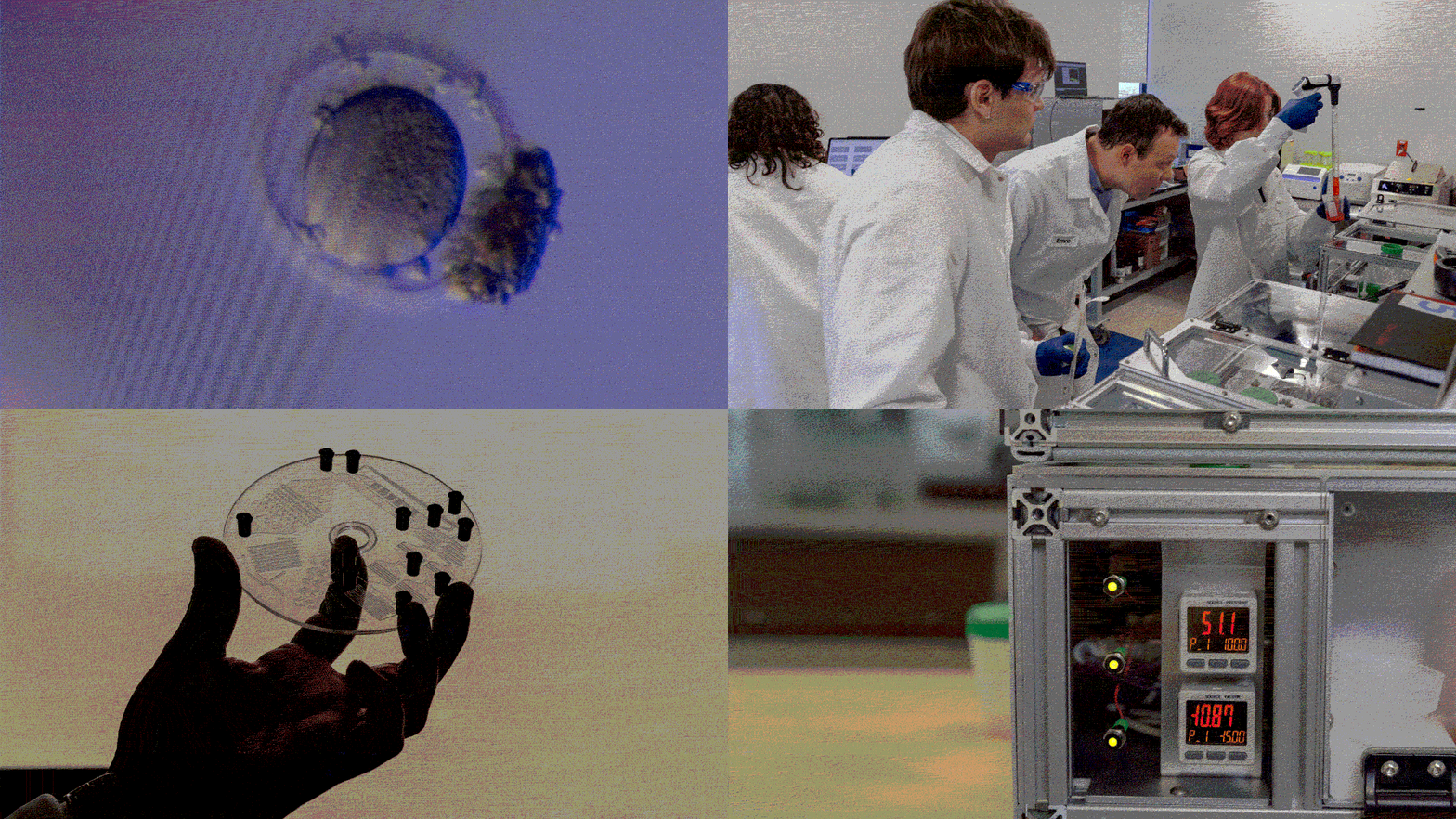
This revelation is now being addressed by an innovative technological breakthrough: a new automated device designed to meticulously and efficiently identify 'hidden' eggs. This advanced system revolutionizes the traditional process by employing sophisticated algorithms and imaging techniques to thoroughly scan culture dishes, uncovering oocytes that manual inspection might miss.
The study suggests that by automating and enhancing the detection process, this novel technology can significantly increase the total number of eggs recovered from a woman during an IVF cycle. For couples undergoing the emotionally and financially taxing journey of fertility treatment, this represents a monumental leap forward. A greater yield of healthy eggs translates directly into an improved likelihood of creating more embryos, thereby substantially boosting the chances of a successful implantation and, ultimately, the birth of a baby.
Experts in reproductive medicine are keenly observing this development, anticipating that it could lead to higher success rates per IVF cycle, potentially reducing the number of cycles required for some patients and alleviating considerable stress. This automated 'egg-finding' technology promises to optimize a fundamental aspect of IVF, offering renewed hope and enhanced efficiency for fertility clinics and hopeful parents globally.