Scientists Discover 'Potentially Habitable' Earth-Like Planet Candidate
By NewsDose Team
Updated on January 30, 2026
5 min read
Key takeaways
If confirmed, this exoplanet would be the only known rocky world in the habitable zone of a Sun-like star.
In a fascinating testament to the enduring legacy of the Kepler Space Telescope, scientists have unveiled a promising new exoplanet candidate, HD 137010 b, that continues to fuel humanity's quest for Earth-like worlds beyond our solar system. Despite retiring in 2018, the invaluable data collected by the Kepler mission continues to yield groundbreaking discoveries, with this latest find offering a tantalizing glimpse into potential extraterrestrial habitats.
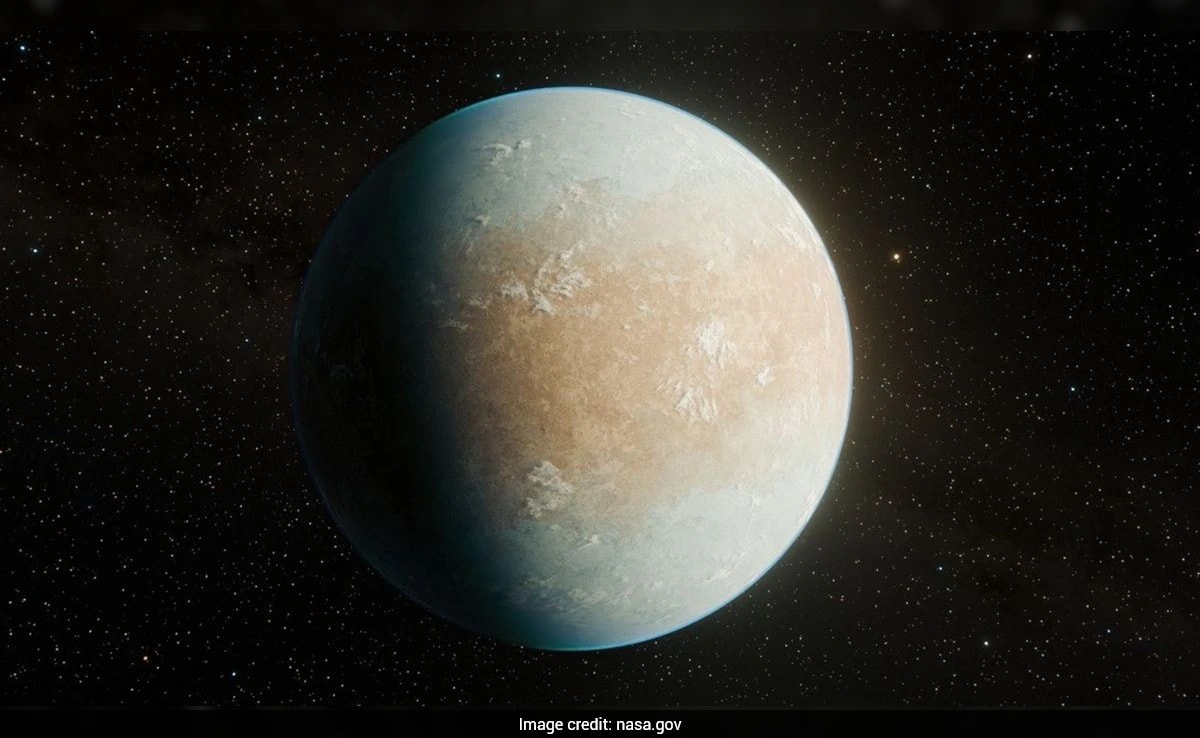
Astronomers from Australia, leveraging advanced analytical techniques, have pinpointed HD 137010 b, a celestial body orbiting a Sun-like star situated approximately 150 light-years from Earth. This intriguing "planet candidate" is notably about six percent larger than our home planet. Its unique characteristics have earned it the evocative moniker "where Earth meets Mars," a nod to its size similarity to Earth combined with the potential for a frigid environment, possibly even colder than the perpetually frozen Martian surface.
The groundbreaking findings, meticulously compiled by a research team spearheaded by Australia's University of Southern Queensland (UniSQ), were officially published on January 27th in the prestigious Astrophysical Journal Letters. The research paper, while highlighting the profound implications of this discovery, cautiously refers to HD 137010 b as a "planet candidate." This designation underscores the rigorous scientific process involved, as at least one additional observation is required to definitively classify it as a confirmed planet.
Dr. Chelsea Huang, a prominent UniSQ researcher and one of the esteemed authors of the study, expressed profound excitement regarding the discovery. She articulated, "The discovery of HD 137010 b represents a truly exhilarating type of exoplanet, pushing the boundaries of what we thought possible." She further elaborated on the broader scientific context, stating, "Ever since the first exoplanet was detected three decades ago, the scientific community has been relentlessly pursuing the elusive 'Earth's twin.' This discovery brings us closer to that long-held aspiration." An exoplanet, for clarity, is defined as any planet that orbits a star located outside of our own solar system.
Why This Discovery Marks a Significant Milestone
The potential confirmation of HD 137010 b carries immense significance for several critical reasons. If validated, it would become the sole known rocky world residing within the habitable zone of a star analogous to our Sun. The habitable zone, often colloquially termed the "Goldilocks zone," represents the orbital region around a star where conditions are theoretically suitable for liquid water to exist on a planet's surface – a fundamental prerequisite for life as we know it.
Lead author Alex Venner conveyed a conservative yet hopeful outlook, estimating that there is a 50 percent probability of HD 137010 b being truly habitable. Dr. Venner clarified the astronomical definition, stating, "The habitable zone, as understood by astronomers, is the area around a star where water could exist in its liquid state. This particular planet candidate, HD 137010 b, is situated right at the very edge of what we currently consider potentially habitable conditions, making it an object of intense scrutiny."
While the initial data and subsequent analysis are undeniably thrilling, the scientific journey for HD 137010 b is far from over. Future observations are paramount to gain a comprehensive understanding of this exoplanet's fundamental characteristics, including its precise mass, atmospheric composition, and surface conditions. These subsequent investigations will be crucial in determining whether this distant world truly harbors the potential for life or offers new insights into the diversity of planetary systems.
The continued success of missions like Kepler, even years after their operational end, underscores the power of astronomical data archiving and collaborative international research. Discoveries such as HD 137010 b not only expand our cosmic inventory but also deepen our appreciation for the vastness and complexity of the universe, inspiring new generations to look up and ponder our place within it.