Rohit Sharma Names 2 Players Who Could Be India's Key Performers At T20 World Cup 2026. Not Abhishek Sharma And Jasprit Bumrah
By NewsDose Team
Updated on January 30, 2026
5 min read
Key takeaways
Defending champions India will enter the T20 showpiece as one of the overwhelming favourites due to their massive depth and quality.
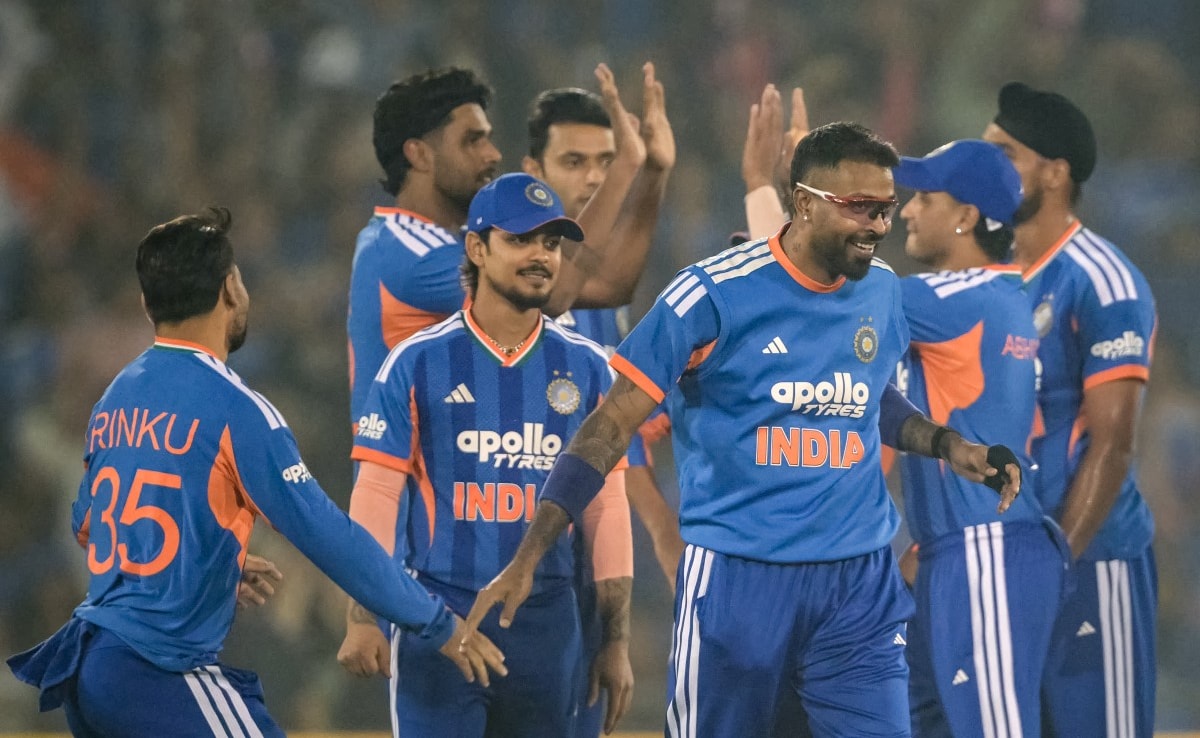
Former India captain and T20 World Cup winner, Rohit Sharma, has shared his expert insights into the crucial players who will likely shape India's destiny at the upcoming T20 World Cup in 2026. With India entering the tournament as defending champions and formidable contenders, Rohit pinpointed all-rounder Hardik Pandya and left-arm pacer Arshdeep Singh as pivotal figures for the squad.
Sharma particularly emphasized Arshdeep Singh’s multifaceted skills, highlighting his effectiveness both with the new ball and during the critical death overs. "Having both Jasprit Bumrah and Arshdeep Singh in the attack is a tremendous asset because their primary objective is always to hunt for wickets," Rohit explained. "Arshdeep's greatest strength lies in his ability to swing the new ball, which allows him to secure early breakthroughs. He typically handles the opening and closing overs, arguably the most vital phases of a T20 innings, and he excels in both."
He further elaborated on Arshdeep’s strategic approach: "With the new ball, he has the knack of swinging it away from left-handers, often leading to catches in the slips, and he targets the pads of right-handers. Importantly, he has also developed the skill of moving the ball away from right-handers, adding another dimension to his bowling. These are indispensable qualities for any new-ball bowler, and his constant pursuit of wickets is why he often starts the innings." Recalling a memorable performance, Rohit added, "His spell in the 2024 T20 World Cup final was exemplary. I vividly remember his crucial dismissal of a well-set batter and how he conceded minimal runs in the 19th over, building immense pressure on the opposition. This ability to deliver under pressure, both upfront and at the death, will be key for India in the 2026 T20 World Cup." India had clinched the previous edition of the tournament under Rohit’s captaincy before his retirement from the T20 international format.
Turning his attention to Hardik Pandya, Rohit underscored the all-rounder's immense value in providing equilibrium to the team. "Hardik Pandya's presence in the team carries immense weight due to his consistent contributions with both bat and ball," Rohit asserted. "His batting prowess becomes paramount when the team faces challenging situations. If we're at, say, 160 runs after 15-16 overs and Hardik is at the crease, he possesses the power and skill to propel the score to 210-220. Conversely, if the team finds itself struggling at 50 for 4, he has the temperament to meticulously rebuild the innings."
Rohit elaborated on the demanding nature of Pandya's batting position: "Batting in the middle order, at numbers 5, 6, or 7, is incredibly tough, which is precisely why Hardik’s role is critical across all formats. We are well aware of his bowling capabilities; he delivers in crucial phases – with the new ball, through the middle overs, and at the death. His all-round contribution is vital as it affords the team the luxury of playing six specialist bowlers while maintaining significant batting depth."
Beyond individual player analysis, Rohit also delved into a significant tactical conundrum facing the Indian team management: the deployment of spin maestros Kuldeep Yadav and Varun Chakravarthy in the same playing XI. "The paramount challenge for captain Suryakumar Yadav and coach Gautam Gambhir will undoubtedly be how to effectively field both Kuldeep Yadav and Varun Chakravarthy simultaneously," Rohit observed. "Achieving this combination might necessitate playing with only two seamers, which presents a considerable strategic hurdle."
"However, I confess I would be strongly tempted to include both Varun and Kuldeep," he continued. "They are genuine wicket-takers, and batters often find it extremely difficult to read their variations. Given the right conditions, I would certainly advocate for their inclusion." Rohit then touched upon the prevailing conditions in India during the tournament window. "Considering the playing conditions in India, especially observed during the recent series, dew is a significant factor. In February and March, as winter transitions, heavy dew is commonplace across most regions. Even in places like Mumbai, which don't experience extreme cold, dew is prominent. I'd estimate that 90-95 percent of grounds in India will contend with dew. This presents a unique challenge. The decision ultimately rests on the coach and captain's comfort level with potentially fielding three frontline spinners. There's no rigid rule, it hinges entirely on the team leadership's tactical vision."
Finally, Rohit offered specific advice to Kuldeep Yadav regarding his on-field demeanor, particularly concerning DRS reviews. "My straightforward counsel to Kuldeep is to simply bowl, go back to his mark quietly, and refrain from appealing on every single delivery. This is a fundamental aspect of the game. Despite repeated reminders, this enthusiastic tendency persists. One must apply common sense; just because the ball touches the pad doesn't automatically mean it's out every time – this isn't amateur cricket."
"While I appreciate his passion, the team's interests must come first. Each team is allotted only two DRS reviews. As a wicketkeeper, I would have a clear vantage point to assess the pitch and impact, and I could then guide the bowler. However, from positions like cover or slip, the angle is compromised. Therefore, it's imperative to heed the advice of the wicketkeeper and the bowler. This is why, when a review is considered for Kuldeep's bowling, I always look to the keeper for the final decision, not at the bowler."
The T20 World Cup 2026 is scheduled to unfold across various venues in India and Sri Lanka, running from February 7 to March 8, promising an exhilarating display of cricketing talent and strategic battles.
You Might Also Like

More in Cricket
- "IPL 2026: BCCI Bans Rival Teams From Sharing Practice Pitches"
- BCCI Issues Strict Guidelines For All 10 Franchises Ahead Of IPL 2026
- "Laxman's 2001 Eden Epic: Why Mind Conquered Body for India"
- Why there’s always drama when it’s India vs Pakistan
- "Usman Tariq: T20 World Cup Action Baffles Batters, Sparks Debate"
