Mohammad Yousaf Triggers "Viewership Discussion" Over Bangladeshs T20 World Cup Axe, Gets Fact Checked
By NewsDose Team
Updated on January 28, 2026
5 min read
Key takeaways
Mohammad Yousaf was fact-checked on social media over his claims on the T20 World Cup row involving ICC and Bangladesh.
A significant controversy has erupted in the cricketing world following statements made by legendary Pakistan cricketer Mohammad Yousaf regarding Bangladesh's exclusion from the upcoming T20 World Cup 2026. His claims, centered on potential viewership losses for the International Cricket Council (ICC), quickly ignited a passionate debate across social media platforms and were subsequently subject to a crucial fact-check.
The saga began with the ICC's decision to deem Bangladesh's request for a change in their designated T20 World Cup venues as 'unreasonable'. Despite assertions from the Bangladeshi government regarding security threats, the global cricketing body found no credible evidence to support these claims, leading to Bangladesh's replacement by Scotland in the biennial showpiece event. This development sent ripples through the cricketing fraternity, particularly in the subcontinent, prompting strong reactions from influential figures.
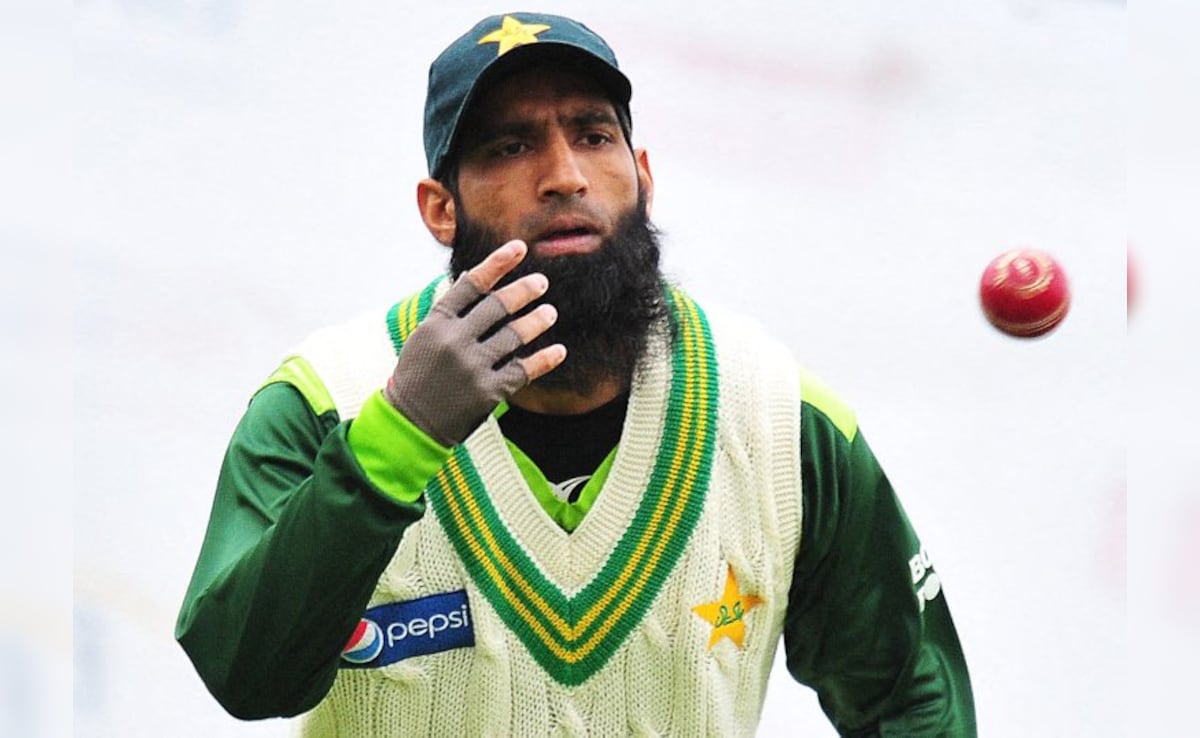
Responding to Bangladesh's ouster, Mohammad Yousaf, a towering figure in Pakistan cricket history and a respected analyst, took to a popular microblogging platform to voice his strong disapproval. He argued that the absence of Bangladesh, a nation renowned for its fervent cricket following and substantial fan base, would inevitably result in a substantial decline in global viewership for the ICC. Yousaf presented what he claimed were compelling statistics, asserting that the combined cricket viewership of ten nations—New Zealand, Australia, Scotland, Nepal, Netherlands, Ireland, Namibia, Zimbabwe, Sri Lanka, and Afghanistan—was broadly equivalent to Bangladesh's standalone viewership. He specifically cited figures: "10 nations combined: 178 million" versus "Bangladesh alone: 176 million."
Furthermore, Yousaf’s post extended beyond mere numbers, delving into the principles of sports governance. He critiqued the decision, stating, "In a sport driven by global audiences, sidelining Bangladesh's legitimate security concerns raises serious questions about consistency and governance. When accommodation becomes selective, fairness disappears. Cricket cannot be administered by influence - only by principle." His remarks resonated with many who felt Bangladesh had been unfairly treated, yet they also drew immediate scrutiny from within the cricketing community and online fact-checkers.
However, Yousaf's influential statements were swiftly challenged by a community-driven fact-checking initiative on the platform, designed to ensure accuracy in public discourse. A clear and concise community note appended to his post debunked his core premise. The note elucidated: "The figures cited (178 million combined, 176 million for Bangladesh) match the populations of those countries, not cricket viewership. Global viewership shares place Bangladesh at 4-5%, with Australia having high household penetration." This crucial clarification highlighted a fundamental misinterpretation by Yousaf, differentiating between national population figures and actual cricket viewership data, which are vastly different metrics in the intricate landscape of sports broadcasting and audience engagement.
The incident underscores the growing importance of accurate data in public discourse, especially in the age of social media where influential personalities can inadvertently spread misinformation. While the passion of former players for their sport and regional teams is understandable, the reliance on verified statistics is paramount for fostering informed discussions and maintaining credibility in an increasingly scrutinized public sphere.
Adding another layer of complexity to this unfolding drama, Pakistan has been actively contemplating its own stance following Bangladesh's exclusion. With the T20 World Cup set to commence on February 7 in India and Sri Lanka, there have been serious discussions within Pakistan about a potential withdrawal from the tournament in a show of solidarity with their South Asian counterparts. The chief of the Pakistan Cricket Board (PCB), Mohsin Naqvi, reportedly met with the country's Prime Minister, Shehbaz Sharif, to deliberate on this sensitive matter and to finalize Pakistan's participation. This high-level meeting indicates the gravity with which the situation is being viewed in Islamabad, given the profound implications of such a decision.
While the Pakistan government has opted to postpone its final decision on participation by a week, the implications of such a withdrawal are profound. A move to boycott the T20 World Cup could lead to significant global isolation for Pakistan cricket, potentially damaging its standing within the ICC and among other cricketing nations. Furthermore, it would almost certainly trigger severe financial sanctions from the ICC, potentially plunging the PCB into considerable financial ruin. The long-term consequences could impact player development, international tours, and the overall health of cricket in Pakistan, making this a decision fraught with immense risks. The cricketing world now watches closely as Pakistan weighs its options, navigating a delicate balance between regional solidarity and the potentially catastrophic repercussions of a tournament boycott on the global stage.
You Might Also Like

More in Cricket
- "IPL 2026: BCCI Bans Rival Teams From Sharing Practice Pitches"
- BCCI Issues Strict Guidelines For All 10 Franchises Ahead Of IPL 2026
- "Laxman's 2001 Eden Epic: Why Mind Conquered Body for India"
- Why there’s always drama when it’s India vs Pakistan
- "Usman Tariq: T20 World Cup Action Baffles Batters, Sparks Debate"
