Opinion: Opinion
By NewsDose Team
Updated on January 30, 2026
5 min read
Key takeaways
If the Bangladesh Cricket Board and the Bangladesh government thought that there was a genuine security threat to their players in India, why weren't these concerns raised earlier?
The global cricketing landscape, once primarily defined by heroic on-field battles and the pursuit of sporting excellence, has undergone a seismic transformation over recent decades. This evolution, mirroring the complexities of modern life, has unfortunately ushered in an era fraught with chaos, anxiety, and simmering tensions that often transcend the boundary ropes. The romanticized vision of cricket rivalries as mere contests of skill and nerve between exceptionally talented athletes has largely faded, replaced by a more intricate and often politically charged dynamic.
There was a time when conversations about cricket revolved passionately around a batter’s blazing form, a bowler’s masterful torment of opposition lineups, or a captain’s strategic brilliance. These discussions unfolded in living rooms, bustling clubs, vibrant roadside tea stalls, and university grounds, uniting fans in a shared adoration for the game. Today, however, the predominant narrative, frequently dominating headlines long before a tournament even begins, concerns off-field confrontations involving nations, their respective cricket boards, and administrative officials. While purists of the game undoubtedly persist, their voices are increasingly drowned out by the clamour of geopolitical considerations that now inextricably intertwine with sporting events. The notion of keeping sports pristine and separate from the political arena has, regrettably, become an increasingly futile endeavour.
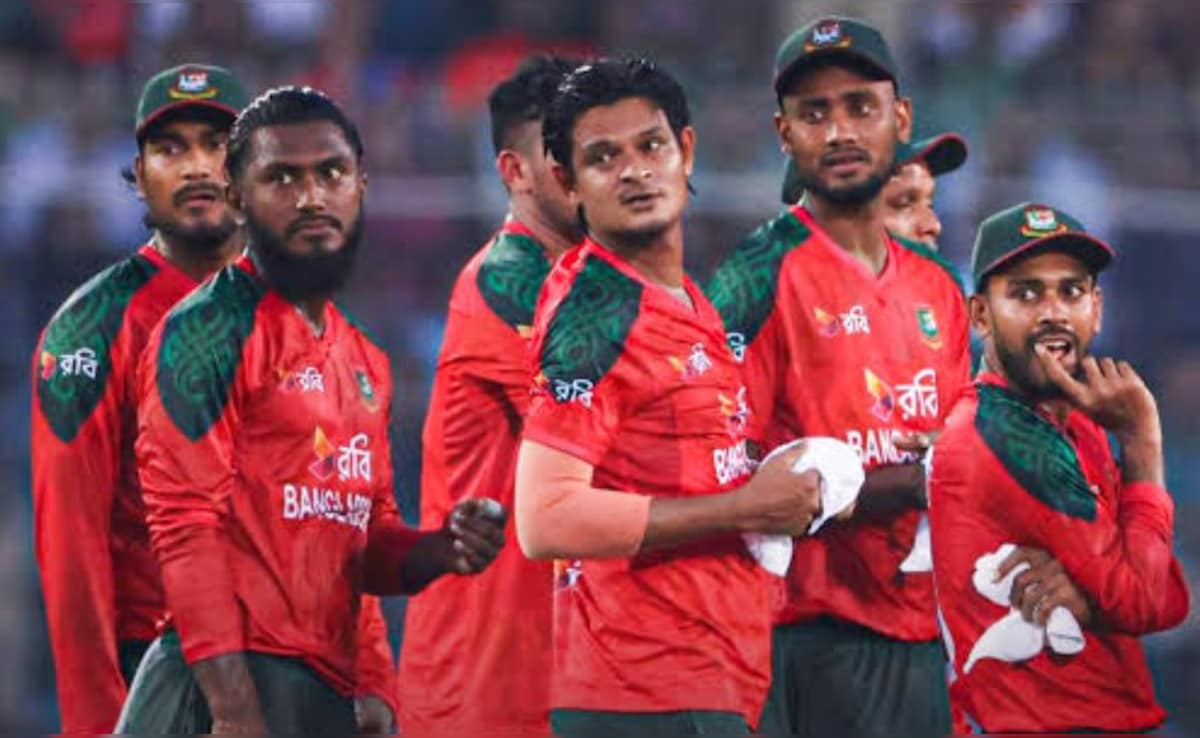
A stark and lamentable illustration of this burgeoning trend is the recent, deeply unfortunate exclusion of a highly talented national team from the upcoming ICC Men's T20 World Cup. Despite having officially qualified and possessing a legitimate claim to challenge on cricket’s grandest stage, their cricketers have been unceremoniously robbed of the opportunity to showcase their skills and entertain millions of devoted fans. The repercussions extend far beyond the playing eleven; an estimated 18 crore people in their cricket-obsessed nation, where the sport has become an intrinsic facet of national identity, will now be deprived of watching their heroes in action.
The team in question, initially drawn into Group C alongside formidable opponents like England, the West Indies, Nepal, and Italy for the tournament set to be co-hosted by India and Sri Lanka, were by no means mere participants. As the third-highest ranked team in their group, and given the inherently unpredictable nature of the T20 format, they harboured genuine aspirations of advancing to the Super Eight stage, potentially needing just one exceptional performance to turn the tide. Beyond that, the possibilities were limitless. Now, all such prospects remain tragically confined to the realm of hypotheticals, a truly crying shame for players and supporters alike.
The decision to award India and Sri Lanka co-hosting rights was announced back in November 2021, forming part of the international cricketing body's 2024-2031 cycle of men’s tournaments. However, the background to the recent withdrawal is layered with complex domestic and diplomatic issues. Credible reports surfaced regarding the targeting of the Hindu community in Bangladesh from August 2024, adding a sensitive geopolitical dimension to the unfolding events. This context is crucial in understanding the subsequent chain of decisions and their timing.
The timing of the national cricket board's actions, under the directive of its interim government, raises a series of critical and unavoidable questions that demand scrutiny:
- If genuine security concerns for their players existed while competing in India, why were these significant anxieties not formally raised by the national cricket board or government at a much earlier juncture?
- Why did the interim government instruct the national cricket board to petition the international cricketing body for a complete venue change for all their matches scheduled in India just one day after a prominent Indian Premier League (IPL) franchise released their star fast bowler, Mustafizur Rahman, from its 2026 squad? (Mustafizur was released on January 3, 2026, and the venue change request was made on January 4). This close temporal proximity suggests a potential retaliatory connection.
- Was there any direct and transparent communication between the national cricket board and its Indian counterpart regarding these security concerns prior to the public request for a venue change?
- What conceivable link exists between player security in India and the interim Bangladeshi government’s indefinite ban on all IPL broadcasts and promotions within its territory? While officially cited as being “in public interest,” this move was widely interpreted as a tit-for-tat response to the Mustafizur incident, particularly as he was the sole Bangladeshi player slated to feature in IPL 2026.
From another perspective, the handling of the entire Mustafizur episode by the Indian franchise and league administrators could undoubtedly have been managed with greater foresight and sensitivity. Everyone involved was acutely aware of the volatile political climate in Bangladesh, which had been simmering with anti-establishment protests against the previous government since July 2024, escalating from peaceful demands to violent clashes. To circumvent any potential public backlash or diplomatic fallout in India involving Bangladeshi players, the most prudent course of action might have been to avoid including Mustafizur in the player auction altogether. Instead, he was not only included but also commanded a substantial sum – approximately Rs 9.20 crore – from an IPL franchise, only for that franchise to later be reportedly asked to release him. This sequence of events was undeniably perceived as a deeply humiliating slight by the Bangladeshi cricketing establishment, exacerbating an already fragile diplomatic standoff. While undoubtedly unfair to Mustafizur himself, a transparent explanation at an earlier stage, before his acquisition and financial commitment, might have averted this specific crisis, even if it meant denying him a significant playing opportunity and income.
However, it is equally imperative for the Bangladeshi interim regime to grasp the gravity of the situation and resist transforming it into an issue of national ego, particularly given the profound implications for the health and future of their national cricket. The stakes were simply too high. Despite receiving explicit assurances from the international cricketing body regarding robust security provisions for their players and staff during their stay in India, and an internal security assessment by the same body that identified no specific threat to their team, Bangladesh chose to gamble significantly. By steadfastly adhering to their threat of withdrawing from the World Cup, they risked — and ultimately suffered — a spectacular self-inflicted wound. Their attempt to salvage perceived lost pride has, ironically, backfired, culminating in further humiliation as the international cricketing body swiftly replaced them with Scotland in the tournament. Decision-makers within Bangladesh’s sporting and governmental apparatus must confront the stark realities of contemporary international relations. The ripple effects of this decision, both financial and otherwise, are projected to be enormous and long-lasting.
The immediate financial penalties are staggering. Reports indicate that the national cricket board will forfeit a participation fee of approximately $3 million (equivalent to around 36.33 crore Bangladeshi Taka), alongside any potential prize money the team or individual players might have earned. The most significant blow, however, will be the substantial cut from the international cricketing body's central revenue distribution. Traditionally, Bangladesh receives a 4.46% share of this annual revenue pie, which, based on recent projections, amounts to roughly $27-30 million. This jeopardises almost 60% of the national cricket board’s annual income, a catastrophic blow to its financial stability and future development plans. Furthermore, by opting to adhere to its hardline stance and refusing to participate in the World Cup unless its last-minute demands for a venue change were met, Bangladesh will also be subject to a hefty $2 million fine from the international cricketing body. This penalty is levied under the Member Participation Agreement, which stipulates fines for any member nation that withdraws from a tournament without justified cause. Beyond these direct penalties, there are myriad other financial repercussions: an estimated 300 crore BDT loss for the host broadcaster in Bangladesh, significant reductions in advertisement revenue, and a high probability of Bangladeshi players losing lucrative endorsement deals with Indian companies, given that visibility remains the sponsors’ holy grail in the modern game.
While time often possesses a remarkable capacity to heal wounds, and the national cricket board might eventually navigate these severe financial repercussions, what has been most severely jeopardised are India’s future bilateral cricket associations with its neighbours. This effectively translates into millions more in potential cricketing and broadcast revenue that could now be at risk. Regardless of the trajectory of strictly diplomatic relations between the two nations, future cricketing ties could well become strained for the foreseeable future. A significant white-ball tour by India to Bangladesh, originally postponed from August 2025 to September 2026, is now scheduled for later this year. Whether this crucial series will proceed as planned, or fall victim to the lingering chill of this recent standoff, remains a critical question.
Adding another layer of controversy, the Bangladeshi Sports Advisor, while addressing a press conference in Dhaka, was quoted by a local publication as alleging that the international cricketing body had identified three potential security threats for the World Cup: Mustafizur’s participation, Bangladeshi fans wearing national jerseys, and heightened security risks due to upcoming Bangladeshi elections (scheduled for February 12). However, this claim was swiftly and unequivocally refuted by a source within the international cricketing body. The source was quoted as stating, "…What the Sports Advisor said is a complete lie. The international cricketing body's communication never mentions that Mustafizur’s selection will be an issue. It’s complete falsehood… There is no such advisory in formal communication."
This direct contradiction compels yet another crucial inquiry: if, as asserted by the international cricketing body, there was no such communication, particularly concerning Mustafizur’s presence, why would such an untruth be promulgated? Was it deemed so vital to maintain a hardline stance, irrespective of genuine assurances and despite the monumental stakes involved? This incident underscores a worrying trend where political manoeuvring appears to eclipse sporting integrity and the welfare of the game itself.
The tragic outcome for Bangladesh cricket serves as a potent reminder of the fragility of sporting goodwill when subjected to intense geopolitical pressures. The dreams of a nation’s cricketers, the aspirations of its passionate fans, and the financial stability of its cricket board have all been severely compromised in a dispute that spiralled far beyond the playing field. The global cricketing community watches with concern, hoping that lessons are learned and that the spirit of sportsmanship can once again triumph over the complex web of international politics.
You Might Also Like


More in Cricket
- "IPL 2026: BCCI Bans Rival Teams From Sharing Practice Pitches"
- BCCI Issues Strict Guidelines For All 10 Franchises Ahead Of IPL 2026
- "Laxman's 2001 Eden Epic: Why Mind Conquered Body for India"
- Why there’s always drama when it’s India vs Pakistan
- "Usman Tariq: T20 World Cup Action Baffles Batters, Sparks Debate"
