Inside Op Sindoor: How India’s air power forced Pak to beg for truce just in 88 hours
By NewsDose Team
Updated on January 27, 2026
5 min read
Key takeaways
Defence & Security News: The strong performance of India’s integrated air defence network, combined with simultaneous precision strikes by the Indian Air Force (IAF) deep insi.
A recent in-depth analysis from a prominent European strategic studies institute has shed critical light on the swift resolution of the May 2025 conflict, revealing how a formidable display of air power orchestrated by India proved instrumental in compelling Pakistan to seek a ceasefire within a mere 88 hours. The conflict, though brief, unequivocally demonstrated India's enhanced military capabilities and readiness, marking a significant moment in regional dynamics.
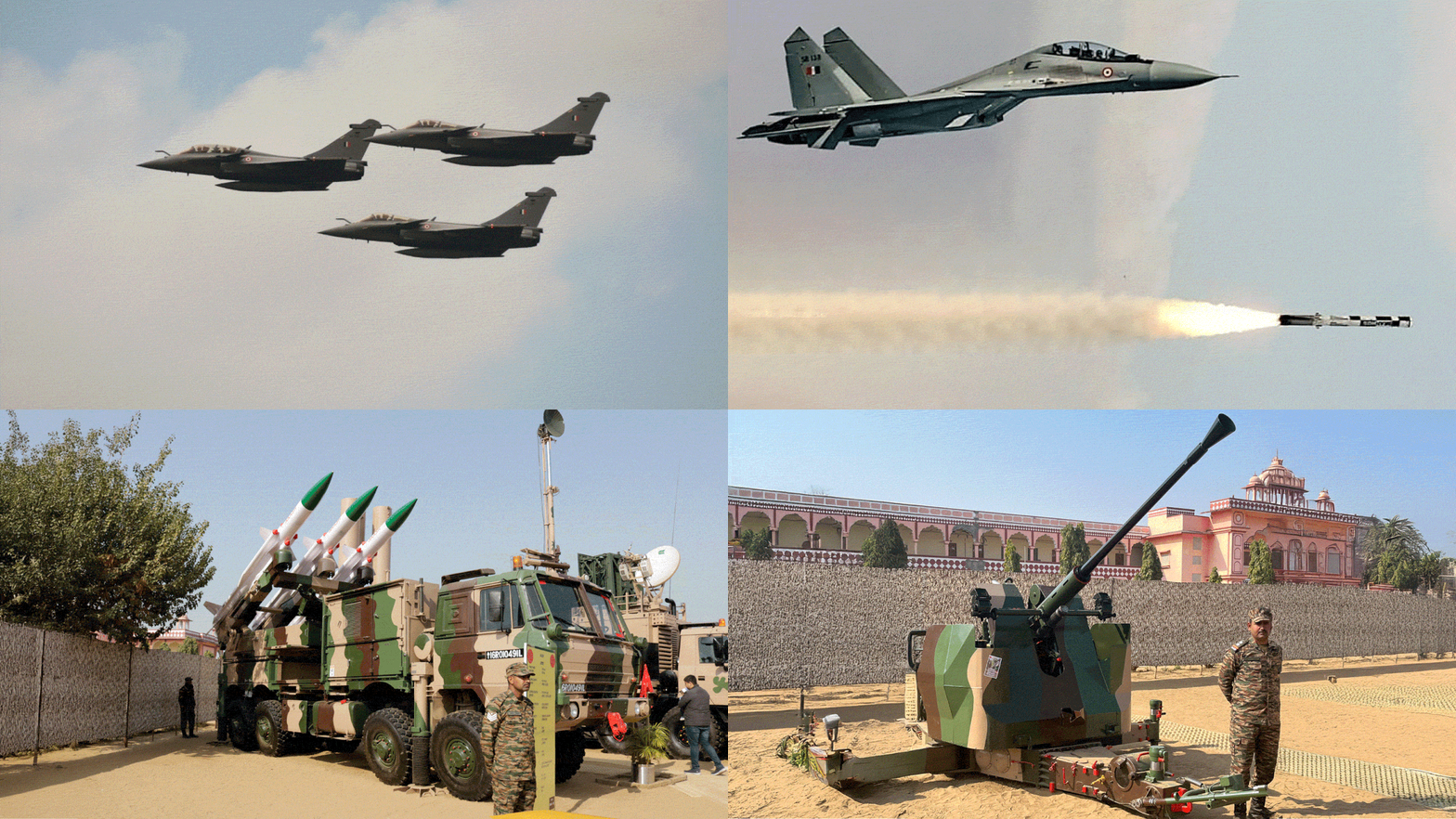
Central to this rapid outcome was the unparalleled efficacy of India’s sophisticated, integrated air defence network. This cutting-edge system, designed for comprehensive aerial surveillance and interception, showcased its advanced capabilities by effectively neutralizing hostile incursions and safeguarding strategic assets. Its seamless operation created an almost impenetrable shield over key Indian territories, severely limiting Pakistan's capacity for offensive aerial maneuvers and dictating the tempo of the engagement from the outset.
Concurrently, the strategic offensive operations conducted by the Indian Air Force (IAF) played a decisive role. Employing state-of-the-art platforms and precision-guided munitions, these simultaneous strikes targeted critical military infrastructure and command-and-control centres deep within Pakistani territory. The accuracy and intensity of these coordinated assaults inflicted substantial damage, disrupting Pakistan's logistical lines and significantly degrading their operational readiness. The psychological impact of these deep penetrations, coupled with Islamabad's realization of India's overwhelming air superiority, quickly eroded their will to continue hostilities.
The report from the European think tank emphasizes that the combination of India's robust defensive umbrella and relentless offensive pressure created an untenable situation for Pakistani forces. Faced with rapidly diminishing operational capabilities and mounting strategic losses, Islamabad had no viable option but to appeal for an immediate cessation of hostilities. This swift capitulation, occurring just over three days—precisely 88 hours—after the conflict's commencement, stands as a resounding testament to the synergistic application of modern air warfare doctrines and advanced military technology by India.
Military analysts and experts globally are expected to study this particular engagement for years to come as a prime example of how superior air power, when meticulously planned, integrated, and executed, can dictate the terms of engagement and bring about a rapid, decisive conclusion to armed conflicts. It powerfully underscores the critical importance of continuous investment in both defensive and offensive aerial capabilities for maintaining regional security and projecting strategic influence.