NDTV Exclusive: The Hunters Of Lyman
By NewsDose Team
Updated on January 30, 2026
5 min read
Key takeaways
In an exhaustive interview with NDTV, drone pilots and operators from Ukraine's Signum Batallion go into details about drone warfare and what happens on the frontlines.
In the evolving landscape of modern conflict, the skies above contested territories hum with a new kind of combat. East of the war-torn town of Lyman, the conflict unfolds less with the deafening roar of artillery and more with the subtle, electronic whir of First-Person View (FPV) drones. At the forefront of this technological shift is Ukraine's elite Signum Battalion, a unit that has redefined drone warfare through precision, innovation, and relentless operational effectiveness.
Operating from behind screens in camouflaged positions, Ukrainian drone pilots meticulously track Russian supply routes and troop movements over narrow forest tracks and snow-dusted roads. Their work is a testament to methodical planning, where every observation, every tracked movement, and every logistical interruption creates a cascading effect across the frontlines. This relentless vigilance transforms the battlefield into a digital canvas where targets are identified, engaged, and neutralized with chilling efficiency.
The Art of Remote Engagement
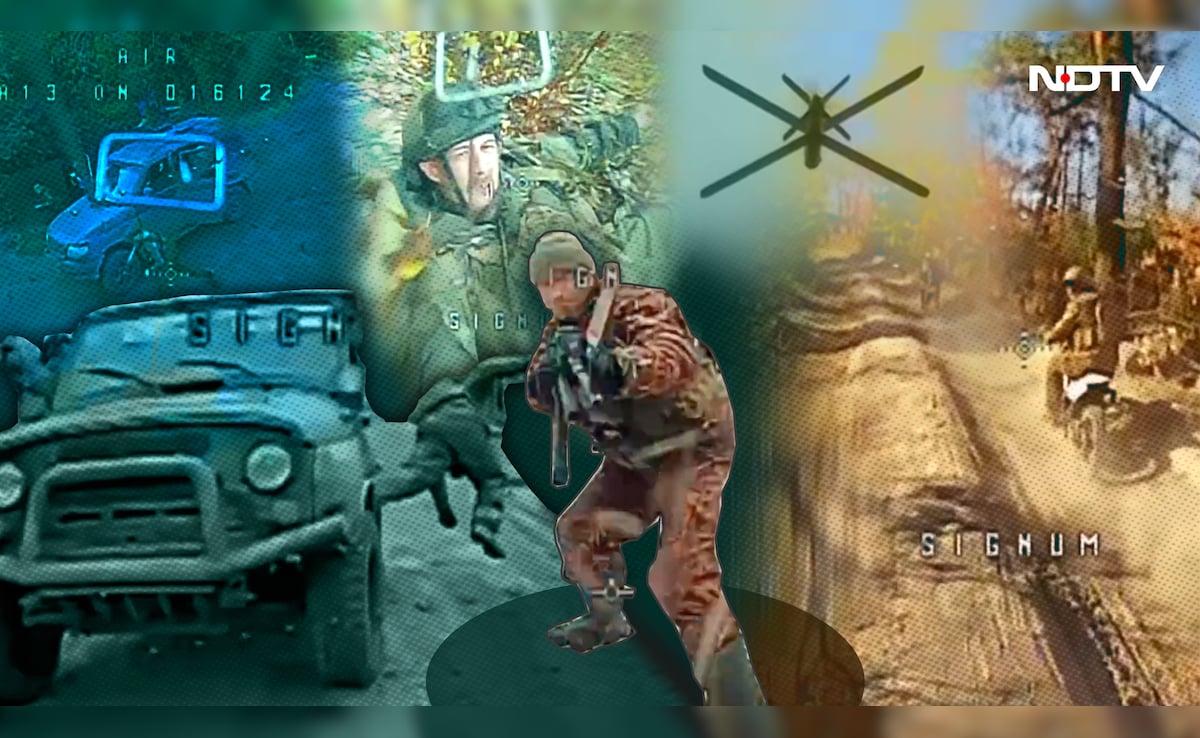
One striking example of their prowess involved an all-terrain vehicle (ATV) carrying two Russian soldiers and crucial supplies. Captured by a drone's high-altitude camera, the ATV sped along a forest path. The Ukrainian FPV drone pursued with unwavering focus. Despite the soldiers' desperate attempt to abandon the vehicle moments before impact, their escape was tragically futile. The ATV was annihilated, its supplies lost, and another vital link in the Russian operational chain near Lyman severed.
Elsewhere, the Signum pilots unleash waves of their 'Molniya' (Lightning) kamikaze drones. These agile craft punch through enemy defensive fire, targeting dugouts, vehicles, and temporary shelters with pinpoint accuracy. Even under the cloak of night, Russian troop movements find no sanctuary. Equipped with advanced thermal cameras and night-flying capabilities, Signum's drones illuminate the forest, transforming it into a stage where every movement is exposed. Operators then systematically engage targets, validating their grim adage: 'He who moves at night does not live to see the morning.'
From Volunteers to Formal Integration
The Signum unit's journey began in the tumultuous early days of Russia’s full-scale invasion in 2022. Formed as a volunteer detachment dedicated to defending Kyiv, its members quickly found themselves redeployed to eastern Ukraine. There, they bolstered the defenses of the 3rd Battalion of the 93rd Mechanized Brigade in one of the war's most fiercely contested sectors near Izium. This region witnessed disproportionate armored assaults, with up to a dozen tanks often committed to attacking individual villages. Later, the unit was formally integrated into the Armed Forces of Ukraine, marking a crucial step in its evolution.
The transition from a decentralized volunteer unit to a formalized technical element was not without challenges. In early 2022, the Ukrainian Armed Forces lacked clear protocols for integrating irregular formations. However, forward-thinking commanders like Battalion Commander Oleksandr Sak recognized Signum’s immense potential. By August 2022, Signum personnel, then numbering around 40 soldiers, were officially enlisted into his battalion, setting a precedent for integrating specialized volunteer groups.
Pioneering Tactical Lessons and Innovations
Signum’s early and systematic use of FPV drones as strike platforms in 2022 heralded a fundamental shift in the character of warfare. Combat increasingly moved towards remote engagement, where drones, rather than traditional infantry, became the primary means of contacting and engaging the enemy. A key tactical lesson emerged: 'no number of drones should be spared against a single occupying soldier.'
Equally critical was the prioritization of counter-reconnaissance. Degrading enemy situational awareness by destroying their surveillance UAVs became a paramount objective. In 2025 alone, Signum crews reportedly destroyed over 520 enemy reconnaissance drones, including high-value systems costing hundreds of thousands of dollars.
Leadership and Resilience: The Story of Sova
The unit’s commander, known by the callsign 'Sova,' born in 1991, embodies remarkable resilience. A veteran of the 2013-2014 Revolution of Dignity, he joined the Kulchytskyi Battalion as a volunteer in 2014. Rather than pursuing a conventional military path, Sova remained continuously engaged in defending Ukraine throughout successive phases of Russian aggression, receiving his first officer rank only in 2025 despite his extensive combat experience.
Holding the Line: Soledar and Bakhmut
Signum gained notable recognition for its tenacious defense during the intense battles for Soledar and Bakhmut, holding positions for over four months. Their success hinged on the tight integration of reconnaissance assets with mobile firepower. Unlike many conventional units, Signum’s reconnaissance teams maintained direct control over their fire assets, dramatically minimizing delays caused by layered command structures. This enabled rapid decision-making and agile maneuvering. During these critical defenses, the unit deployed mobile mortars, MK19 automatic grenade launchers, AGS systems, and FPV drones. Planning and execution were handled internally, fostering a high degree of individual responsibility rather than rigid adherence to external orders.
The Evolving Profile of an Ideal Pilot
While technical aptitude is crucial, Signum places significant value on FPV pilots with prior infantry experience. Even today, drone operators with an infantry background are expected to undertake close-quarters tasks when adverse weather or electronic interference makes flying impossible. The unit deliberately operates in close coordination with infantry, positioning itself near the forward line. This proximity to the enemy shortens response times and significantly increases the likelihood of engaging high-value targets before competing units.
Precision Targeting and Battlefield Impact
With over 500 enemy vehicles confirmed destroyed or damaged by Signum since late 2023, target prioritization is a sophisticated process guided by higher command and the 'E-Points' system. This system assigns weighted values to different target categories—for instance, 12 points for an enemy infantryman and 40 for a tank. During periods of high drone availability in 2025, Signum achieved up to 6,500 points per month. Initially, emphasis was placed on enemy logistics and long-range reconnaissance drones, leading to the destruction of hundreds of vehicles. More recently, infantry has become the primary focus, with an average of 150-200 enemy personnel neutralized per month. Enemy FPV operators are also treated as high-value targets, receiving elevated scoring, and during enemy assault operations, priority shifts to the destruction of armored vehicles.
Adapting to New Threats: Countering 'Turtle Tanks'
As Russian forces deploy increasingly improvised physical defenses, such as the notorious 'turtle tanks,' Signum continually adapts its strategies. Against these heavily modified armored vehicles, the unit employs large, Ukrainian-produced shaped-charge warheads and custom munitions developed in-house. These targets are typically engaged through coordinated strikes, combining the precision of FPV drones with the heavier payload capabilities of bomber UAVs.
Pioneering Drone-on-Drone Engagements
Signum has also made significant strides in drone-on-drone combat. Attempts to intercept enemy UAVs with FPV drones began in early 2023 during the Bakhmut campaign, initially as decentralized initiatives. By 2024, such engagements became operationally necessary due to shortages of MANPADS missiles. Within this challenging environment, Signum became the first unit to successfully destroy a Russian Lancet loitering munition using another drone. Their success in intercepting a Lancet drone, a high-value loitering munition, during a night mission against Shaheds, demonstrated skillful coordination and flawless work with their 'STING' interceptor drone.
During the summer of 2024, the unit neutralized over 70 aerial targets in a single month. Initial encounters with any new aerial threat are always the most challenging, but as tactics are refined, effectiveness rapidly increases. By the end of 2025, Signum ranked among the leading Ukrainian units in aerial target destruction using drones, and from mid-2025 onward, they were among the first to intercept Shahed drones with interceptor UAVs, destroying more than 60 to date.
Technological Nuances: Fibre-Optic vs. FPV and Air Detonation
The unit also sheds light on the technical distinctions of drone technology. Fibre-optic drones transmit video via a physical cable, offering stable signals akin to cable television or a wired internet connection. In contrast, radio-controlled FPV drones operate like satellite TV, relying on radio antennas and repeaters, with signal quality fluctuating based on location. The weight of the cable spool, ranging from 1.5 to 3 kilograms for ranges exceeding 20 kilometers, is a significant factor for fibre-optic drones.
Regarding engagement methods, air detonation systems on FPV interceptors differ technically from traditional contact-fused drones. Enemy reconnaissance drones, often lightweight structures of plywood, aluminum, and plastic, require only a proximity air burst detonating one to two meters from the target for destruction, negating the need for direct contact and requiring specialized pilot training in target profiling and detonation timing.
Domestic Development and AI Integration
As Ukraine moves towards domestic drone models like the 'Shmavik,' Signum engineers have developed reconnaissance drones comparable in function to popular commercial models. However, achieving equivalent software maturity, stabilization, and user-friendliness requires substantial time and financial investment, as system integration and usability at scale remain key advantages of established global manufacturers. Signum engineers are actively testing visual navigation and autonomy solutions, recognizing the significant potential of AI, with broader deployment expected in 2026. The 'Sting' interceptor drone, produced by Wild Hornets, for instance, costs approximately $3,000 when equipped with a TV camera, significantly cheaper than comparable Western systems, highlighting a sustainable cost model for high-volume strikes.
Operational Security and Data Protection
Prioritizing Ukrainian-developed software is crucial for Signum to enhance operational security and reduce data exposure risks. When foreign platforms are utilized, particularly commercial systems, additional security modifications are applied to mitigate potential vulnerabilities, ensuring sensitive operational data remains protected.
Reintegration and Psychological Well-being
The rehabilitation of soldiers returning from captivity is highly individualized. For many within Signum, meaningful participation in operational success serves as a profound form of psychological recovery. Between March and December 2025, Signum neutralized over 1,000 enemy infantry using FPV drones, destroyed more than 700 enemy shelters with bomber drones, and dozens of artillery systems and hundreds of vehicles. Ranking among the top three units in the E-Points system for several months, contributing to tangible battlefield results is considered the most effective form of rehabilitation.
Unmet Needs and Future Ambitions
Despite their achievements, the battalion’s most critical unmet need remains a consistent supply of drones. They could effectively employ two to three times more drones than they currently receive from state and volunteer sources, which would proportionally amplify their operational results. Signum believes the target set by the new Minister of Defence, Mykhailo Fedorov, to neutralize 50,000 Russian occupying forces per month is realistic, provided drone availability is significantly increased.
Procurement policy also presents a challenge. The state primarily purchases certified drones, yet newer, more capable systems are already available but await certification. These include fibre-optic drones with ranges exceeding 30 kilometers and systems from manufacturers who, despite proven effectiveness, choose not to undergo state certification, such as the Sting drones from Wild Hornets.
Countering Evolving Russian Tactics
Over the past six months, Russian forces have increasingly resorted to mass infantry assaults, aiming to exhaust Ukrainian drone inventories. Signum’s response has been to expand its own production capacity and strengthen cooperation with volunteer suppliers, ensuring sufficient reserves for sustained operations.
Regarding the psychological impact on drone operators, stress is most pronounced when external factors, such as weather or technical failures, prevent mission execution. In contrast, Signum operators who successfully eliminate five enemy combatants in a day report feeling optimal, while those who neutralize ten Russian invaders generally report excellent morale. Their focus on mission success and tangible results appears to be a significant factor in their psychological resilience.
The Signum Battalion continues to push the boundaries of drone warfare, demonstrating that in the modern battlefield, technological innovation, tactical ingenuity, and unwavering dedication are paramount to success.


