NDTV Exclusive: The Hunters Of Lyman
By NewsDose Team
Updated on January 30, 2026
5 min read
Key takeaways
In an exhaustive interview with NDTV, drone pilots and operators from Ukraine's Signum Batallion go into details about drone warfare and what happens on the frontlines.
In the grim expanse east of Lyman, the cacophony of conventional warfare is increasingly yielding to a new, more insidious soundtrack: the low, electronic hum of First-Person View (FPV) drones. These advanced aerial sentinels are reshaping the frontlines of the ongoing conflict, turning tactical engagements into a deadly game of cat and mouse played from afar. At the heart of this technological revolution stands Ukraine's Signum Battalion, an elite drone unit whose methodical precision and innovative tactics are rewriting the rules of modern combat.
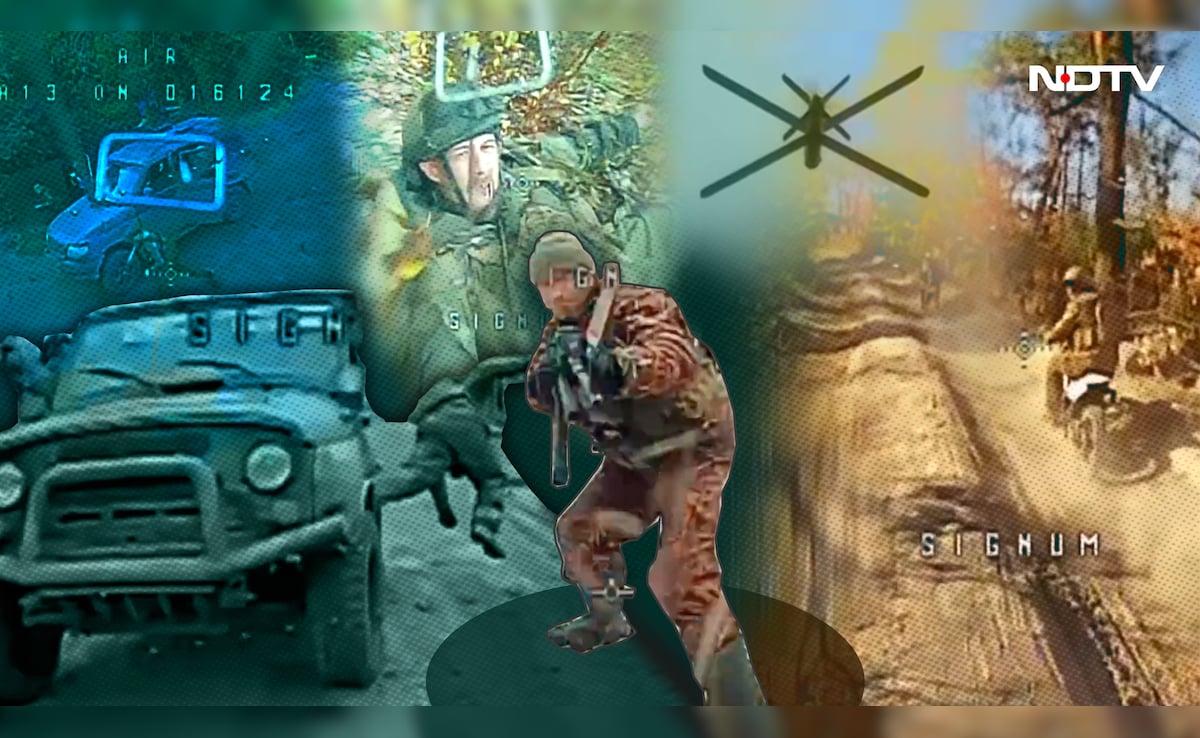
High above the narrow forest tracks, cratered roads, and snow-dusted landscapes, Signum pilots operate with the calculated patience of skilled hunters. Their focus is unwavering: Russian supply routes, troop movements, and logistics. Every observation, every flight path, every engagement is meticulously planned, its ripple effect felt swiftly and decisively across the battleground. Imagine an all-terrain vehicle, carrying two Russian soldiers and crucial supplies, tearing along a forest road. From above, a Ukrainian drone follows, an unseen predator. The moment of realization for the soldiers is fleeting; they abandon their vehicle seconds before impact. The instinctive leap saves lives, but the ATV is destroyed, vital supplies are lost, and another fragile connection supporting Russian units near Lyman is severed.
The Signum Battalion's prowess extends beyond mere observation and interdiction. They unleash waves of their 'Molniya' (Lightning) kamikaze drones, pushing through defensive fire to strike dugouts, vehicles, and temporary shelters. By night, Russian troops, attempting to exploit the cover of darkness and dense forests, find themselves exposed. Thermal cameras and advanced night-flying drones illuminate their every move, transforming the battlefield into a brightly lit stage for the drone operators. With chilling efficiency, one Russian soldier after another is neutralized. As the Signum operators grimly put it, 'He who moves at night does not live to see the morning.'
The Genesis of a Specialized Force
The Signum unit's journey began in the crucible of Russia's full-scale invasion of Ukraine in 2022. It emerged as a volunteer detachment, initially formed to defend Kyiv. However, the rapidly evolving nature of the conflict soon saw its members redeployed to eastern Ukraine, where they joined the formidable 3rd Battalion of the 93rd Mechanized Brigade. In time, their unparalleled effectiveness led to their formal integration into the Armed Forces of Ukraine. During those early days, the 93rd Brigade found itself defending one of the most fiercely contested sectors near Izium, often facing overwhelming Russian armored assaults involving up to a dozen tanks against individual villages.
The transition from a decentralized volunteer group to a formalized technical element within the 93rd, and later the 53rd, Separate Mechanized Brigades was not without its challenges. Early 2022 saw a lack of established procedures for integrating volunteer formations, and many commanders were understandably hesitant to assume responsibility for irregular units. Cooperation, at first, was largely informal. It was Battalion Commander Oleksandr Sak who pioneered the formalization of this cooperation. By August 2022, Signum personnel were officially enlisted into his battalion, then comprising approximately 40 soldiers, marking a pivotal moment in their evolution.
Tactical Evolution and Battlefield Dominance
Signum's early, systematic deployment of FPV drones as strike platforms in 2022 proved to be a watershed moment, fundamentally altering the character of modern warfare. Combat shifted decisively towards remote engagement, with drones, rather than traditional infantry, becoming the primary means of contact with the enemy. A critical lesson learned was the absolute necessity of deploying any number of drones required to neutralize a single occupying soldier. Equally crucial was the prioritization of counter-reconnaissance: the systematic destruction of enemy surveillance UAVs to degrade their situational awareness. In 2025 alone, Signum crews impressively destroyed over 520 enemy reconnaissance drones, including high-value systems costing hundreds of thousands of dollars.
Leading this innovative unit is a commander known by the callsign 'Sova,' born in 1991. His journey in defending Ukraine began early, participating in the Revolution of Dignity (2013-2014) and joining the Kulchytskyi Battalion as a volunteer in 2014. Rather than pursuing a conventional military career, Sova has remained continuously engaged through successive phases of Russian aggression, demonstrating remarkable resilience and tactical acumen, earning his first officer rank only in 2025.
The battalion's resilience was particularly evident during the intense battles for Soledar and Bakhmut, where Signum held its positions for over four months. Their key advantage stemmed from the tight integration of reconnaissance assets with mobile firepower. Unlike many conventional units, Signum's reconnaissance teams exercised direct control over their fire assets, dramatically minimizing delays inherent in layered command structures. This agile approach facilitated rapid decision-making and maneuverability. During the defense of Soledar and Bakhmut, the unit effectively employed mobile mortars, MK19 automatic grenade launchers, AGS systems, and, crucially, FPV drones. Planning and execution were handled internally, fostering a high degree of individual responsibility over rigid adherence to externally issued orders.
The Evolving Profile of a Drone Pilot
While pioneering FPV kamikaze strikes, the question arose: has the 'ideal pilot' profile shifted towards professional engineers and gamers over traditional infantry? Signum maintains that while technical skills are vital, prior infantry experience is highly valued. Even today, drone operators with infantry backgrounds are expected to conduct close-quarters tasks when flying is impossible due due to adverse weather or electronic interference. The unit deliberately operates in close coordination with infantry, positioning itself near the forward line to significantly shorten response times and increase the likelihood of engaging high-value targets before competing units.
With over 500 enemy vehicles confirmed destroyed or damaged by the unit since late 2023, target prioritization is a sophisticated process, determined by higher command and guided by the E-Points system. This system assigns weighted values to different target categories – for instance, 12 points for an enemy infantryman, 40 for a tank. During periods of high drone availability in 2025, Signum achieved up to an astonishing 6,500 points per month. Initially, in spring and summer, the emphasis was on enemy logistics and long-range reconnaissance drones, leading to the destruction of hundreds of vehicles. Since late summer, infantry became the primary focus, with an average of 150-200 enemy personnel neutralized monthly. Enemy FPV operators are considered high-value targets and receive elevated scoring, while armored vehicles are prioritized during assault operations.
Adapting to a Dynamic Battlefield
As Russian forces deploy increasingly improvised physical defenses, such as the notorious 'turtle tanks,' Signum continuously adapts its FPV flight paths and explosive payloads. Against heavily modified or improvised armored vehicles, the unit employs large Ukrainian-produced shaped-charge warheads and custom munitions developed in-house. These formidable targets are typically engaged through coordinated strikes combining FPV drones and heavier bomber UAVs, showcasing a flexible and lethal approach.
A notable innovation has been Signum's pioneering success in drone-on-drone interception. Attempts to intercept enemy UAVs with FPV drones began in early 2023 during the Bakhmut campaign, initially as decentralized initiatives. By 2024, such engagements became operationally necessary due to shortages of MANPADS missiles. Within this challenging context, Signum became the first unit to successfully destroy a Russian Lancet loitering munition using another drone. This critical capability was highlighted in an October 2025 incident near Lyman, where operators detected a Lancet rapidly approaching their positions and, through skillful coordination, destroyed it with a STING drone. This success built upon earlier achievements; during the summer of 2024, the unit neutralized over 70 aerial targets in a single month. Initial encounters with any new aerial threat are always the most challenging, but Signum's ability to refine tactics rapidly ensures increasing effectiveness. By the end of 2025, Signum ranked among the leading Ukrainian units in aerial target destruction, also becoming one of the first to intercept Shahed drones with interceptor UAVs, destroying more than 60 to date.
Technological Edge and Future Horizons
Signum's success in intercepting aerial assets relies significantly on radio intelligence, which is essential for detecting enemy activity before launch. In contrast, engagements against infantry and ground targets primarily depend on visual reconnaissance conducted by drones operating continuously, day and night. The unit also explores various drone technologies. Fibre-optic drones transmit video via a physical cable, offering stable signals akin to cable television, though they carry substantial weight (1.5 to 3 kilograms for spools with ranges exceeding 20 kilometers). Radio-controlled FPV drones, like satellite television, rely on antennas and repeaters, with signal quality fluctuating based on location. The use of air detonation systems on FPV interceptors represents another technical advancement. Enemy reconnaissance drones, often lightweight structures of plywood, aluminum, and plastic, can be destroyed by a proximity air burst detonating one to two meters from the target, eliminating the need for direct contact and simplifying pilot training.
Ukraine's move towards domestic drone models like the 'Shmavik,' which aim to replicate DJI Mavic's stability, optics, and software, presents its own set of challenges. Signum engineers have developed reconnaissance drones comparable to the Mavic in function, but achieving equivalent software maturity, stabilization, and user-friendly control demands substantial time and financial investment. DJI's primary advantages remain in system integration and usability at scale. Looking ahead, Signum engineers are actively testing AI-powered visual navigation and autonomy solutions, aiming to ensure drones can hit targets even after losing a signal due to electronic warfare. While significant resources are required, broader deployment of such AI solutions is anticipated in 2026, with other Ukrainian manufacturers making considerable progress.
The cost-effectiveness of Ukrainian-produced solutions is stark. While some Western interceptor alternatives can cost up to $17,000, the 'Sting' interceptor drone, produced by Wild Hornets, has proven operationally effective at approximately $3,000 for the Ukrainian military when equipped with a TV camera. Signum prioritizes Ukrainian-developed software to enhance operational security and reduce data exposure risks, especially when foreign platforms like DJI systems are used, which require additional security modifications to mitigate vulnerabilities.
The Human Element: Resilience and Needs
Beyond the technology, the human cost and resilience are paramount. For soldiers returning from Russian captivity, rehabilitation is highly individualized. For many, meaningful participation in operational success serves as an effective form of psychological recovery. Between March and December 2025, Signum neutralized over 1,000 enemy infantry using FPV drones, destroyed more than 700 enemy shelters with bomber drones, and eliminated dozens of artillery systems and hundreds of vehicles. The brigade consistently ranked among the top three units in the E-Points system for several months. Contributing to tangible battlefield results, the unit believes, is the most effective form of rehabilitation.
Despite their critical role, challenges remain. A unit that originally operated without state salaries always has needs. The most critical item not being fully supplied by the central government is, simply put, more drones. The battalion could effectively employ two to three times more drones than it currently receives from state and volunteer channels, which would proportionally increase operational results. The target set by the new Minister of Defence, Mykhailo Fedorov, to neutralize 50,000 Russian occupying forces per month, is deemed realistic by Signum, provided drone availability is significantly increased. Procurement policy also poses an obstacle; the state primarily purchases certified drones, while newer, more capable systems are already available but await certification. These include fibre-optic drones with ranges exceeding 30 kilometers and systems from manufacturers who, despite proven effectiveness, choose not to undergo state certification, such as the Sting drones by Wild Hornets.
In the last six months, Russian forces have increasingly relied on mass infantry assaults, intended to exhaust Ukrainian drone inventories. Signum's response has been to expand its own production capacity and strengthen cooperation with volunteer suppliers to maintain sufficient reserves for sustained operations, demonstrating their adaptive capabilities. On the psychological front, while drone operators perform actions that can be compared to snipers, psychological stress is most pronounced when external factors prevent mission execution. In a testament to their resolve and purpose, Signum operators who eliminate five enemy combatants in a day report feeling 'perfect,' and those who neutralize ten Russian invaders generally report 'excellent morale,' underscoring the profound psychological impact of mission success in this new era of warfare.