Russia Invites Ukraine President Zelensky To Moscow For Peace Talks
By NewsDose Team
Updated on January 30, 2026
5 min read
Key takeaways
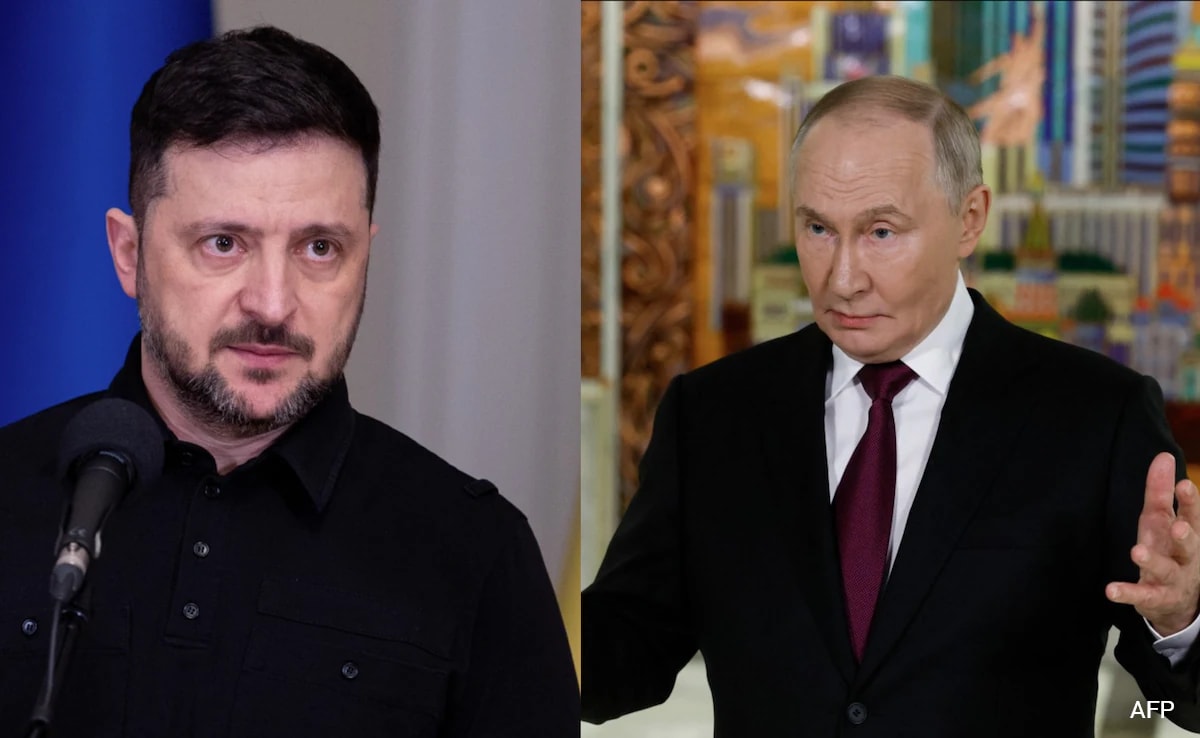
The Kremlin said on Thursday that Russia had reiterated its invitation for Ukrainian President Volodymyr Zelenskiy to come to Moscow for peace talks, as US-led efforts to reach a deal to end the nearly four-year war in Ukraine intensify.
Moscow has once again extended an invitation to Ukrainian President Volodymyr Zelensky for peace discussions in the Russian capital. This renewed overture comes amidst a significant surge in US-led diplomatic endeavors aimed at forging a resolution to the nearly four-year-long conflict in Ukraine, a war that continues to exact a heavy toll on the region.
The Kremlin's announcement arrived on Thursday, coinciding with the latest prisoner exchange between the warring nations. It also followed closely after Moscow's refusal to comment on mounting speculation regarding a potential agreement with Kyiv to cease strikes on each other's critical energy infrastructure, a move that would represent a de-escalation in a particularly brutal aspect of the war.
Recent Washington-mediated peace talks held in Abu Dhabi last weekend were initially perceived as injecting fresh impetus into the stalled peace process. However, despite this diplomatic momentum, the chasm between Russian and Ukrainian negotiating positions remains profound, particularly concerning core issues of sovereignty and security. The intensity of fighting on the ground shows no signs of abating, and Kyiv continues to grapple with widespread, debilitating power outages, a direct consequence of sustained missile strikes.
Sources close to the negotiations suggest that a breakthrough might be on the horizon. An unnamed US official, speaking to a prominent news outlet on Saturday, indicated that President Zelensky and Russian President Vladimir Putin were reportedly "very close" to arranging a direct meeting following the intensive US-mediated discussions. Furthering this sentiment, a new round of Abu Dhabi talks involving Russian and Ukrainian delegations is slated for Sunday. US President Donald Trump, a vocal proponent of ending what he terms Europe's most significant conflict since World War Two, expressed optimism on Tuesday, noting that "very good things" were unfolding in the peace process.
Despite these hopeful signs, fundamental disagreements continue to plague the path to a comprehensive peace deal. The most contentious issues include the precise delineation of territory in any future agreement, the potential deployment of international peacekeepers or observers in a post-conflict Ukraine, and the ultimate fate of the Russian-controlled Zaporizhzhia nuclear power plant, a site of immense strategic and humanitarian concern.
Kremlin spokesman Dmitry Peskov, whose remarks were relayed by a major news agency on Thursday, confirmed that Moscow had yet to receive a formal response to its latest invitation for President Zelensky to visit Moscow. It's worth recalling that President Zelensky previously rebuffed a similar invitation last year, asserting that he could not travel to the capital of a nation actively bombarding his country. At that time, he counter-proposed that President Putin instead journey to Kyiv for direct talks.
Yuri Ushakov, a Kremlin foreign policy aide, emphasized on Wednesday the necessity for any potential meeting between President Putin and President Zelensky to be meticulously prepared and unequivocally results-oriented. He also assured that President Zelensky's safety would be unequivocally guaranteed should he choose to come to Moscow.
Concurrently, US Secretary of State Marco Rubio highlighted the territorial dispute as the central, most formidable obstacle to peace. On Wednesday, he described the disagreement over territorial control as the "very difficult" issue that remains largely unresolved. Russia continues to insist on Ukrainian forces withdrawing from approximately 20% of the Donetsk region, an area currently not under Russian military control.
Kyiv, for its part, has steadfastly refused to cede territory that it argues Russia has not genuinely secured on the battlefield. Ukrainian officials contend that such a concession would not only be a strategic defeat but could also serve as a dangerous springboard for future Russian incursions deeper into Ukrainian territory. However, Ushakov, the Kremlin aide, indicated on Thursday that he does not view the land issue as the sole remaining key point of contention.
Adding another layer of complexity to the peace efforts, Russian Foreign Minister Sergei Lavrov voiced skepticism regarding the viability of any security guarantees that Washington might offer to Ukraine as part of a peace accord. He expressed doubts that such guarantees could lead to an enduring peace if their primary design was to perpetuate Ukraine's current political leadership in power, suggesting a deeper ideological rift.
The internal dynamics within Russia also underscore the challenges. Ramzan Kadyrov, the Kremlin-backed leader of Chechnya, articulated a hardline stance, advocating for an escalation of the conflict rather than pursuing peace. In comments that reflect a prevalent belief among some hardliners that Moscow is gaining military advantage, Kadyrov declared at the Kremlin, "I believe the war must be taken to its conclusion. I am against negotiations." This stark view from a prominent figure highlights the significant internal pressures influencing Moscow’s approach to the conflict and the profound hurdles that negotiators face in bridging the divide toward a lasting peace.