No Milk, No Eggs, Little Adherence To Any Prescribed Menu Lead To Nutrition Crisis At Youth Games
By NewsDose Team
Updated on January 30, 2026
5 min read
Key takeaways
Khelo MP Youth Games 2026, the biggest sporting extravaganza of Madhya Pradesh, is unfolding across the state with scale and spectacle.
The Khelo MP Youth Games 2026, envisioned as Madhya Pradesh’s premier sporting spectacle, has unfolded across the state with remarkable scale and fanfare. Drawing millions of aspiring young athletes from various blocks, districts, and divisions, this event is more than just a competition; it’s a crucial stepping stone. For many, it represents a once-in-a-lifetime opportunity to secure a spot in the state team and potentially represent Madhya Pradesh at the national level, competing across 28 diverse sports disciplines.
However, amidst the high-stakes competition and dazzling displays of athleticism, a deeply concerning issue has cast a shadow over the event: a pervasive nutrition crisis affecting participants. While the action on the fields and courts has been intense, a troubling disconnect between the promise of a supportive environment and the ground reality of athlete welfare has become painfully clear.
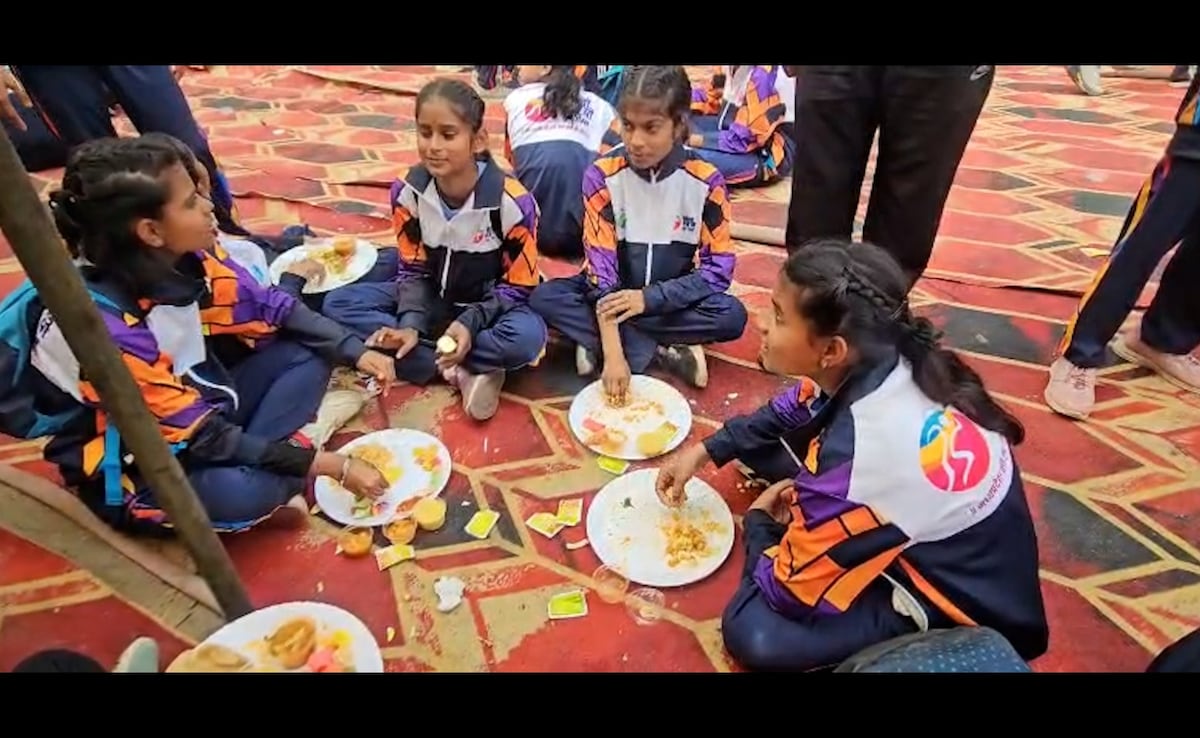
An extensive ground report, encompassing multiple venues and involving detailed conversations with dozens of athletes, has brought to light serious concerns regarding the quality and nutritional adequacy of the food being provided. Instead of a carefully curated, scientifically balanced diet essential for high-performance athletes, participants are reportedly being served a monotonous, carbohydrate-heavy menu. Staples include oil-fried puris, potato curry, halwa, upma, plain white bread, and tea. Fruits are a rare sight, and crucially, protein-rich foods – the very building blocks for an athlete's recovery and performance – are largely absent.
“The food is palatable, but there’s no milk, no boiled eggs,” expressed Devendra, an athlete taking a brief respite between demanding matches, highlighting a critical deficiency. This sentiment was echoed repeatedly. Alok Salodia, an athlete from Sujalpur, lamented, “It’s puri, potato curry, and halwa every single day. There’s no milk, no paneer, no eggs to be seen.”
The science of sports nutrition is unequivocal: athletes engaged in high-intensity disciplines such as athletics, boxing, and kabaddi require a meticulously planned intake of protein, sufficient calcium, consistent hydration, and overall balanced nutrition to sustain their energy levels, aid muscle repair, and prevent injury. Yet, the reality on the ground appears starkly different from these fundamental requirements. Players have voiced strong complaints about the repetitive nature of the meals, with little to no adherence to any prescribed nutritional menu and a noticeable lack of oversight regarding dietary standards.
“We’ve been given the same puri and vegetable curry for two consecutive days,” stated Aryan Singh, another participant, adding, “Even for breakfast, there’s no milk, eggs, or paneer.” For some, the situation crosses the line into outright neglect. Krishna Prajapati, an athlete from Sagar, shared a particularly distressing experience: “No milk, no eggs, no paneer… there wasn’t even proper water available to wash our hands.” Naithik, a boxing player from Rewa, summed it up bluntly: “It’s food to fill your stomach, but the protein an athlete needs is simply not being provided.” Prashant, a kabaddi player from Gwalior, underscored the absolute necessity: “Milk, eggs, and paneer are essential for us, and we received none of it.”
These complaints were not isolated incidents but a widespread issue, with similar grievances surfacing from Jabalpur. Athletes there reported that items such as eggs, paneer, and Bournvita milk – frequently listed in official meal plans – were conspicuously absent from their actual meals.
Official government guidelines stipulate that athletes participating in such high-profile events should be provided with milk, eggs, paneer, multigrain bread, and a carefully designed, balanced meal plan. However, nutrition experts contend that the food currently being served falls drastically short of basic sports nutrition requirements. Senior dietitian Simra emphasized that athletes demand moderate carbohydrates, 20-40 grams of protein per meal, healthy fats, and rigorous hydration, particularly during the intense phases of a tournament. “Even for an average individual, an imbalanced meal can be detrimental,” she explained. “For athletes, a healthy and balanced diet is not just beneficial, it is non-negotiable for their performance and well-being.”
Despite the mounting chorus of concerns and credible reports from the ground, Sports Minister Vishwas Sarang offered a brief and dismissive assessment when questioned about the complaints. “Everything is going well… everything is going very well,” he stated, seemingly brushing aside the gravity of the situation.
However, the crucial question persists and refuses to be ignored. The Khelo MP Youth Games 2026 is intended to serve as a vital launchpad for the future champions of Madhya Pradesh. But as these promising young athletes push their limits in pursuit of medals and glory, a quiet, yet profound, question lingers: can true champions genuinely be forged on a diet primarily consisting of oil-fried puris and potato curry? With nine divisions, 28 sports, and the dream of national glory hanging in the balance, the games undeniably offer immense hope. Yet, unless the ambition for athletic excellence is matched by an unwavering commitment to proper nutrition, the looming fear remains that these potential champions might ultimately be running on empty plates, jeopardizing their health, performance, and long-term athletic prospects.
You Might Also Like

More in India
- "CBSE 10th Result 2026: Mid-April Release Expected Earlier"
- "महावीर जयंती 2026: 10 शिकवणी, शांती-यशाचा मार्ग उघडतील"
- "RBSE Class 12 Results 2026: Check Scores Fast, Avoid Website Crash"
- "Noida Airport: How It Solves Fog Delays & Long Check-In Lines"
- "CBSE 10th, 12th Results 2026: Expect April for Class 10?"
