Why India's C-130J Is King Of Tactical Airlift Missions: 10 Points
By NewsDose Team
Updated on February 15, 2026
5 min read
Key takeaways
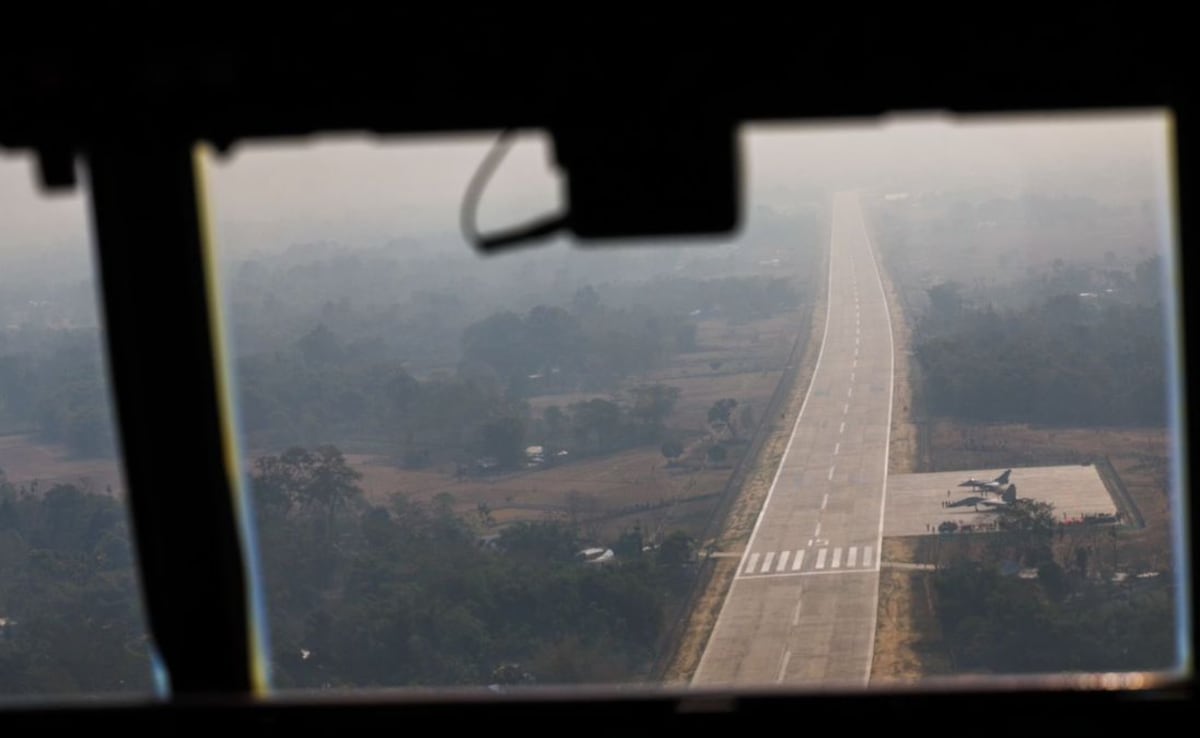
Prime Minister Narendra Modi landed on the northeast's first emergency landing field (ELF) in an Indian Air Force C-130J Super Hercules turboprop aircraft. This rugged transport plane is ideal for operating in difficult terrain, common in India.
Prime Minister Narendra Modi recently underscored India's enhanced strategic capabilities by making a historic landing on the Northeast's inaugural emergency landing field (ELF). Piloting this significant event was an Indian Air Force (IAF) C-130J Super Hercules turboprop aircraft, a testament to the nation's commitment to bolstering its infrastructure and operational readiness in challenging geographical terrains.
The establishment of this cutting-edge emergency landing facility marks a pivotal moment for regional connectivity and national security. These ELFs are meticulously designed to facilitate rapid deployment and response, acting as crucial arteries in areas where conventional airstrip access is limited. Their strategic placement dramatically elevates the IAF's capability to operate across India's diverse and often unforgiving landscapes, ensuring swift military and humanitarian logistics.
The selection of the C-130J Super Hercules for this high-profile demonstration was a deliberate choice. Universally acclaimed as one of the most reliable and versatile tactical airlifters in the world, this rugged transport aircraft is purpose-built for operating in arduous conditions and from unprepared airstrips. Its unparalleled short take-off and landing (STOL) capabilities render it indispensable for critical missions in high-altitude, geopolitically sensitive regions such as Ladakh and Arunachal Pradesh, where runways are often short, rugged, and present unique operational challenges.
India's formidable fleet of C-130J Super Hercules aircraft, acquired from the United States, currently comprises 12 units. The initial contingent arrived in 2008, followed by additional deliveries between 2011 and 2019, significantly fortifying the IAF's tactical airlift and special operations capacities.
Beyond its primary function as a robust cargo and transport aircraft, the C-130J is a true multi-role platform, capable of executing a broad spectrum of missions. These range from intricate special operations and extended-range flights supported by aerial refueling to vital paradrop exercises, critical search and rescue (SAR) operations, and the urgent delivery of humanitarian relief during natural disasters. Its proven efficacy was notably demonstrated during the evacuation of Indian nationals stranded in Sudan in April 2023, solidifying its reputation for reliability in dire crisis scenarios.
This recent landing was not Prime Minister Modi's inaugural experience with the C-130J on an emergency landing strip. In November 2021, he undertook a similar historic landing on the Purvanchal Expressway in Sultanpur, thereby showcasing both the strategic utility of such infrastructure projects and the C-130J's adaptable operational envelope.
The C-130J's design philosophy, as outlined by its manufacturer, is specifically geared towards the unique demands of tactical airlift. It prioritizes not sheer speed, but rather the crucial ability to operate effectively at low altitudes and slower speeds, granting unprecedented access to diverse locations for a multitude of missions. It stands as the solitary tactical-by-design medium-sized airlifter that comprehensively addresses the complex and demanding requirements of contemporary tactical airlift operations.
Among its distinguishing features, the C-130J Super Hercules boasts best-in-class short-field take-off and landing performance, airworthiness certification from over 20 global operators, and superior survivability. It also offers lower fuel consumption and a reduced carbon footprint, alongside an increased range and superior pallet and passenger capacity, firmly establishing it as a cornerstone of modern air mobility doctrines. The aircraft's ability to seamlessly integrate into various operational environments further enhances its strategic value to national defense.
The proactive deployment of emergency landing fields, synergized with the formidable and adaptable capabilities of aircraft like the C-130J Super Hercules, profoundly reinforces India's defense preparedness and its capacity for rapid humanitarian and disaster response. This forward-thinking approach is pivotal for ensuring enhanced national security and improved connectivity, particularly across the nation's most challenging and remote geographical regions.
You Might Also Like

More in India
- "CBSE 10th Result 2026: Mid-April Release Expected Earlier"
- "महावीर जयंती 2026: 10 शिकवणी, शांती-यशाचा मार्ग उघडतील"
- "RBSE Class 12 Results 2026: Check Scores Fast, Avoid Website Crash"
- "Noida Airport: How It Solves Fog Delays & Long Check-In Lines"
- "CBSE 10th, 12th Results 2026: Expect April for Class 10?"
