Rare New Flowering Plant Discovered In Nagaland's Community Protected Forest
By NewsDose Team
Updated on January 28, 2026
5 min read
Key takeaways
In a striking reminder that India's biodiversity continues to reveal new surprises even in the 21st century, a community-protected forest in Nagaland has yielded a previously unknown species of flowering plant
In a groundbreaking botanical revelation, India's rich biodiversity continues to surprise, with researchers unveiling a previously unknown species of flowering plant deep within a community-protected forest in Nagaland. This significant find, brought to light by scientists from Nagaland University, powerfully underscores the vital role of local conservation efforts and traditional forest stewardship in safeguarding the nation's unparalleled natural heritage.
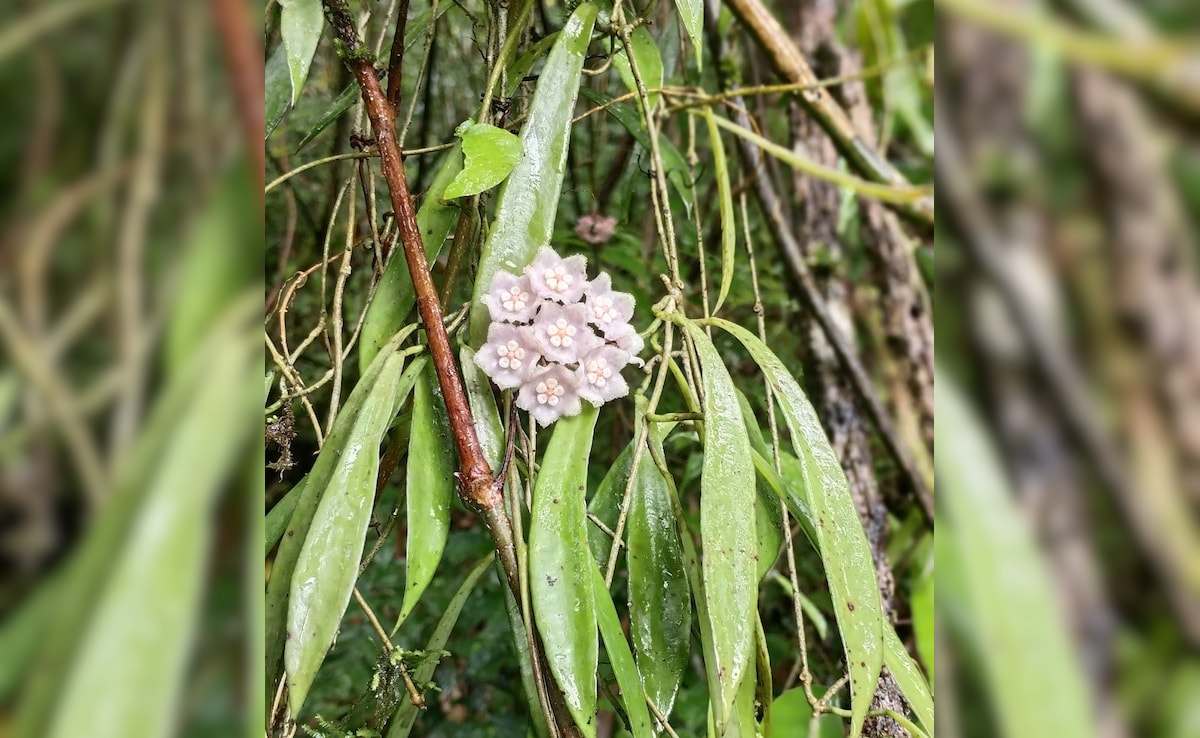
The newly identified species, christened Hoya nagaensis, is a captivating member of the 'wax plant family,' renowned for its distinctive waxy, star-shaped blossoms and a unique milky latex. Its discovery occurred during systematic botanical surveys conducted in the high-altitude, largely unexplored forests of the Kavunhou Community Reserved Forest, nestled in the Phek district—approximately 110 kilometers from the state capital, Kohima. This particular Hoya, with its intricate morphology and specific temperate forest habitat, represents a truly unique addition to the scientific record.
Researchers describe Hoya nagaensis as producing striking star-shaped flowers that capture the eye, alongside exuding a characteristic milk-like latex. This latex is a common feature among many species in the broader Apocynaceae, or milkweed, family. While initial studies have not yet delved into potential medicinal applications, the scientific community notes that plants producing such latex have historically been a source of important bioactive compounds. This intriguing characteristic positions Hoya nagaensis as a species of considerable interest for future pharmacological research, subject to rigorous scientific evaluation and robust conservation safeguards.
The discovery was spearheaded by a dedicated team from Nagaland University, including Dr. Gyati Yam, Assistant Professor in the Department of Forestry, and researchers Vieneite-o Koza and Joynath Pegu. Their pioneering work received crucial support from the university's Start-Up Project for Young Faculty (SUPYF), a testament to the institution's commitment to fostering cutting-edge research. The findings have since been meticulously peer-reviewed and published in an esteemed international botanical journal, affirming the scientific rigor and importance of the discovery. India, already celebrated as a biodiversity hotspot, boasts an estimated 20,000 different flowering plant species, a figure constantly enriched by such new identifications.
Dr. Yam emphasized the profound implications of this find, stating, "This discovery vividly illustrates how much of Nagaland's magnificent forest biodiversity remains undocumented and unexplored. Our intensive field research specifically targeted these high-altitude ecosystems, enabling us to formally describe plant species previously unknown to science. Simultaneously, our work sheds light on the indispensable role that community-reserved forests play in protecting these incredibly fragile and unique ecosystems."
Alarmingly, researchers have confirmed that Hoya nagaensis is currently known to exist in only a single, highly localized area, rendering it exceptionally vulnerable to environmental pressures. Due to its severely restricted distribution and ongoing threats such as shifting cultivation practices and widespread forest disturbance, the species has been provisionally assessed as Critically Endangered. This designation highlights the urgent need for immediate and concerted conservation interventions to prevent its potential loss.
Vieneite-o Koza further elaborated on the distinctive context of this discovery: "The most remarkable aspect of this finding is its origin within a community-protected forest. The distinctiveness of its leaf shapes and intricate floral characteristics clearly set this species apart from all other known Hoya varieties. Our observations unequivocally demonstrate that community-led conservation initiatives are absolutely critical in safeguarding rare and endemic plant life, especially in regions rich with biodiversity yet facing significant anthropogenic pressures."
Joynath Pegu underscored the broader societal impact, adding, "This discovery stands as a powerful testament to the efficacy of the traditional forest stewardship practices meticulously observed and passed down by local Naga communities for generations. Despite the ever-increasing pressures on natural forests across the globe, these meticulously managed community areas, like Kavunhou, continue to function as invaluable refuges. They provide sanctuary for species that might otherwise vanish entirely, often before the scientific community even has a chance to document their existence."
Scientists universally agree that this finding firmly reinforces Nagaland's esteemed status as a significant biodiversity hotspot. It simultaneously amplifies the urgent global call for habitat-based conservation strategies. By meticulously documenting the plant's unique morphology and intricate ecological context, this comprehensive study not only strengthens India's vital botanical records but also establishes a crucial foundation for all future research into the species' ecology, long-term conservation requirements, and its potential applications.
As pressures on natural habitats continue to intensify across the planet, researchers passionately stress that dedicated conservation efforts are the paramount key to protecting India's irreplaceable plant heritage. Ensuring that transformative discoveries like Hoya nagaensis are not isolated incidents but rather integral components of a continuous and vibrant story of scientific exploration, deeply intertwined with community-led stewardship, remains a critical imperative for the future of the nation's magnificent forests and their hidden treasures.
You Might Also Like


More in India
- "CBSE 10th Result 2026: Mid-April Release Expected Earlier"
- "महावीर जयंती 2026: 10 शिकवणी, शांती-यशाचा मार्ग उघडतील"
- "RBSE Class 12 Results 2026: Check Scores Fast, Avoid Website Crash"
- "Noida Airport: How It Solves Fog Delays & Long Check-In Lines"
- "CBSE 10th, 12th Results 2026: Expect April for Class 10?"
