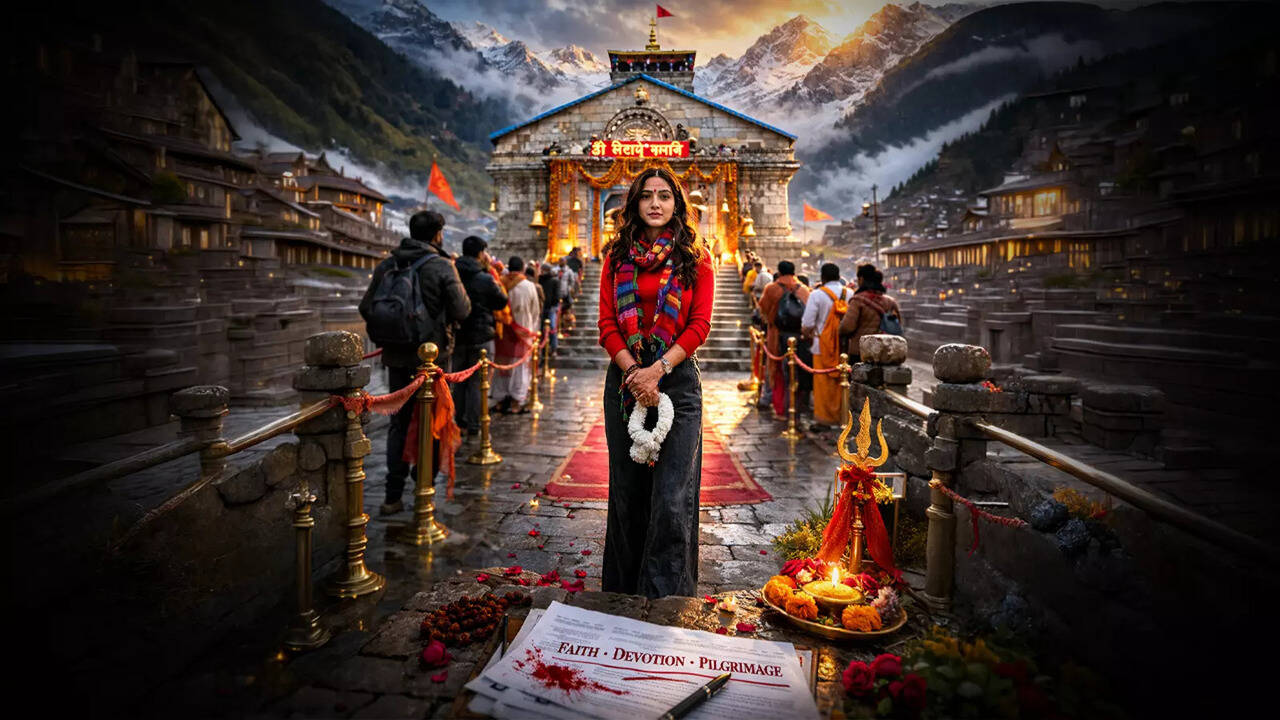
Why Sara Ali Khan is being asked to sign a faith affidavit to enter Kedarnath’s Hindu shrines
By NewsDose Team
Updated on March 20, 2026
5 min read
Key takeaways
Politics News: Actor Sara Ali Khan may need to submit a written declaration of faith if she wants to continue visiting Kedarnath and Badrinath. Hemant Dwivedi, chair.
In a significant development that has drawn widespread attention, particularly concerning prominent figures like actor Sara Ali Khan, a new policy proposed by the Badri-Kedar Temple Committee (BKTC) could soon mandate a written declaration of faith for non-Hindus seeking entry to the sacred shrines of Kedarnath and Badrinath.
The proposal, which has been forwarded to the Uttarakhand government for approval, stipulates that individuals who do not identify as Hindu will be required to sign an affidavit affirming their belief in Sanatan Dharma before being granted darshan at these revered pilgrimage sites. This move follows a unanimous decision made by the BKTC at a board meeting held on March 10, where the committee finalized a standard format for the affidavit.
Hemant Dwivedi, Chairman of the BKTC, which oversees the administration of both temples, addressed reporters in Kedarnath, articulating the rationale behind the controversial directive. "We have issued a formal order to prevent the entry of non-Sanatanis into our temples because it leads to various complications," Dwivedi stated. He emphasized that the decision was influenced by the impending Char Dham Yatra, a monumental pilgrimage set to commence on April 19, for which over six lakh devotees have already registered.
The Char Dham Yatra, encompassing the four sacred sites of Yamunotri, Gangotri, Kedarnath, and Badrinath, holds immense spiritual significance for Hindus. The pilgrimage attracts millions annually, seeking blessings and spiritual solace. The introduction of such an affidavit requirement marks a notable shift in the temples' access policy, potentially reshaping the experience for many non-Hindu visitors who have traditionally visited these sites out of cultural interest or respect without formal declarations of faith.
While the specific "complications" cited by the BKTC chairman remain open to interpretation, the policy aims to reinforce the sanctity and traditional practices associated with these ancient Hindu shrines. The committee's stance underscores a broader discussion about the management of religious sites and the balance between inclusivity and the preservation of specific religious identities and rituals.
The implementation of this policy, pending the Uttarakhand government's assent, could set a precedent for other religious institutions across the country. Observers are keenly watching how the state government will respond to the BKTC's proposal, given the potential for diverse reactions from various communities and civil society groups regarding religious freedom and access to public spaces of worship.
For individuals like Sara Ali Khan, whose mother is Hindu and father is Muslim, navigating such requirements could present a unique set of circumstances. The policy highlights the complexities that arise in a diverse society concerning religious identity and access to spiritual sites that are significant to one particular faith while also drawing interest from others.
You Might Also Like


More in India
- "CBSE 10th Result 2026: Mid-April Release Expected Earlier"
- "महावीर जयंती 2026: 10 शिकवणी, शांती-यशाचा मार्ग उघडतील"
- "RBSE Class 12 Results 2026: Check Scores Fast, Avoid Website Crash"
- "Noida Airport: How It Solves Fog Delays & Long Check-In Lines"
- "CBSE 10th, 12th Results 2026: Expect April for Class 10?"
