Opinion
By NewsDose Team
Updated on January 28, 2026
5 min read
Key takeaways
For all those who had been waiting since 2007 for the much-anticipated India-European Union (EU) Free Trade Agreement (FTA), the wait will end only next year after the European Parliament finally ratifies the "mother of all deals" sealed in New Delhi
After years of meticulous negotiations and fervent anticipation since 2007, the landmark India-European Union (EU) Free Trade Agreement (FTA) is finally on the cusp of becoming a reality. While the "mother of all deals" was sealed in New Delhi recently, its practical implications for consumers and businesses will commence only after its ratification by the European Parliament, an eagerly awaited step expected next year. This agreement promises to reshape trade dynamics, particularly within the agrifood sector, between India and the 27-nation bloc, marking a significant milestone in global economic partnerships.
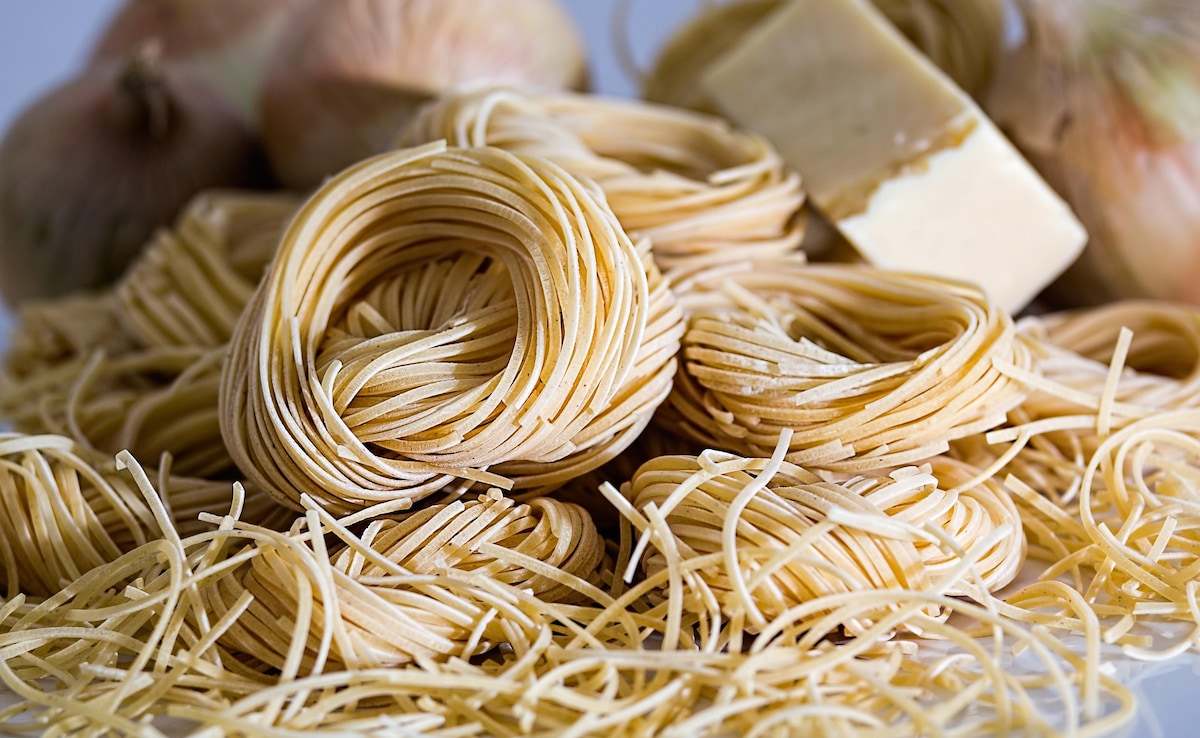
The immediate question on everyone's mind – will Indian markets soon be flooded with Italian pasta and German sausages? The answer, while exciting, comes with a tempered timeline. While palpable changes won't manifest in the current financial year, consumers can definitively anticipate a greater abundance and variety of European food products on shelves from FY2027-28 and FY2028-29 onwards. This phased introduction acknowledges the complexities of integrating such a comprehensive trade pact into existing market structures.
Historically, India has not been a colossal market for agricultural commodities and processed foods originating from the EU. In 2024, for instance, EU agrifood exports to India amounted to a modest 1.3 billion euros, representing a mere 0.6 percent of the bloc's total agrifood exports. This figure, though seemingly small, formed a fraction of the broader 75-billion-euro EU-India trade that year, as per data from the European Commission's Trade and Economic Security Department. Nevertheless, even everyday items like pasta are poised to become a tangible indicator of the FTA's transformative impact on daily life and consumer choices.
The food and beverage industry, in particular, is observing the unfolding process with keen interest and high expectations. As the agreement navigates through the mandatory legal and procedural stages in Europe, the provisions are already sending ripples of excitement through European food and alcoholic beverage producers, as well as their Indian importers. The opportunities unleashed by reduced tariffs are unprecedented, promising a new era of accessibility and variety for Indian consumers.
Among the most significant benefits are the dramatic reductions in import duties. For a range of processed foods including breads, pastries, biscuits, pasta, chocolate, and even pet food, tariffs are slated to plummet from a substantial 50 percent to zero. Similarly, fruit juices and non-alcoholic beers, currently subject to a 55 percent tariff, will also see duties eliminated entirely. Essential kitchen staples like olive oil, margarine, and other vegetable oils, which presently incur a 45 percent duty, will also become tariff-exempt. Meats are also included in this liberalisation; sheep meat duties will drop from 33 percent to nil, while sausages and other meat products will see tariffs reduced from a hefty 110 percent to a more manageable 50 percent. Even fresh produce like kiwis and pears will benefit from a tariff reduction from 30 percent to 10 percent, although these imports will be thoughtfully managed through quotas to ensure market stability.
While European food producers undoubtedly have cause for celebration, a pertinent question arises regarding the impact on India's burgeoning domestic market. In recent years, India has witnessed a remarkable surge in local production of pasta, European-style breads, sausages, indigenous olive oil from regions like Rajasthan, and even pet food. This 'Vocal for Local' movement gained significant momentum during the Covid-19 pandemic, with subsequent rapid growth fueled by the pervasive influence of social media, which provided national visibility, and the exponential rise of app-based food delivery services such as Zomato, Swiggy, and Blinkit, ensuring swift delivery to consumers' doorsteps. Brands like Suchali's (artisanal breads), Weikfield and Sunfeast (pasta), and Wingreens (offering a diverse range from fruit juices and chips to dips and pasta) have firmly established themselves as household names, embodying the spirit of local entrepreneurship and quality.
Despite the opening of the floodgates for European processed food products, experts largely believe that the market share of these deeply entrenched domestic products is unlikely to be significantly disturbed. The 'middle-class mindset' in India has developed a strong affinity for and loyalty to homegrown brands, which have proven their quality, accessibility, and affordability. This established consumer base provides a robust buffer against foreign competition, suggesting a harmonious co-existence rather than an overwhelming displacement.
However, a more pressing concern, particularly for Indian importers of European food products, is the fluctuating exchange rate between the rupee and the euro. Rakesh Banga of Banyan Fine Foods, a Delhi-based importer specialising in European seafood and meats, articulates this worry: "The rupee has weakened significantly, from approximately Rs 90 to Rs 109 against a euro in just over the past year. This sharp appreciation of the euro threatens to negate the positive impact of the new tariff regime set to kick in next year." Such currency volatility introduces an unpredictable element that could offset the intended benefits of tariff reductions, potentially keeping end-consumer prices higher than initially anticipated.
The primary beneficiaries of this liberalisation are likely to be the luxury segment. Chefs in five-star hotels and high-end restaurants, operating with more generous budgets, will undoubtedly welcome the expanded choice, especially for top-tier products. Dhruv Oberoi, Executive Chef at Olive Bar & Kitchen in New Delhi, acknowledges this: "While I champion local produce, I will still seek out my bronze die, high-protein Garofalo pasta and 'pelati' (peeled) tomatoes from Italy." He further anticipates a growing presence of European fruits and berries at weddings and other upscale events, perceiving them as "the new symbols of food snobbery," catering to a discerning clientele seeking exclusivity and premium quality.
Nadia Sood, a serial entrepreneur and co-founder of Bebida Hospitality, who navigates markets across India, the UK, EU, and Japan, concurs that the FTA will streamline market access for premium European food products. Yet, she advocates for a nuanced understanding of the agreement's immediate effects. "The FTA will undoubtedly lead to a reduction in prices for European luxury food items in the Indian market due to lower tariffs," Sood confirms. "However, it’s crucial not to expect an instantaneous impact. The European Parliament's approval process is a prerequisite for these benefits to reach Indian consumers, and that process naturally requires time." This reiterates that the full narrative of the FTA's impact will unfold gradually over the current year and the next.
Despite the widespread optimism, a solitary "dark cloud" has been noted on the horizon, though experts remain unfazed. The concern stems from a recent development on January 17, when the EU leadership concluded a similar trade agreement with the South American trade bloc Mercosur. Following intense opposition, particularly from France and Poland, the European Parliament narrowly voted to refer that deal to the European Court of Justice. This action is expected to delay the Mercosur FTA's implementation by at least two years, with agricultural commodities and meats forming the primary areas of contention. Could a similar fate befall the India-EU FTA?
Experts have largely dismissed this possibility, thus reinforcing the near certainty of the India-EU FTA taking effect in 2027. The key distinction lies in the nature of Indian agricultural exports to the EU, which are not substantial enough to be perceived as a threat to the livelihoods of European farmers. As Abhijit Das, a prominent trade policy expert at New Delhi's Centre for WTO Studies, succinctly puts it, "Our coffee, tea, and spices, after all, are not competing directly with European farm produce." This fundamental difference mitigates the political and economic opposition seen in the Mercosur case.
Indeed, coffee stands as the sole agricultural commodity among India's top 12 exports to the EU, ranking at No. 12 with an estimated value of US $775 million in 2025. The European Commission's Trade and Economic Security Division has clarified that "Both sides have agreed to exclude the most sensitive agricultural products from liberalisation. The Agreement balances market access with the protection of sensitive sectors." Consequently, the EU will maintain its existing tariffs on "sensitive products" such as beef, sugar, rice, chicken meat, milk powder, honey, bananas, soft wheat, garlic, and ethanol, safeguarding its domestic agricultural interests.
Abhijit Das, however, points to another critical chapter within the FTA that warrants careful attention: 'Trade and Sustainable Development' (TSD). This chapter is legally binding and enforceable through a dedicated consultation mechanism. The European Commission's Trade and Security Department describes this mechanism as an "avenue to address labour, environmental, and gender equality issues in a sustainable and inclusive manner, so that improvement is achieved on the ground, and not just on paper." Das cautions that this could potentially "lead to disagreements between the EU and India because our laws and our cultural sensibilities are different." The long-term implications of these potential disagreements – whether they prove to be minor divergences or irreconcilable differences – remain to be seen, adding another layer of complexity to this multifaceted agreement.
Ultimately, as the adage goes, the devil is in the details. The India-EU FTA is far more than a simple trade deal; it represents the inaugural chapter of an unfolding narrative that holds the promise of epic proportions, profoundly influencing economic relations, cultural exchange, and consumer landscapes for decades to come. Its success will hinge on careful implementation, ongoing dialogue, and a mutual understanding of both the opportunities and the challenges it presents.
You Might Also Like

More in India
- "CBSE 10th Result 2026: Mid-April Release Expected Earlier"
- "महावीर जयंती 2026: 10 शिकवणी, शांती-यशाचा मार्ग उघडतील"
- "RBSE Class 12 Results 2026: Check Scores Fast, Avoid Website Crash"
- "Noida Airport: How It Solves Fog Delays & Long Check-In Lines"
- "CBSE 10th, 12th Results 2026: Expect April for Class 10?"
