Chandela fort News: बारिश से कटी मिट्टी, तो चंदेल राजाओं के किले में छिपा खजाना आ गया बाहर, खुदाई में जुटे लोग !
By NewsDose Team
Updated on January 30, 2026
5 min read
Key takeaways
Chandela Fort: बताया जा रहा है कि यह खजाना चंदेल काल से जुड़ा हो सकता है और इसकी कीमत करोड़ों रुपये में आंकी जा रही है. पूरे मामले पर प्रशासन की नजर बनी हुई है, लेकिन सवाल ये है कि क्या यह वास्तव में ऐतिहासिक खजाना है ?
A wave of fervent excitement has swept through Chhatarpur district in Madhya Pradesh following reports of an astonishing discovery of ancient treasure. The serene Rajgarh village, nestled within the region, has become the epicenter of this unfolding drama, drawing massive crowds eager to witness—and perhaps partake in—what many believe could be a fortune dating back centuries.
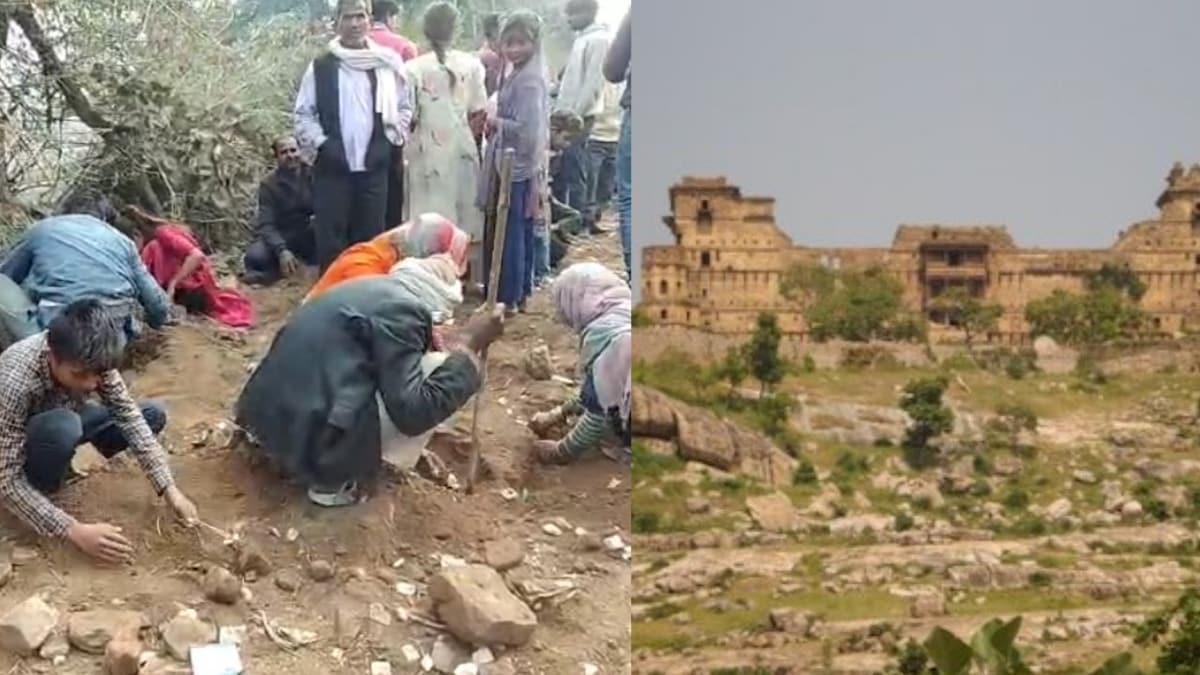
The intriguing saga began when torrential rains washed away mounds of soil excavated from the vicinity of a historic fort, revealing glints of what locals claim to be gold coins and biscuits. The soil, removed during ongoing construction work for staff accommodation near the ancient Chandela-era fort, had been dumped along the route leading to Swargeshwar Dham. As the rains eroded the loose earth, these alleged precious artifacts surfaced, quickly sparking widespread curiosity and a frenzied response from the local populace.
Word of the discovery spread like wildfire across Rajgarh and neighboring areas, transforming the quiet village into a bustling hub overnight. By late Wednesday evening, hordes of villagers, armed with shovels, pickaxes, and even bare hands, had descended upon the site. Each individual seemed driven by a shared hope: to unearth their own piece of history, or perhaps, a personal fortune. The air was thick with anticipation and the sounds of digging, as people worked late into the night, their eyes scanning the mud for any glimmer of metallic sheen.
The alleged hoard is speculated to be a remnant from the illustrious Chandela dynasty, a powerful Central Indian Rajput clan that ruled much of the Bundelkhand region between the 9th and 13th centuries CE. Known for their magnificent temple architecture, including the world-renowned Khajuraho Group of Monuments, the Chandelas left an indelible mark on Indian history. A discovery of this magnitude would not only be a significant archaeological find but could also be worth billions, cementing its place as a national treasure.
Local claims suggest that numerous individuals have indeed found what appear to be antique gold coins, bearing the distinct patina of age and historical significance. Ramesh Billa, the village sarpanch of Rajgarh, articulated the prevailing sentiment, stating, "Stories of buried treasures beneath the Rajgarh fort and its surroundings have been passed down through generations. This incident seems to lend an astonishing new credibility to those age-old legends." The relentless flow of people to the site since the initial reports underscores the deep-seated belief in these local folklore.
However, amidst the excitement, local administration faces a formidable challenge. Authorities are actively engaged in efforts to manage and disperse the burgeoning crowds, urging them to refrain from unauthorized excavation. Despite these appeals, the allure of untold riches and historical revelation proves a powerful magnet, with public enthusiasm showing no signs of waning. The delicate balance between allowing public interest and ensuring the preservation of a potentially priceless historical site is proving difficult to maintain.
As of now, neither the district administration nor the Archaeological Survey of India (ASI) has issued an official statement regarding the nature or authenticity of the finds. The absence of a formal declaration leaves room for both hope and skepticism. Should these artifacts be authenticated as genuine historical treasures, they would, by law, become the property of the state, necessitating meticulous excavation, documentation, and preservation by expert archaeologists.
The situation remains fluid, with all eyes on Chhatarpur as the authorities deliberate their next course of action. The unfolding events at Rajgarh village promise to be a fascinating chapter in India's rich archaeological narrative, and the nation awaits eagerly to learn the truth behind this sensational discovery. How long it will take for definitive answers to emerge, and what steps will be taken to secure and study this potential historical goldmine, remains to be seen.
You Might Also Like


More in India
- "CBSE 10th Result 2026: Mid-April Release Expected Earlier"
- "महावीर जयंती 2026: 10 शिकवणी, शांती-यशाचा मार्ग उघडतील"
- "RBSE Class 12 Results 2026: Check Scores Fast, Avoid Website Crash"
- "Noida Airport: How It Solves Fog Delays & Long Check-In Lines"
- "CBSE 10th, 12th Results 2026: Expect April for Class 10?"
