Ajit Pawar's Plane May Have Missed Satellite Safety Gear By Just 28 Days
By NewsDose Team
Updated on January 30, 2026
5 min read
Key takeaways
The crash of the chartered aircraft carrying Maharashtra Deputy Chief Minister Ajit Pawar has raised concerns about whether the plane narrowly missed being fitted with a satellite-based safety system that could have significantly aided its approach.
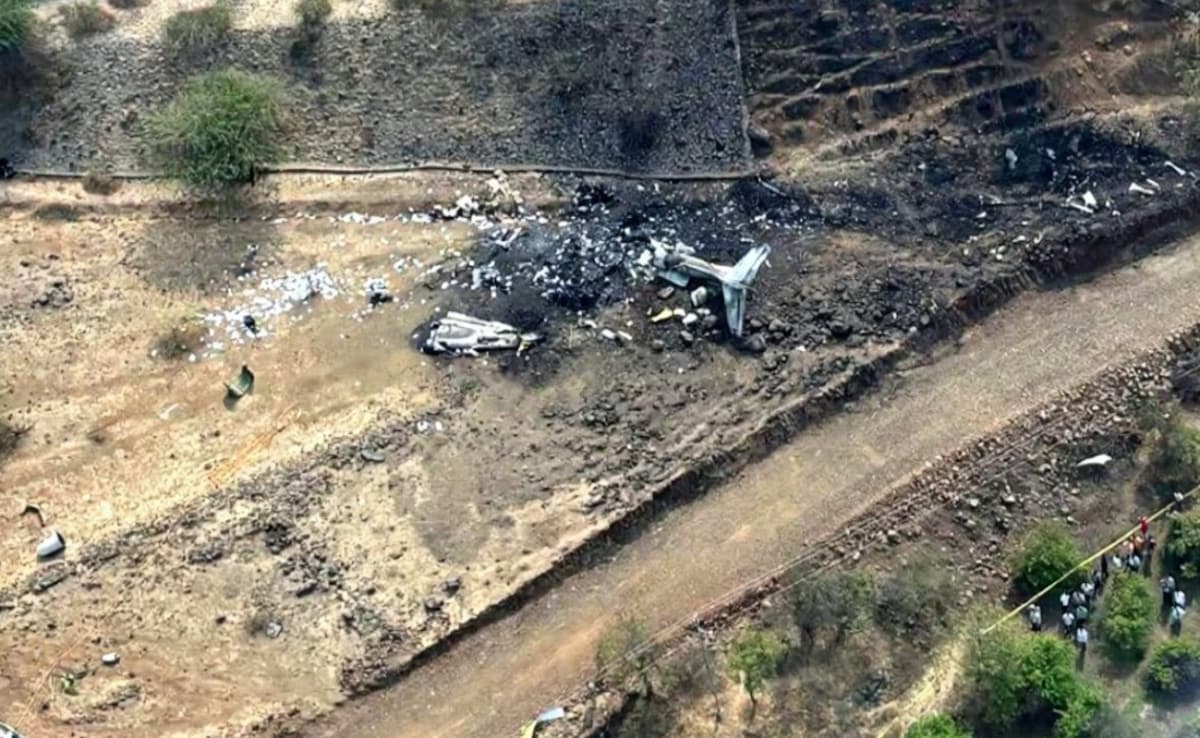
A tragic aviation incident at Baramati airport has sent shockwaves through Maharashtra's political landscape and ignited a critical debate over the state of aviation safety, particularly at regional airfields. The crash of a chartered Learjet, which claimed the lives of Maharashtra Deputy Chief Minister Ajit Pawar and four others, occurred amid challenging low-visibility conditions and has highlighted a concerning gap in modern navigation technology on board the ill-fated aircraft.
Investigators are piecing together the events of that fateful Wednesday morning, focusing on whether the plane narrowly missed being equipped with a crucial satellite-based safety system, GAGAN, designed to significantly enhance approach capabilities in adverse weather. The aircraft's registration timeline suggests a close call, with its legal compliance potentially masking a technological shortfall.
The 16-year-old Learjet, operated by VSR Ventures Pvt Ltd, was registered in India just 28 days before a new mandate came into force. This regulation required all newly registered aircraft to be fitted with advanced satellite-based navigation and approach systems. While the aircraft met the legal requirements at its time of registration, it is now believed to have lacked the cutting-edge guidance that could have provided a vital lifeline during its second landing attempt at Baramati.
The Lifeline of Satellite Navigation: GAGAN
For most major airports globally, the Instrument Landing System (ILS) serves as the backbone of precision approaches, providing pilots with an "invisible glide path" to navigate runways even when obscured by fog, heavy rain, or haze. However, ILS installations are capital-intensive and complex, making them unfeasible for many smaller, regional airports like Baramati.
To bridge this critical safety gap, India developed its own indigenous satellite-based augmentation system (SBAS) known as GAGAN – GPS Aided Geo Augmented Navigation. This innovative system leverages satellite technology to offer pilots precision guidance akin to ILS, crucial for airports lacking ground-based infrastructure. GAGAN enhances the accuracy and integrity of GPS signals, enabling aircraft to execute stable, predictable approaches. Crucially, an aircraft must be fitted with compatible avionics to utilize GAGAN's capabilities; without this hardware, the advanced guidance remains inaccessible.
A Race Against Time: The Missed Deadline
The Learjet involved in the Baramati tragedy was registered on June 2, 2021. Barely four weeks later, on June 30, 2021, the new regulatory requirement for satellite-based navigation systems became mandatory. This narrow window meant the aircraft was legally compliant at the time of its registration but, by a mere 28 days, fell outside the scope of the new safety upgrade. Aviation experts postulate that this timing difference likely meant the aircraft was not equipped with the GAGAN-compatible systems that could have significantly improved the crew's situational awareness and guidance during their low-visibility approach.
Navigating Without Modern Aids: The Baramati Challenge
Baramati Airport presents its own set of unique challenges. It operates as an uncontrolled airfield, which means it lacks continuous air traffic control services typical of larger hubs. Pilots and instructors from local flying schools typically manage traffic information. In such environments, and critically, without ILS or GAGAN-enabled procedures, pilots revert to conventional "step-down" approaches.
Unlike a continuous, stabilised descent, step-down approaches require the aircraft to descend in discrete stages, with the crew needing to visually confirm the runway or specific markers at each step. While manageable in clear weather, this method transforms into a high-stakes challenge when visibility is compromised. Safety experts liken it to navigating a dimly lit staircase – each step demands verification before proceeding, drastically reducing the margin for error if visual cues are missed.
The Fateful Moments: A Second Attempt
According to preliminary reports from the Civil Aviation Ministry, the Learjet established contact with Baramati air traffic control at 8:18 am, approximately 30 nautical miles from the airport. The crew was informed of calm winds and visibility around 3,000 metres. However, during their initial final approach, the pilots reported being unable to sight the runway and promptly initiated a "go-around" – a standard procedure to abort a landing and reposition for another attempt when conditions are unsuitable.
Moments later, on the second approach, the crew again encountered difficulty visually acquiring the runway. Then, after reporting "runway in sight," they were cleared to land at 8:43 am. A mere minute later, at 8:44 am, air traffic personnel witnessed flames erupting near the runway threshold. The aircraft's wreckage was subsequently discovered on the left side of the runway, a grim testament to the tragic outcome.
Political Ramifications and Unanswered Questions
The sudden demise of the 66-year-old Ajit Pawar, a prominent figure often referred to as 'Dada' in Maharashtra's political circles, has plunged the state's BJP-led coalition government into profound shock. It also casts a shadow of uncertainty over the future leadership of the Nationalist Congress Party (NCP), which he spearheaded. His uncle and NCP founder, Sharad Pawar, called for the incident not to be politicised, emphasizing its nature as a tragic accident.
As the investigation unfolds, the Baramati Learjet crash serves as a stark reminder of the complexities of aviation safety, especially at regional airports where advanced navigation aids may be absent. The incident compels a deeper look into the modernization of air safety regulations, the widespread implementation of satellite-based navigation systems, and the imperative to equip all aircraft, regardless of their registration date, with the best available technology to prevent future tragedies in India's rapidly expanding air travel sector.
You Might Also Like


More in India
- "CBSE 10th Result 2026: Mid-April Release Expected Earlier"
- "महावीर जयंती 2026: 10 शिकवणी, शांती-यशाचा मार्ग उघडतील"
- "RBSE Class 12 Results 2026: Check Scores Fast, Avoid Website Crash"
- "Noida Airport: How It Solves Fog Delays & Long Check-In Lines"
- "CBSE 10th, 12th Results 2026: Expect April for Class 10?"
