Rani Mukerji To NDTV On 'Women-Centric' Films: "It's A Label We Should Stop Using"
By NewsDose Team
Updated on January 28, 2026
5 min read
Key takeaways
Rani Mukerji further revealed what made her step back into Shivani Roy's shoes for Mardaani 3
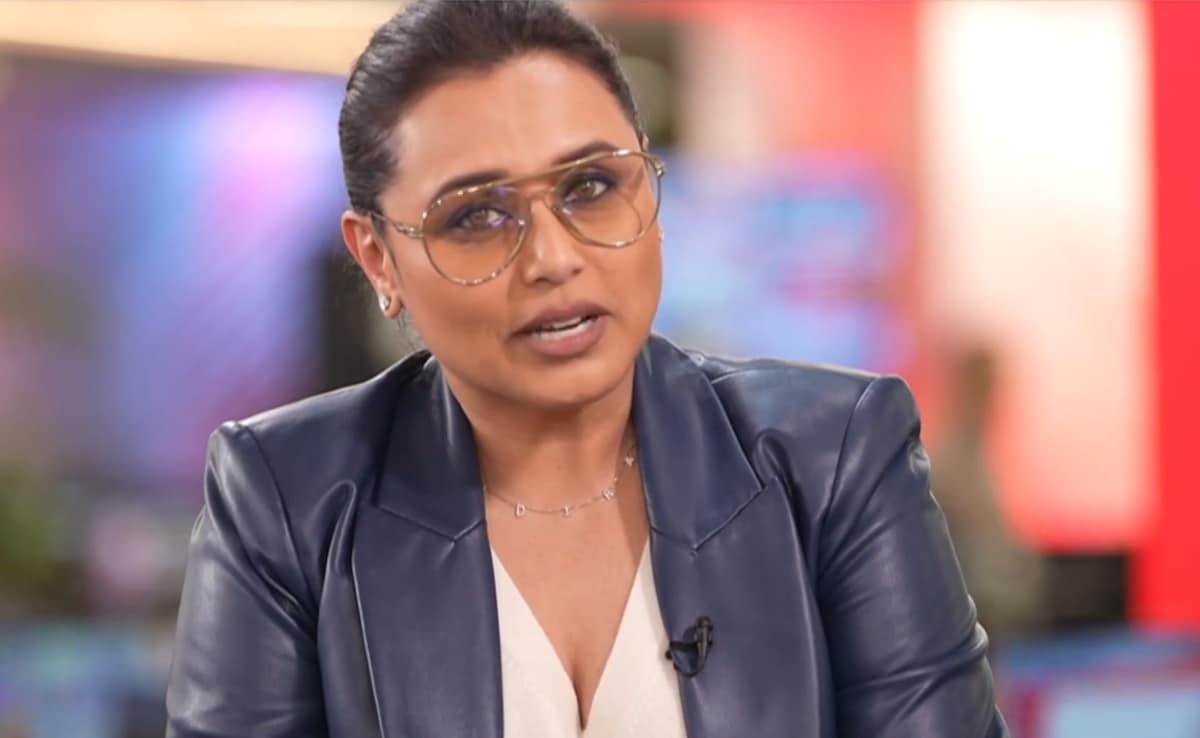
The seasoned Bollywood actor, Rani Mukerji, is gearing up for the release of her much-anticipated film, Mardaani 3, which is set to hit screens on January 30. As the premiere date approaches, Mukerji engaged in a revealing conversation where she candidly addressed several pertinent issues concerning the portrayal of women in cinema and society at large. Her insights offer a compelling perspective on the evolving landscape of Indian filmmaking and the need for a more equitable artistic representation.
One of the central themes of the discussion revolved around the persistent categorization of films led by women as “women-centric.” Mukerji vehemently expressed her belief that this label is not only outdated but also counterproductive in an era where content quality and audience appeal should be the sole determinants of a film's success. “It's a label that we should absolutely discontinue,” she articulated, urging the contemporary generation to actively participate in shifting this narrative. She highlighted that today's audiences are primarily driven by the appeal of a trailer or the quality of the content itself, rather than the gender of the lead protagonist.
Mukerji further elaborated, proposing that films should simply be evaluated as “good films or bad films,” or “interesting or not interesting.” She firmly believes that the practice of attaching gender-specific labels diminishes the universal appeal and artistic merit of a cinematic work. When it was noted that she had championed many female-led roles early in her career, even before such terms gained prominence, Mukerji refined her argument with a sharper distinction. “I think a more appropriate way to describe these films is by stating that 'the protagonist was a female.' That, to me, is how films should be genuinely perceived,” she clarified, emphasizing a focus on the character's role rather than their gender as a primary identifier for the film's genre.
To underscore the inherent absurdity of gender qualifiers in cinema, Mukerji drew parallels from everyday life. “We don't differentiate between a male pilot and a female pilot, or a male chef and a female chef,” she pointed out. She continued by illustrating, “When we board an aircraft, we don't inquire about the pilot's gender, nor do we book tickets based on whether it will be a female or a male pilot at the controls.” For Mukerji, this logical approach should extend seamlessly to the world of filmmaking. “It's high time we adopt this same perspective in cinema and cease referring to female actresses distinctly; rather, we should simply use the term 'actor.' We are all actors, whether we embody the main protagonist or form part of the supporting cast.”
The conversation then navigated towards the pervasive issue of typecasting, particularly how married women or mothers are often perceived as unsuitable for romantic leads. Mukerji challenged this narrow and reductive view of female performers. “If an actor is portraying a girlfriend, then certainly that context applies. However, if she is playing an officer or a teacher, I don't believe the audience needs to view them through the lens of a potential romantic partner,” she asserted.
Addressing the nostalgic idea that she might no longer embody characters like Tina from Kuch Kuch Hota Hai, Mukerji offered a pragmatic response. “Tina, too, would age, wouldn't she? She wouldn't remain perpetually frozen in time. Change, after all, is the only constant.” She passionately stressed that cinema's vast scope cannot be confined merely to romantic narratives. “I believe it is incredibly shallow and a very limited perspective to bracket films so frivolously, suggesting that they are only about seeing an actress as a potential girlfriend. Cinema is an expansive art form.”
Mukerji continued, highlighting the diverse tapestry of roles available for women, encompassing inspirational narratives, compelling dramas, and engaging comedies. “Romance constitutes just one facet of cinema; it should not be accorded disproportionate importance,” the esteemed actor remarked.
Delving into the origins of the Mardaani franchise, Mukerji explained her motivation for reprising the role of Shivani Roy in Mardaani 3, stating that the full reason would become evident upon the film's release. She revisited the genesis of the inaugural film, sharing a deeply personal connection: “Mardaani, as I often articulate, encapsulates all the anger I harbor towards the perpetrators of crimes against women.” She poignantly connected the birth of the franchise to a pivotal moment in India's recent history, stating, “It was subsequent to the Nirbhaya case that the very idea of Mardaani truly originated.”
The role, for Mukerji, transcends mere performance; it is a profound channel for expressing her indignation. “As an artist, I found a powerful outlet to articulate my anger through a character like this. This isn't just a film about acting; it confronts horrific realities faced by girls, children, and women. Mardaani serves as my conduit for expressing that grief, that fury, and it is my message to all my sisters and the magnificent women across the nation that an intrinsic power resides within each of us.”
Reflecting on whether India has made significant strides since 2012 in terms of women's safety, Mukerji offered a candid and sobering assessment. “Regrettably, the situation has only deteriorated. In 2012, we were discussing women's safety. Here we are in 2026, still confronting the very same concerns.” She acknowledged that many viewers might shy away from disturbing content, yet she firmly believes that a degree of discomfort is not only necessary but crucial. “This is precisely the time when one must feel disturbed. One must embrace that discomfort and unease, because it is only when we are uncomfortable that we truly begin to perceive the stark realities unfolding around us.”
When asked about the most “mardaani” act she has performed in her personal life, Mukerji’s response resonated with many. “I believe women exhibit their 'mardaani' side constantly—be it during daily commutes, within the confines of their homes, or when navigating the complexities of the professional world. In every sphere of life, women consistently demonstrate some aspect of their inherent strength and resilience every single day.”
Mardaani 3, featuring Rani Mukerji as the formidable cop Shivani Shivaji Roy, represents the third installment in the critically acclaimed action franchise that has consistently championed strong female protagonists. The film continues to spotlight vital societal issues through its engaging narrative.
You Might Also Like

More in Entertainment
- "Surbhi Jyoti's Baby Bump Reveal: Fans Melt at 'Walking Love Letter'"
- "Laughter Chefs 3: Bharti, Krushna's Boss Lady Coup Rocks Show"
- "KKK 15 Cast Mystery SOLVED: Bigg Boss Trio Joins Shetty!"
- "Bharti Singh & Haarsh Finally Reveal Son Kaaju's Face"
- The 50: Rajat Dalal passes a derogatory remark against Nehal Chudasama after task; says, “jinko too much attitude hota hai na aison ko toh mai yaha rakhta hu” |
