<i>Bridgerton Season 4 Part 1</i> Review: A Gilded Cinderella Romance That Lacks Its Glass-Slipper Moment
By NewsDose Team
Updated on January 30, 2026
5 min read
Key takeaways
It may not deliver the most incendiary passion of the series, but it offers something arguably more enduring
The wisteria-draped world of the ton once again unfurls its silken embrace, but this time, the spotlight – or perhaps, the soft glow of a forgotten candelabra – illuminates a familiar figure stepping from the shadows: Benedict Bridgerton. The third eldest Bridgerton sibling, often seen drifting through societal spectacles with a rakish grin and an artist's eye, finds himself unexpectedly at the very heart of the social season's most compelling drama. Prepare your senses for another exquisite journey into Regency romance, where the familiar grandeur of lavish balls and whispered scandals is underscored by a profound, introspective shift.
Season 4 of the beloved period phenomenon arrives with all the hallmarks fans adore: breathtaking ballrooms, sartorial splendor that defies imagination, and a soundtrack that blends classical elegance with contemporary flair. Yet, beneath the shimmering surface, a distinct evolution is at play. This installment delves into the complexities of identity and connection when stripped of title and expectation, asking what happens when a man who has meticulously curated a life of untethered freedom is irrevocably altered by the very force he sought to avoid: genuine, inconvenient love.
For three prior seasons, Benedict Bridgerton, portrayed with nuanced charm by Luke Thompson, has been the family's charming enigma. Free from the weighty responsibilities of the viscountcy, yet without the clandestine power of a societal chronicler, he navigated the marriage mart with a blend of witty indifference and artistic pursuits. His existence was defined by a self-proclaimed "venturesome course outside good society," a declaration that served as both a testament to his independent spirit and a protective shield against the constraints of his birthright. His pursuit of art, his easy laughter, and his fleeting romantic entanglements painted a picture of a man content to remain on the periphery, observing life rather than being consumed by it.
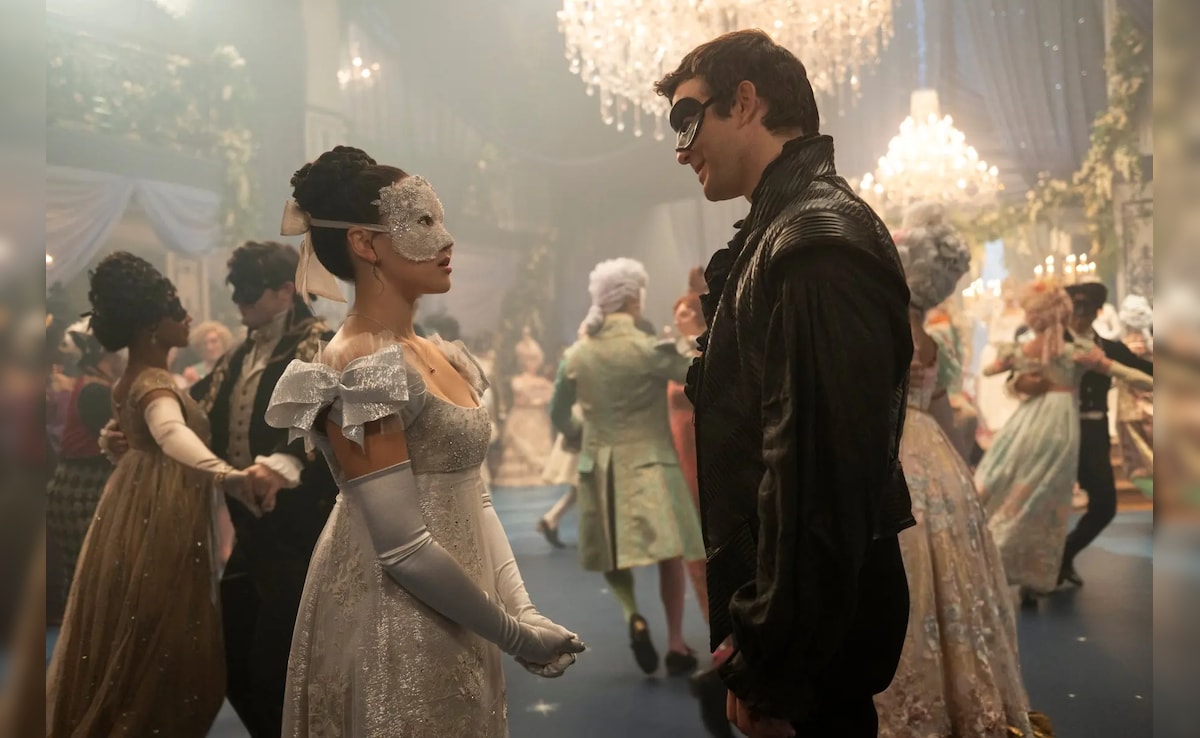
However, Season 4 wastes no time in challenging this carefully constructed sense of self. The catalyst for Benedict's reckoning is, fittingly, as theatrical and enchanting as the Bridgerton universe itself: a dazzling masquerade ball hosted by the indomitable Lady Violet Bridgerton, brought to life with her characteristic grace by Ruth Gemmell. Amidst a sea of masked faces, Benedict encounters a woman unlike any he has met within the ton – the enigmatic "Lady in Silver." Her unstudied grace, her genuine reactions, and a refreshing lack of artifice cut through the performative flirtations prevalent in high society. She dances with a surprising lack of pretense, engages with an authentic curiosity, and appears, for a precious few hours, untouched by the calculations of status and lineage that define her world.
Their connection is immediate, palpable, and profoundly intimate, yet destined to be incomplete. As the clock inexorably strikes midnight, mirroring a timeless fairy tale, she vanishes, leaving behind only a single, silver glove and a man profoundly disarmed. Benedict, previously impervious to the machinations of the marriage market, finds himself unexpectedly undone, embarking on a quest not just for a woman, but for the elusive feeling of true connection she ignited within him.
The parallels to the classic Cinderella narrative are unmistakable: the masked heroine, the midnight departure, the solitary token, the fervent search. The series embraces these fairy-tale tropes wholeheartedly, but elevates them beyond mere pastiche through a critical shift in perspective. This is not solely the idealized fantasy of a prince discovering his princess; it is equally the poignant story of a woman acutely aware that such a fantasy, for her, can only be ephemeral. This dual perspective imbues the romance with a unique blend of longing and grounded reality.
Sophie Baek, portrayed with luminous depth and understated strength by Yerin Ha, is no conventional debutante. Far from the glittering ballrooms, Sophie exists in a precarious social limbo, bound by servitude to the household of her late father's manipulative widow, Lady Araminta Gun (Katie Leung). Her attendance at the masquerade is an act of quiet, courageous rebellion – a single night of borrowed grandeur and self-expression in a life otherwise dictated by unrelenting labor and societal invisibility. Sophie's compelling nature stems not just from her striking beauty or quick wit, but from her profound awareness of the stakes involved. She understands implicitly the rigid boundaries of class, what society permits, and what it mercilessly punishes. Her decision to withhold her true identity from Benedict is not an act of coy flirtation, but a necessary strategy for survival, shaping a romance that unfolds as a delicate negotiation between powerful longing and harsh realities.
Luke Thompson’s performance as Benedict reaches new emotional depths this season. The familiar rakish charm remains, but it is now tempered by a raw vulnerability. His confession of feeling like an "imposter" in his own privileged world recontextualizes his previous detachment not as arrogance, but as a deeper sense of displacement. For a man born into immense privilege, Benedict is strikingly aware of his 'Number Two' status within a family defined by strict hierarchy. His attraction to Sophie is therefore as much about recognition and authentic connection as it is about desire; she sees him not as an heir, nor as a conquest, but as a man searching for his true place, untethered from the expectations of his name.
The chemistry between Benedict and Sophie, while perhaps less overtly volcanic than some of the series' past pairings, offers a different, equally compelling kind of magnetism. Where earlier seasons ignited with antagonistic tension and explosive passion, Benedict and Sophie’s connection is a slow, simmering burn, nurtured through earnest conversation, mutual curiosity, and a shared sense of being slightly out of step with the world around them. The result is a romance that feels profoundly romantic and enduring, more akin to a graceful, intricate waltz than a sudden, consuming wildfire. It’s a love story built on understanding and a profound recognition of shared human experience, transcending societal divides.
Bridgerton’s signature opulence, however, remains unapologetically intact. The production design is as breathtaking as ever, with the masquerade sequence standing out as one of the show’s most visually ambitious and meticulously crafted set pieces. The camera masterfully glides between the exquisite upstairs opulence and the bustling downstairs industry, subtly yet significantly widening the series’ world. For the first time in a truly meaningful way, the show lingers on the intricate machinery beneath the glitter: the dedicated maids, diligent footmen, and tireless housekeepers who painstakingly transform fantasy into reality. This tonal contrast between the serene grandeur of the ballroom and the vibrant frenzy of the kitchens adds rich texture to a universe that, in previous installments, felt almost exclusively gilded. This expansion into the working class is arguably the season's most pivotal evolution. Sophie's narrative arc compels the series to confront class inequity with a directness that its earlier race-blind casting allowed it to navigate around. While the fairy tale aspect is undeniably romantic, the demanding nature of Sophie’s labor and the tangible consequences of her masquerade attendance ground the story in a compelling, relatable reality.
Beyond the central romance, the expansive ensemble cast continues to navigate their own intricate paths. Penelope Featherington (Nicola Coughlan) grapples with the complexities of married life and her public identity as Lady Whistledown, her dynamic with Queen Charlotte (Golda Rosheuvel) now shifting into a delicate dance of negotiation rather than clandestine secrecy. Eloise Bridgerton (Claudia Jessie), ever the defiant intellectual, explores the boundaries of spinsterhood as both a protective shield and a bold declaration of independence. Francesca Bridgerton (Hannah Dodd) and Lord John Stirling (Victor Alli) quietly confront the nuanced challenges of early marital life, while Lady Violet Bridgerton herself tentatively explores the possibility of romance beyond widowhood, offering a tender counterpoint to her son's awakening. While not all subplots carry equal narrative weight, and the season can occasionally feel crowded under the pressure of exposition, the series nonetheless remains compulsively watchable, its sprawling tapestry of stories intricately woven.
The central tension of Season 4 ultimately resides in the profound question of identity: Who are we when stripped of titles, masks, and societal expectations? For Benedict, this journey of self-discovery proves deeply destabilizing, forcing him to confront long-held beliefs. For Sophie, however, it is a clarifying process, solidifying her sense of self amidst adversity. Their romance transcends mere destiny, becoming a powerful narrative of recognition – of choosing to truly see and be seen across the often-impenetrable artificial divides of rank and reputation. While Season 4 doesn't entirely reinvent the established Bridgerton formula of meet-cute, separation, longing, and pursuit, it fosters a quiet, significant maturation within that beloved structure. The show demonstrates a deeper interest in the lingering echoes after the music fades, rather than spectacle for its own sake.
The first half of Season 4 may not deliver the most incendiary passion witnessed in the series thus far, but it offers something arguably more profound and enduring: a love story rooted in profound empathy and mutual understanding. It wisely acknowledges that even the most embellished fairy tales are only truly satisfying when their characters feel authentic enough to experience both joy and heartbreak. As the season progresses towards its much-anticipated conclusion, the lingering question remains: Will Benedict truly step beyond the confines of "good society," or will his love inspire him to reshape its very definition? Whichever path unfolds, the narrative carriage is undeniably in motion, and this author, like many fervent viewers, is utterly captivated and not yet ready to bid farewell to the ball.
You Might Also Like


More in Entertainment
- "Surbhi Jyoti's Baby Bump Reveal: Fans Melt at 'Walking Love Letter'"
- "Laughter Chefs 3: Bharti, Krushna's Boss Lady Coup Rocks Show"
- "KKK 15 Cast Mystery SOLVED: Bigg Boss Trio Joins Shetty!"
- "Bharti Singh & Haarsh Finally Reveal Son Kaaju's Face"
- The 50: Rajat Dalal passes a derogatory remark against Nehal Chudasama after task; says, “jinko too much attitude hota hai na aison ko toh mai yaha rakhta hu” |
