Why Arijit Singh Quit Playback Singing At The Peak Of His Career
By NewsDose Team
Updated on January 28, 2026
5 min read
Key takeaways
Arijit Singh broke several hearts when he informed fans about his decision to retire from playback singing
The music world was sent into a frenzy when iconic singer Arijit Singh made a surprising announcement regarding his future in playback singing. In a heartfelt social media post earlier this year, the double National Award-winning vocalist confirmed his decision to step away from active duties in film music, leaving fans and industry insiders in a state of disbelief and contemplation.
The news arrived shortly after the release of "Maatrubhumi," a highly anticipated track he performed with Shreya Ghoshal for the Salman Khan-starrer Battle of Galwan. The song had just begun to resonate with audiences, making the timing of Singh's announcement even more impactful and prompting widespread speculation across various platforms.
While many struggled to grasp the suddenness of his decision, those familiar with the singer's personality and artistic inclinations suggest that this move, though shocking, wasn't entirely unforeseen. Screenshots from what is believed to be his private X (formerly Twitter) account quickly went viral, showing a deeper insight into the thought process behind his momentous step.
In his candid social media address, Arijit Singh articulated the complex motivations driving his retirement from playback singing. He penned, "Hello. Happy New Year to all. I want to thank you all for giving me so much love all these years as listeners. I am happy to announce that I am not going to take any new assignments as a playback vocalist from now on. I am calling it quits. It was a wonderful journey."
Further elaborating on his decision in a more personal note, he revealed, "There is not one reason behind this, there are several reasons plus I have been trying to do this since a long time. Finally I have gathered the right courage. One of the reasons were simple, I get bored pretty quick, that's why I keep changing arrangements of the same songs and perform them on stage. So here is the thing, I got bored." This candid admission shed light on an artist constantly seeking evolution and new challenges.
To truly comprehend Arijit Singh's pivotal decision, one must reflect on his extraordinary journey in the music industry. His career began not with a bang, but with humble origins as a contestant on the 2005 reality show Fame Gurukul, where he was eliminated before the grand finale. Undeterred, he eventually made his playback debut in 2010 with the Telugu film Kedi.
His breakthrough in Bollywood came a year later with Murder 2, delivering the poignant "Phir Mohabbat Karne Chala Hai Dil," a collaboration with Mohammed Irfan. However, it was the 2013 blockbuster Aashiqui 2 that catapulted him to superstardom, cementing his position as the voice of a generation. Over the past fifteen years, Singh has lent his distinct vocals to an astonishing repertoire of over 800 songs, encompassing film tracks and independent singles—an average of more than 53 songs annually. Beyond singing, he has also ventured into music composition, notable for films like Pagglait.
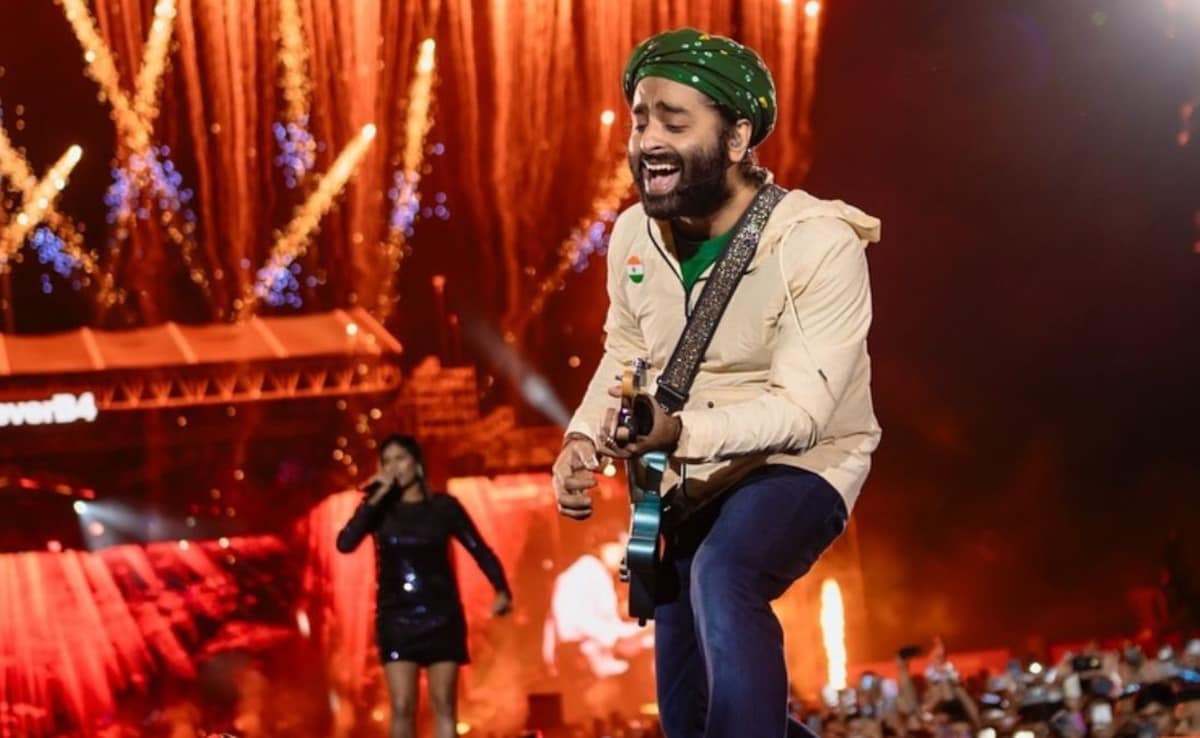
Parallel to his prolific recording career, Singh maintained a relentless schedule of live shows and tours, captivating audiences both domestically and internationally. His voice became ubiquitous, an inescapable and cherished presence in the soundscape of contemporary music.
Arijit Singh's unique identity in an era saturated with talent show discoveries and digital platforms has undoubtedly etched his voice into the collective consciousness. His artistic philosophy, marked by simplicity and a certain detachment, is mirrored in his personal life. Hailing from Murshidabad, West Bengal, far removed from the dazzling lights of Mumbai, Singh was never one to chase celebrity status or frequent high-profile industry gatherings. His media appearances have always been rare, adding to his mystique.
He famously preferred to record many of his songs from his studio in Murshidabad, only traveling to Mumbai when absolutely necessary for professional commitments or his extensive concert tours. This deliberate distance from the industry's inner circle speaks volumes about his priorities and his unwavering commitment to his craft on his own terms.
Sources close to the artist suggest that after reaching the pinnacle of success, fame, and financial stability, a continuous 15-year grind can lead to a profound sense of exhaustion and a yearning for creative liberation. Film music, with its inherent constraints—producer demands, directorial visions, storyline requirements, and market pressures—often limits an artist's ability to pursue their own creative inclinations. Eventually, a moment arrives when an artist desires to break free and follow the rhythm of their own heart.
This appears to be precisely what has transpired with Arijit Singh. His announcement is not a renunciation of music itself, but rather a deliberate pivot away from the confines of film playback. It signals a new chapter where he aims to create music on his own terms, exploring diverse artistic avenues unfettered by commercial or cinematic demands. This move could potentially invigorate the independent music scene, offering a fresh canvas for his immense talent.
While his legion of admirers grapple with the initial shock, an optimistic segment believes this is far from the end. Many speculate that this transition heralds a vibrant new phase for the singer, a period of unbridled artistic exploration that could enrich the broader music landscape. The ultimate answers to these speculations, however, rest with Arijit Singh himself, who will undoubtedly unveil his next steps in his inimitable voice, a voice that fans eagerly await to hear in whatever form it may take.
You Might Also Like


More in Entertainment
- "Surbhi Jyoti's Baby Bump Reveal: Fans Melt at 'Walking Love Letter'"
- "Laughter Chefs 3: Bharti, Krushna's Boss Lady Coup Rocks Show"
- "KKK 15 Cast Mystery SOLVED: Bigg Boss Trio Joins Shetty!"
- "Bharti Singh & Haarsh Finally Reveal Son Kaaju's Face"
- The 50: Rajat Dalal passes a derogatory remark against Nehal Chudasama after task; says, “jinko too much attitude hota hai na aison ko toh mai yaha rakhta hu” |
